THE ADVENTURE COLLECTIVE® · Independent discovery and booking for outdoor travel

Explore Saqqara beyond the Step Pyramid on a private six-hour tour that visits Mereruka’s mastaba, the Pyramid Texts of Unas, the underground Serapeum and the Saqqara Museum. Ideal for travelers who want context, close-up architecture and a guided walkthrough of Egypt’s ancient necropolis.
Explore Saqqara beyond the Step Pyramid on a private six-hour tour that visits Mereruka’s mastaba, the Pyramid Texts of Unas, the underground Serapeum and the Saqqara Museum. Ideal for travelers who want context, close-up architecture and a guided walkthrough of Egypt’s ancient necropolis.
A pale sun cuts across the open desert as you step from a private vehicle onto the hard-packed sands that surround Saqqara. Stone rises in geometric relief: the Tiered Step Pyramid of Djoser looming, nearby mastabas low and sprawling, and the silhouette of later pyramids punctuating the horizon. Walk past bas-reliefs that show harvests and boats; descend into chambers where light is deliberate and voices soften.
Verified experiences and guided adventures in the surrounding area.
Operated by Egypt Gold · Saqqara, Giza Governorate
A pale sun cuts across the open desert as you step from a private vehicle onto the hard-packed sands that surround Saqqara. Stone rises in geometric relief: the Tiered Step Pyramid of Djoser looming, nearby mastabas low and sprawling, and the silhouette of later pyramids punctuating the horizon. Walk past bas-reliefs that show harvests and boats; descend into chambers where light is deliberate and voices soften.
Saqqara is Egypt’s burial landscape in microcosm — from the 3rd Dynasty innovations that birthed the Step Pyramid to Old Kingdom mastabas like Mereruka and Ka-Gemni, and later New Kingdom family tombs. The Pyramid Texts of Unas mark a religious shift; the Serapeum’s granite sarcophagi recall the cult of the Apis bull. Geologically, the site sits on a limestone plateau with compacted desert surfaces and exposed bedrock used as building stone for millennia.
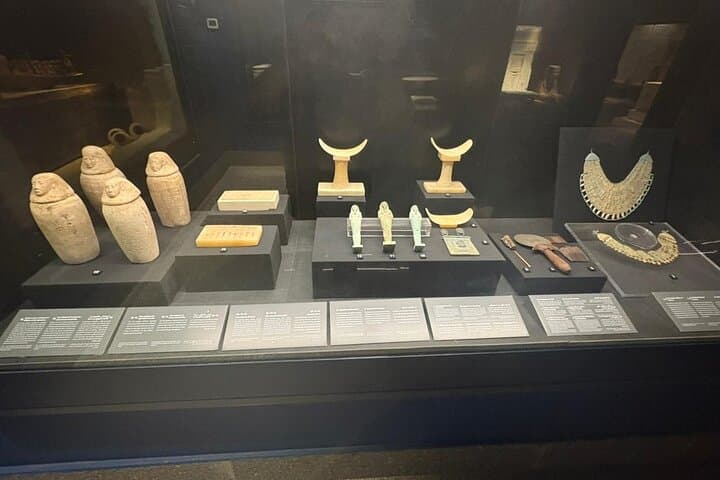
Expect mostly easy walking across firm sand and paved ramp sections, with short stair descents into select tombs and dim galleries in the Serapeum. The tour typically runs six hours by private transport and includes a museum stop for fragile artifacts sheltered from the elements.
Practical edge: start early to avoid peak heat, carry at least 1.5 liters of water, wear sturdy closed shoes for uneven thresholds, and bring a light layer for cooler underground chambers. Photography is common but respect signage around delicate reliefs. With an Egyptologist guide and entrance fees included, this itinerary strips away the single-snapshot visit and lets the necropolis tell its layered story in full.
easy.
6 hours.
Light walking and standing; suitable for most travelers with basic mobility
The full itinerary runs about six hours including transport, site visits and a museum stop.
Yes, the tour price includes entrance fees to the tombs, Serapeum and Saqqara Museum as described.
The provider lists wheelchair accessibility for transport and many surfaces, but some tomb interiors and the Serapeum have tight spaces—check specifics when booking.
Photography is generally allowed in open areas; always follow guide instructions and posted signs, and avoid flash on fragile reliefs.
Saqqara served as the necropolis for Memphis; its monuments span from the Early Dynastic period through later pharaonic eras, marking architectural and religious developments such as the first pyramid and the Pyramid Texts.
Visitor management and conservation efforts focus on stabilizing exposed reliefs and controlling humidity for artifacts; follow paths and avoid touching carved surfaces to reduce wear.
Egypt Gold operates guided outdoor trips and adventures with an emphasis on safety, stewardship, and memorable experiences.


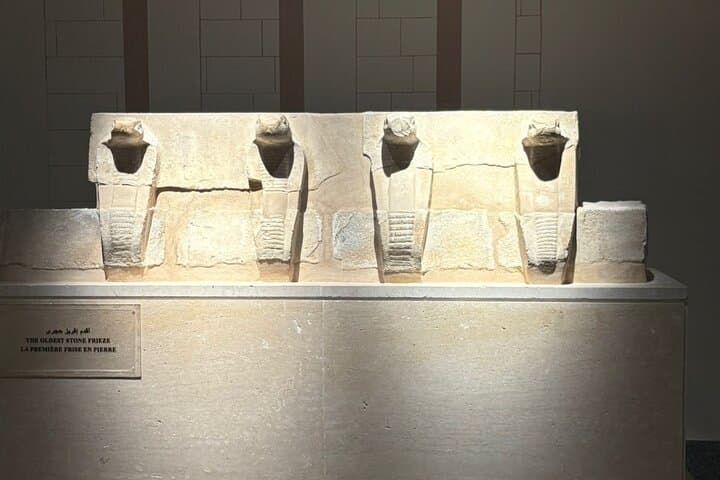
A pale sun cuts across the open desert as you step from a private vehicle onto the hard-packed sands that surround Saqqara. Stone rises in geometric relief: the Tiered Step Pyramid of Djoser looming, nearby mastabas low and sprawling, and the silhouette of later pyramids punctuating the horizon. Walk past bas-reliefs that show harvests and boats; descend into chambers where light is deliberate and voices soften.
A pale sun cuts across the open desert as you step from a private vehicle onto the hard-packed sands that surround Saqqara. Stone rises in geometric relief: the Tiered Step Pyramid of Djoser looming, nearby mastabas low and sprawling, and the silhouette of later pyramids punctuating the horizon. Walk past bas-reliefs that show harvests and boats; descend into chambers where light is deliberate and voices soften.
Saqqara is Egypt’s burial landscape in microcosm — from the 3rd Dynasty innovations that birthed the Step Pyramid to Old Kingdom mastabas like Mereruka and Ka-Gemni, and later New Kingdom family tombs. The Pyramid Texts of Unas mark a religious shift; the Serapeum’s granite sarcophagi recall the cult of the Apis bull. Geologically, the site sits on a limestone plateau with compacted desert surfaces and exposed bedrock used as building stone for millennia.
Expect mostly easy walking across firm sand and paved ramp sections, with short stair descents into select tombs and dim galleries in the Serapeum. The tour typically runs six hours by private transport and includes a museum stop for fragile artifacts sheltered from the elements.
Practical edge: start early to avoid peak heat, carry at least 1.5 liters of water, wear sturdy closed shoes for uneven thresholds, and bring a light layer for cooler underground chambers. Photography is common but respect signage around delicate reliefs. With an Egyptologist guide and entrance fees included, this itinerary strips away the single-snapshot visit and lets the necropolis tell its layered story in full.