THE ADVENTURE COLLECTIVE® · Independent discovery and booking for outdoor travel

Ride Sapa’s terraces and forest lanes on a full-day biking loop from town through Ma Tra, Ta Phin and Takko Pass. Expect long descents, village visits, and panoramic upland views with culturally rich stops.
Ride Sapa’s terraces and forest lanes on a full-day biking loop from town through Ma Tra, Ta Phin and Takko Pass. Expect long descents, village visits, and panoramic upland views with culturally rich stops.
Morning light slices through the low cloud above Sapa as your tires meet the first stretch of asphalt—cool air, the scent of wet earth, and terraces that seem to reach for the sky. The ride begins near town and quickly moves into a landscape carved by farmers and time: steep rice benches, pine patches, and narrow lanes that thread between H'Mong and Red Dao villages.
Verified experiences and guided adventures in the surrounding area.
Operated by Asia Master Tours · Sapa, Lao Cai
Morning light slices through the low cloud above Sapa as your tires meet the first stretch of asphalt—cool air, the scent of wet earth, and terraces that seem to reach for the sky. The ride begins near town and quickly moves into a landscape carved by farmers and time: steep rice benches, pine patches, and narrow lanes that thread between H'Mong and Red Dao villages.
This upland district in Lao Cai sits on the Hoang Lien Son massif, a rugged range shaped by tectonic uplift and heavy monsoon season erosion. French-era villas and a history of hill-station tourism punctuate a region long inhabited by ethnic minorities who maintain rice cultivation, indigo dyeing and seasonal markets.
Expect a route that favors downhill momentum with intermittent climbs—short, steep pitches through forested switchbacks and gravel farmtracks leading to Ma Tra village, then a descent into Ta Phin where colorful textiles and herbal-bath traditions reveal daily life. Takko Pass offers a final stretch of fir-lined road and panoramic drops before a transfer back to Sapa and onward to Lao Cai.
Practical guidance: allow 8–10 hours for the full-day circuit including road transfers, meals, and stops. Total pedaled distance typically falls in the 25–40 km range with several short ascents and roughly 300–500 m cumulative elevation gain. Bring layered rain protection, sturdy pedals or flat shoes with good grip, and a hydration system; brakes and tire check are essential. Ride conservatively on wet switchbacks, respect village privacy, and budget time for market stops—this is as much cultural travel as it is cycling.
moderate.
10 hours.
Moderate fitness with experience on mixed-surface descents and short hill climbs; able to ride 25–40 km with periods of pedaling after bus transfers.
No—well-maintained hybrid or trekking bikes with good brakes and tires are sufficient; some operators provide bikes and helmets.
Climbs are generally short but can be steep; most of the route is downhill or rolling, but riders should be prepared for intermittent uphill efforts.
This tour typically includes breakfast, lunch and dinner as well as entrance fees noted in the itinerary—confirm specifics at booking.
The route can be slippery when wet; guides may reduce speed, and in heavy rain sections can be transferred by vehicle for safety.
Sapa grew as a hill-station under French colonial rule; surrounding valleys are traditional homelands of H'Mong and Red Dao peoples with centuries of rice terracing.
Terraced fields are vulnerable to erosion and unplanned development—travelers should stay on paths, avoid littering, and support local family businesses to benefit the community.
Asia Master Tours operates guided outdoor trips and adventures with an emphasis on safety, stewardship, and memorable experiences.
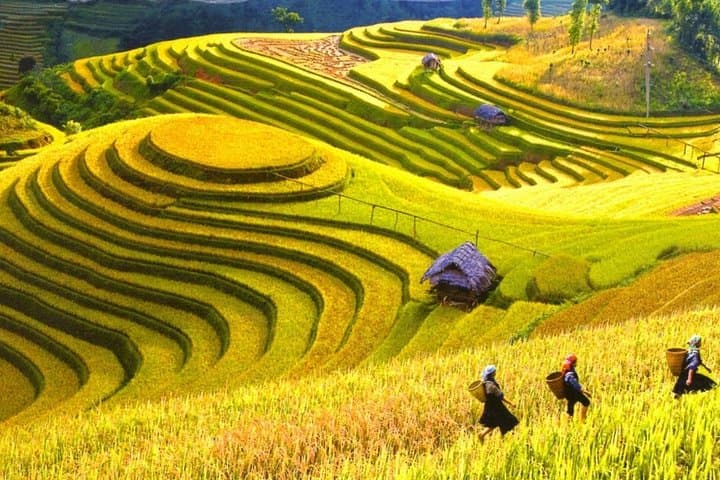
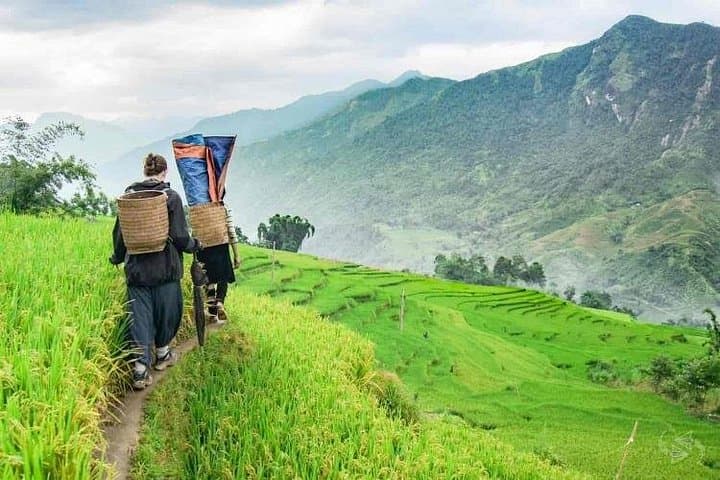
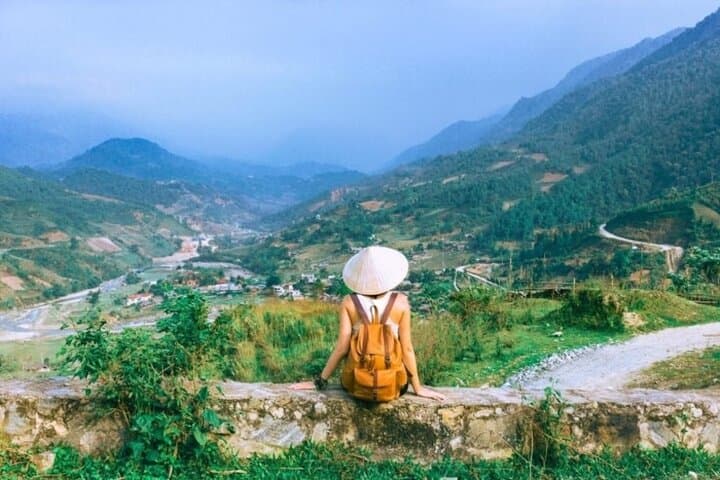
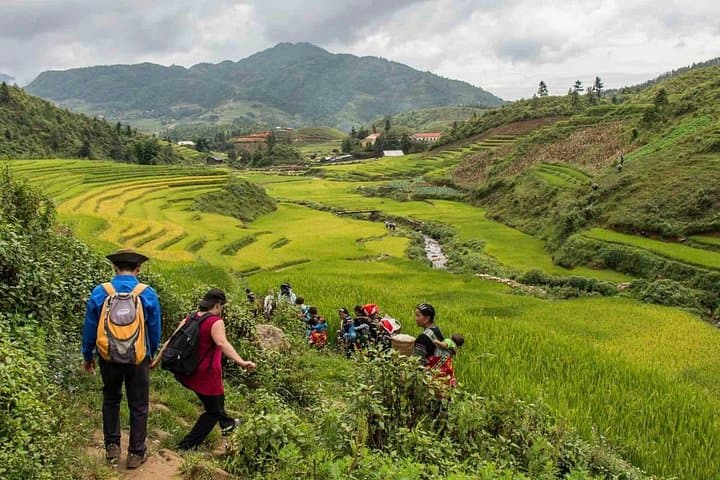
Morning light slices through the low cloud above Sapa as your tires meet the first stretch of asphalt—cool air, the scent of wet earth, and terraces that seem to reach for the sky. The ride begins near town and quickly moves into a landscape carved by farmers and time: steep rice benches, pine patches, and narrow lanes that thread between H'Mong and Red Dao villages.
Morning light slices through the low cloud above Sapa as your tires meet the first stretch of asphalt—cool air, the scent of wet earth, and terraces that seem to reach for the sky. The ride begins near town and quickly moves into a landscape carved by farmers and time: steep rice benches, pine patches, and narrow lanes that thread between H'Mong and Red Dao villages.
This upland district in Lao Cai sits on the Hoang Lien Son massif, a rugged range shaped by tectonic uplift and heavy monsoon season erosion. French-era villas and a history of hill-station tourism punctuate a region long inhabited by ethnic minorities who maintain rice cultivation, indigo dyeing and seasonal markets.
Expect a route that favors downhill momentum with intermittent climbs—short, steep pitches through forested switchbacks and gravel farmtracks leading to Ma Tra village, then a descent into Ta Phin where colorful textiles and herbal-bath traditions reveal daily life. Takko Pass offers a final stretch of fir-lined road and panoramic drops before a transfer back to Sapa and onward to Lao Cai.
Practical guidance: allow 8–10 hours for the full-day circuit including road transfers, meals, and stops. Total pedaled distance typically falls in the 25–40 km range with several short ascents and roughly 300–500 m cumulative elevation gain. Bring layered rain protection, sturdy pedals or flat shoes with good grip, and a hydration system; brakes and tire check are essential. Ride conservatively on wet switchbacks, respect village privacy, and budget time for market stops—this is as much cultural travel as it is cycling.