THE ADVENTURE COLLECTIVE® · Independent discovery and booking for outdoor travel

This full-day crossing from Crete delivers Santorini’s cliffside villages and caldera views in a 12‑hour itinerary. Expect ferry crossings, cobbled alleys, and optional volcano and hot-springs add-ons.
This full-day crossing from Crete delivers Santorini’s cliffside villages and caldera views in a 12‑hour itinerary. Expect ferry crossings, cobbled alleys, and optional volcano and hot-springs add-ons.
A crisp morning on Crete begins at a bustling departure port: kiosks, staff and the low thrum of a ferry preparing to cross the Aegean. Two hours later you step onto Santorini’s volcanic rim, where white-washed houses and cobalt domes cut sharp against the sea. The itinerary sends visitors first to Oia—its lanes, cliff-edge views and iconic churches provide roughly 90 minutes to wander, photograph and feel the wind off the Caldera.
Verified experiences and guided adventures in the surrounding area.
Operated by Cretan Holidays · Fira, South Aegean
A crisp morning on Crete begins at a bustling departure port: kiosks, staff and the low thrum of a ferry preparing to cross the Aegean. Two hours later you step onto Santorini’s volcanic rim, where white-washed houses and cobalt domes cut sharp against the sea. The itinerary sends visitors first to Oia—its lanes, cliff-edge views and iconic churches provide roughly 90 minutes to wander, photograph and feel the wind off the Caldera.
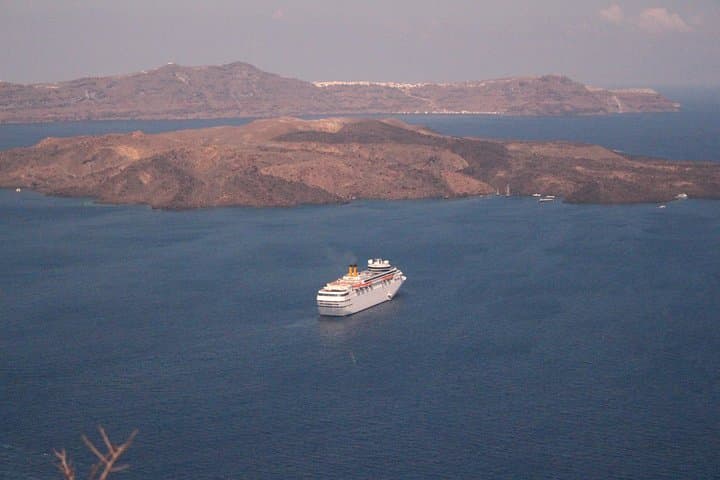
Santorini (ancient Thera) is a geologic page-turn: a Bronze Age mega-eruption collapsed the center of the island, leaving the dramatic caldera and steep cliffs visitors see today. Fira, the island’s administrative and commercial hub, offers narrow alleys, museums and overlooks where the Aegean seems to push forward beneath you. Local life is readable in small bakeries, winery signs and the continual negotiation between tourism and everyday island rhythms.
Practical guidance: the day trip runs about 12 hours, with ferry crossings subject to sea conditions. Expect a lot of walking on uneven cobbles and occasional steep staircases—good shoes and sun protection are non-negotiable. Optional volcano and hot-springs excursions run in warmer months at extra cost and require short boat transfers.
Timing matters: start early to avoid the largest crowds in Oia, and carry water; shops are available but lines can be long. Bring ID for boarding and allow flexible time for the return ferry in case seas rise.
Whether you’re here for views, archaeology or a quick dip in thermal waters, the trip packs Santorini’s signature geology and cliffside culture into a single, manageable day.
easy.
12 hours.
Suitable for most fitness levels; involves extended walking on uneven surfaces and stairs
The ferry takes roughly 1 hour 55 minutes to 2 hours 20 minutes from Heraklion or Rethymno, depending on weather and sea conditions.
Yes—available seasonally (usually mid-May onward) at extra cost and includes a short boat transfer and time to swim in the thermal springs.
Boat transport is wheelchair accessible, but buses and many streets in Santorini have steps and uneven cobblestones; full accessibility is limited on the island.
Bring water, sun protection, comfortable shoes, a valid ID or passport, and a small amount of cash for shops or optional extras.
Santorini’s dramatic caldera formed after a massive Bronze Age eruption (around 1600 BCE), an event that reshaped the island and influenced regional cultures.
High visitor numbers strain trails and archaeological sites—stay on marked paths, avoid climbing fragile ruins and support local businesses to reduce environmental pressure.
Cretan Holidays operates guided outdoor trips and adventures with an emphasis on safety, stewardship, and memorable experiences.
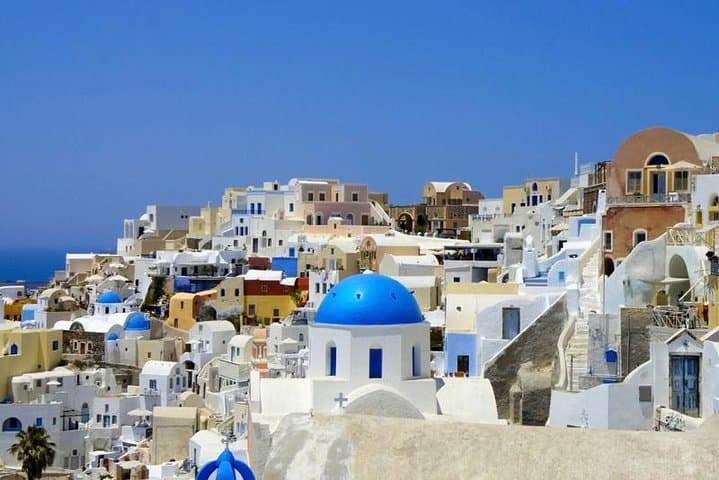
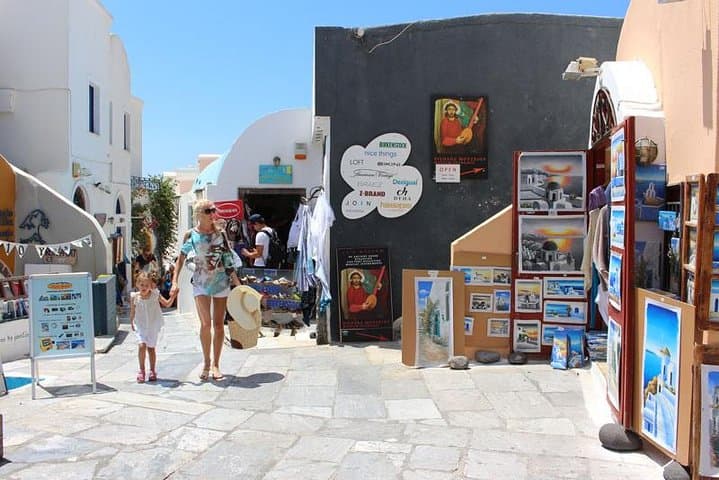
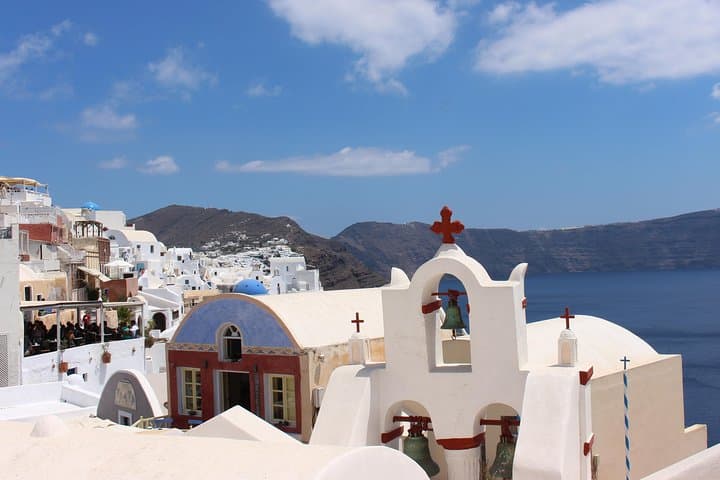
A crisp morning on Crete begins at a bustling departure port: kiosks, staff and the low thrum of a ferry preparing to cross the Aegean. Two hours later you step onto Santorini’s volcanic rim, where white-washed houses and cobalt domes cut sharp against the sea. The itinerary sends visitors first to Oia—its lanes, cliff-edge views and iconic churches provide roughly 90 minutes to wander, photograph and feel the wind off the Caldera.
A crisp morning on Crete begins at a bustling departure port: kiosks, staff and the low thrum of a ferry preparing to cross the Aegean. Two hours later you step onto Santorini’s volcanic rim, where white-washed houses and cobalt domes cut sharp against the sea. The itinerary sends visitors first to Oia—its lanes, cliff-edge views and iconic churches provide roughly 90 minutes to wander, photograph and feel the wind off the Caldera.
Santorini (ancient Thera) is a geologic page-turn: a Bronze Age mega-eruption collapsed the center of the island, leaving the dramatic caldera and steep cliffs visitors see today. Fira, the island’s administrative and commercial hub, offers narrow alleys, museums and overlooks where the Aegean seems to push forward beneath you. Local life is readable in small bakeries, winery signs and the continual negotiation between tourism and everyday island rhythms.
Practical guidance: the day trip runs about 12 hours, with ferry crossings subject to sea conditions. Expect a lot of walking on uneven cobbles and occasional steep staircases—good shoes and sun protection are non-negotiable. Optional volcano and hot-springs excursions run in warmer months at extra cost and require short boat transfers.
Timing matters: start early to avoid the largest crowds in Oia, and carry water; shops are available but lines can be long. Bring ID for boarding and allow flexible time for the return ferry in case seas rise.
Whether you’re here for views, archaeology or a quick dip in thermal waters, the trip packs Santorini’s signature geology and cliffside culture into a single, manageable day.