THE ADVENTURE COLLECTIVE® · Independent discovery and booking for outdoor travel

Explore Sanchi’s 3rd-century stupas and the Gupta-era rock-cut shrines at Udayagiri on a private full-day tour from Bhopal. Expect guided interpretation, short walks on uneven stone, and compact drives between two of central India’s most evocative archaeological sites.
Explore Sanchi’s 3rd-century stupas and the Gupta-era rock-cut shrines at Udayagiri on a private full-day tour from Bhopal. Expect guided interpretation, short walks on uneven stone, and compact drives between two of central India’s most evocative archaeological sites.
You step out of the air-conditioned car onto a low hill ringed by dry grass; a stone drum and the curved silhouette of a stupa cut the sky. Wind threads through the carved gateways as the guide points to the wheel and lion capitals—symbols that once directed pilgrims along trade routes and belief systems.
Verified experiences and guided adventures in the surrounding area.
Operated by City Tours India · Bhopal, Madhya Pradesh
You step out of the air-conditioned car onto a low hill ringed by dry grass; a stone drum and the curved silhouette of a stupa cut the sky. Wind threads through the carved gateways as the guide points to the wheel and lion capitals—symbols that once directed pilgrims along trade routes and belief systems.
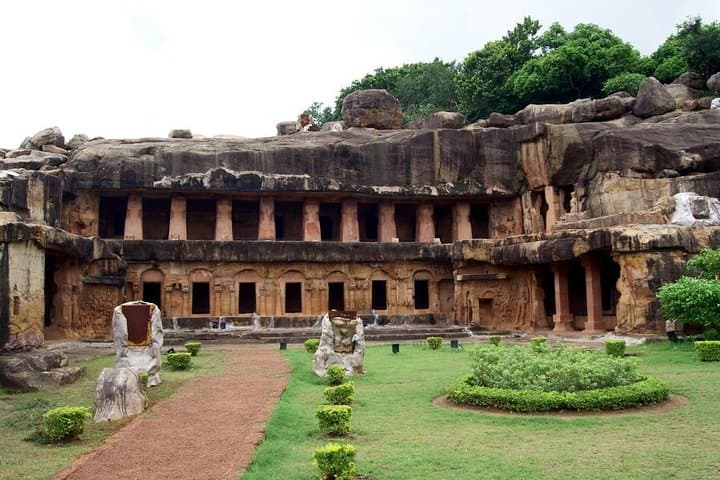
Sanchi’s core monuments date to the 3rd century BCE and were expanded under later dynasties; the site preserves an early Buddhist iconography that uses emblems rather than anthropomorphic images of the Buddha. A short drive east, the Udayagiri rock-cut caves occupy a U-shaped plateau beside the River Bes and carry late 4th–5th century Gupta carvings, including the powerful Varaha relief and several inscriptions that anchor the site to Chandragupta II’s reign.
Geology here is granite outcrop and weathered sandstone, carved into sanctuaries and water channels; surfaces can be uneven and warm to the touch in midday sun. Culture is visible in the stones: ritual thresholds, throne motifs, and carved devotees that mix Hindu and Buddhist practices.
Practically, expect a 7–8 hour day with roughly 45 km (30 miles) and 15 km drives separating sites; each leg takes about 1.5 hours depending on traffic. Wear sturdy shoes for uneven steps, carry water and sun protection, and budget time for ASI checkpoints and short photo stops. The tour usually includes private pickup in Bhopal and a guide, but archaeological site entry fees are typically extra. Morning visits beat heat and crowds; late afternoon gives better light on bas-reliefs. This itinerary suits history-minded travelers who prefer a curated, low-hassle way to see two complementary ancient complexes in a single day.
moderate.
7–8 hours.
Suitable for travelers with light to moderate fitness — several short walks and steps across uneven ground.
It’s about 45 km (30 miles), typically 1.5 hours each way depending on traffic and road conditions.
Most private tours list site admission as extra; confirm with the operator and carry local currency for ASI tickets.
The tour is rated easy to moderate but has uneven surfaces and steps—seniors and young children should be able to walk short distances and climb stairs.
Yes — the private guide included typically provides historical context, interpretation of symbols, and highlights key inscriptions and sculptures.
Sanchi’s core stupa complex originated under the Mauryan period (3rd century BCE) and saw additions through early medieval times; Udayagiri’s major carvings date to the Gupta period under Chandragupta II.
Both sites are protected by the Archaeological Survey of India; visitors should stay on marked paths, avoid touching fragile carvings, and minimize plastic and litter to protect stone surfaces.
City Tours India operates guided outdoor trips and adventures with an emphasis on safety, stewardship, and memorable experiences.
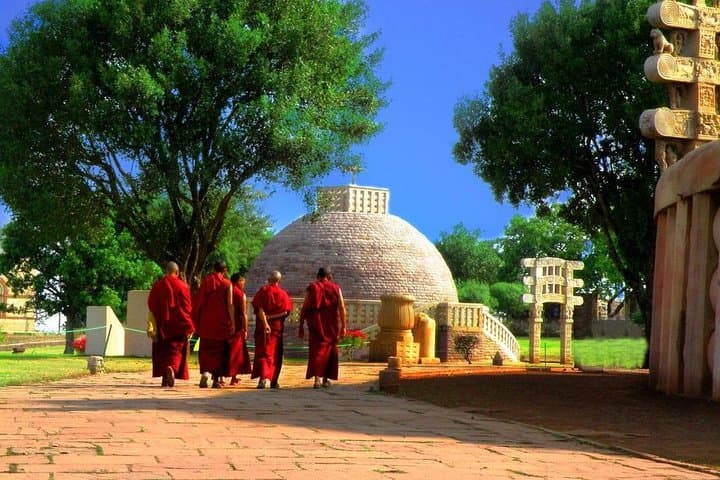
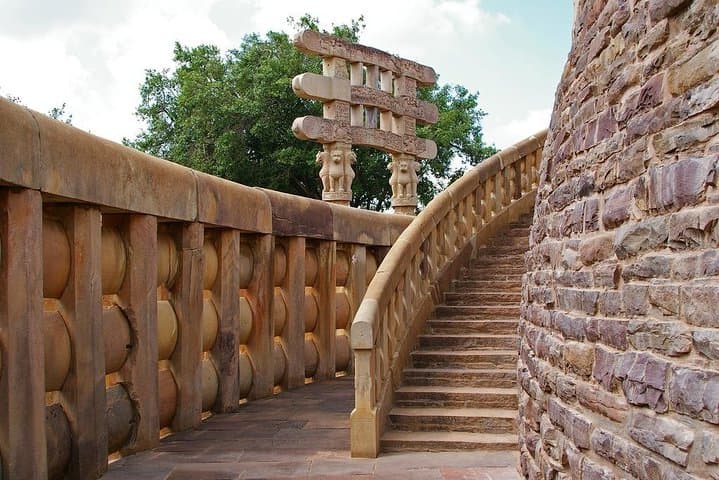
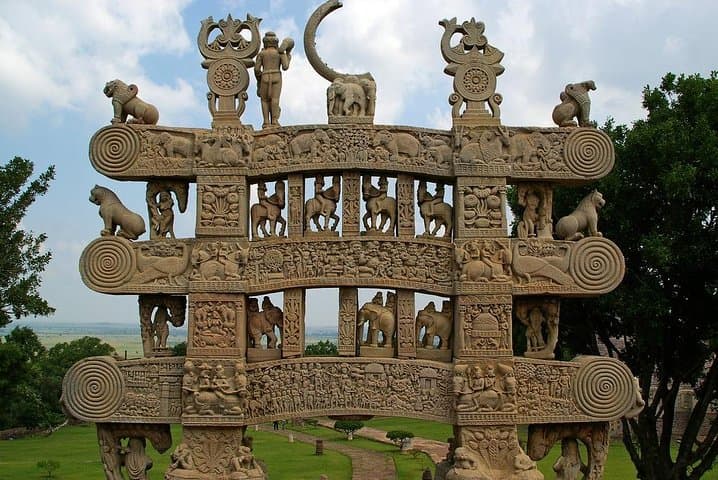
You step out of the air-conditioned car onto a low hill ringed by dry grass; a stone drum and the curved silhouette of a stupa cut the sky. Wind threads through the carved gateways as the guide points to the wheel and lion capitals—symbols that once directed pilgrims along trade routes and belief systems.
You step out of the air-conditioned car onto a low hill ringed by dry grass; a stone drum and the curved silhouette of a stupa cut the sky. Wind threads through the carved gateways as the guide points to the wheel and lion capitals—symbols that once directed pilgrims along trade routes and belief systems.
Sanchi’s core monuments date to the 3rd century BCE and were expanded under later dynasties; the site preserves an early Buddhist iconography that uses emblems rather than anthropomorphic images of the Buddha. A short drive east, the Udayagiri rock-cut caves occupy a U-shaped plateau beside the River Bes and carry late 4th–5th century Gupta carvings, including the powerful Varaha relief and several inscriptions that anchor the site to Chandragupta II’s reign.
Geology here is granite outcrop and weathered sandstone, carved into sanctuaries and water channels; surfaces can be uneven and warm to the touch in midday sun. Culture is visible in the stones: ritual thresholds, throne motifs, and carved devotees that mix Hindu and Buddhist practices.
Practically, expect a 7–8 hour day with roughly 45 km (30 miles) and 15 km drives separating sites; each leg takes about 1.5 hours depending on traffic. Wear sturdy shoes for uneven steps, carry water and sun protection, and budget time for ASI checkpoints and short photo stops. The tour usually includes private pickup in Bhopal and a guide, but archaeological site entry fees are typically extra. Morning visits beat heat and crowds; late afternoon gives better light on bas-reliefs. This itinerary suits history-minded travelers who prefer a curated, low-hassle way to see two complementary ancient complexes in a single day.