THE ADVENTURE COLLECTIVE® · Independent discovery and booking for outdoor travel

Cross the world’s largest salt flat in a 4×4 on an eight-hour loop that pairs industrial history, village life and a hike on Incahuasi Island. Practical advice on altitude, sun protection and seasonality helps you plan the picture-perfect visit.
Cross the world’s largest salt flat in a 4×4 on an eight-hour loop that pairs industrial history, village life and a hike on Incahuasi Island. Practical advice on altitude, sun protection and seasonality helps you plan the picture-perfect visit.
Morning light strips the world to white as a 4×4 crunches across Bolivia’s Salar de Uyuni, the largest salt flat on earth. Wind lifts salt grains like a fine spray and the horizon becomes a clean, hard line you can walk toward.
Verified experiences and guided adventures in the surrounding area.
Operated by Machupicchu Holiday · Uyuni, Potosí
Morning light strips the world to white as a 4×4 crunches across Bolivia’s Salar de Uyuni, the largest salt flat on earth. Wind lifts salt grains like a fine spray and the horizon becomes a clean, hard line you can walk toward.
The day opens at Uyuni’s Train Cemetery, where rusting locomotives speak to the late-19th-century mining boom and the region’s industrial past. A short drive brings you to Colchani, a working salt village where families harvest and process salt in traditional beds and sell llama-wool textiles and carved souvenirs.
Geologically the salar is the drained basin of prehistoric lakes; its thick salt crust hides brine pockets and fossilized sea rock. Incahuasi Island rises from that white plain—an ancient coral reef now crowned by giant cacti and offering 360° views of endless salt and sky. Cultural details thread through the route: roadside artisan tables, the quiet choreography of salt workers, and a museum-hotel that hints at a former era of tourism.
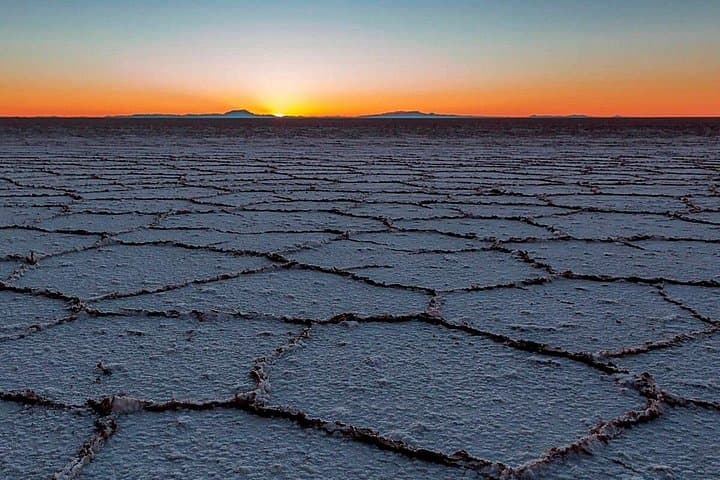
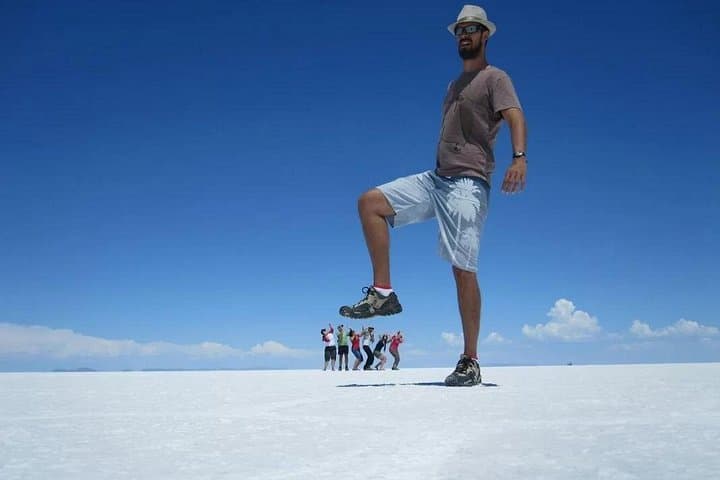
Expect an eight-hour loop by 4×4 with short hikes—an accessible day but at 3,600–3,700 m altitude. Practical guidance is straightforward: the sun is intense and reflections amplify it; temperatures swing from freezing to hot; facilities are basic in Colchani and on the island. Bring layered clothing, sun protection, cash for crafts and snacks, and a guide who knows which seasonal spots will photograph like a mirror and which will reveal tessellated crusts.
moderate.
8 hours.
Light-to-moderate fitness for short hikes and walking at high altitude; comfortable mobility required.
This is an approximately eight-hour shared 4×4 tour with multiple short stops and a guided hike on Incahuasi; expect a gentle pace with time for photos.
Uyuni sits around 3,600–3,700 m; mild symptoms are common—acclimate, hydrate, avoid alcohol before the tour, and mention any history of severe altitude illness to your guide.
Typical inclusions are 4×4 transport, a Spanish-speaking driver-guide, hotel/bus terminal pickup, and lunch; check your booking for English guide options and final inclusions.
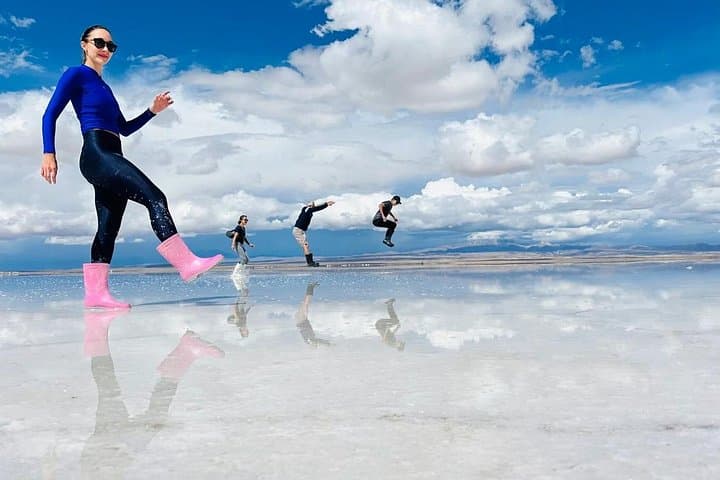
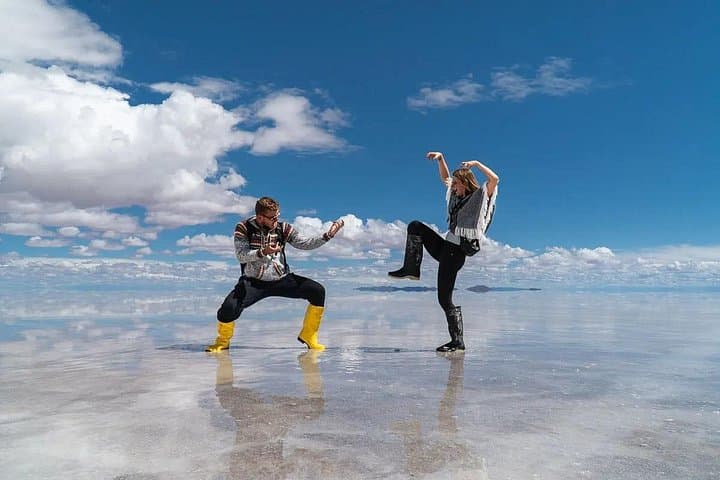
The rainy season (roughly December–March) creates shallow water over the salar and produces the mirror reflection—dry months reveal the cracked, tessellated salt surface.
The area grew during the 19th-century mining era; trains once carried minerals from the Potosí highlands and many locomotives were later abandoned at Uyuni.
Rising interest and lithium exploration put pressure on local ecosystems and salt industries; travel with operators who minimize disturbance and respect community production areas.
Machupicchu Holiday operates guided outdoor trips and adventures with an emphasis on safety, stewardship, and memorable experiences.
Morning light strips the world to white as a 4×4 crunches across Bolivia’s Salar de Uyuni, the largest salt flat on earth. Wind lifts salt grains like a fine spray and the horizon becomes a clean, hard line you can walk toward.
Morning light strips the world to white as a 4×4 crunches across Bolivia’s Salar de Uyuni, the largest salt flat on earth. Wind lifts salt grains like a fine spray and the horizon becomes a clean, hard line you can walk toward.
The day opens at Uyuni’s Train Cemetery, where rusting locomotives speak to the late-19th-century mining boom and the region’s industrial past. A short drive brings you to Colchani, a working salt village where families harvest and process salt in traditional beds and sell llama-wool textiles and carved souvenirs.
Geologically the salar is the drained basin of prehistoric lakes; its thick salt crust hides brine pockets and fossilized sea rock. Incahuasi Island rises from that white plain—an ancient coral reef now crowned by giant cacti and offering 360° views of endless salt and sky. Cultural details thread through the route: roadside artisan tables, the quiet choreography of salt workers, and a museum-hotel that hints at a former era of tourism.
Expect an eight-hour loop by 4×4 with short hikes—an accessible day but at 3,600–3,700 m altitude. Practical guidance is straightforward: the sun is intense and reflections amplify it; temperatures swing from freezing to hot; facilities are basic in Colchani and on the island. Bring layered clothing, sun protection, cash for crafts and snacks, and a guide who knows which seasonal spots will photograph like a mirror and which will reveal tessellated crusts.