
Full-Day Sal Island Tour: Buracona, Pedra de Lume & Shark Bay
A practical full-day loop around Sal that pairs geology with coastal culture — from Palmeira’s working port to Buracona’s Blue Eye and the salt crater at Pedra de Lume. This guided tour blends short walks, shoreline viewing of juvenile lemon sharks and a therapeutic float in volcanic salt pans.
An Adventure In Santa Maria.
A practical full-day loop around Sal that pairs geology with coastal culture — from Palmeira’s working port to Buracona’s Blue Eye and the salt crater at Pedra de Lume. This guided tour blends short walks, shoreline viewing of juvenile lemon sharks and a therapeutic float in volcanic salt pans.
Read the full experience
Salt air hits first — a dry, warm rush off the Atlantic that pushes through car windows as the island unfolds. Travelers begin at Ponta Preta with a quick orientation, then curve along a coastline of black volcanic rock and cobalt bays. Murdeira’s clear shallows glint; Palmeira’s fishing boats creak; Buracona’s Blue Eye waits like a secret reflected in a cave.
Salt air hits first — a dry, warm rush off the Atlantic that pushes through car windows as the island unfolds. Travelers begin at Ponta Preta with a quick orientation, then curve along a coastline of black volcanic rock and cobalt bays. Murdeira’s clear shallows glint; Palmeira’s fishing boats creak; Buracona’s Blue Eye waits like a secret reflected in a cave.
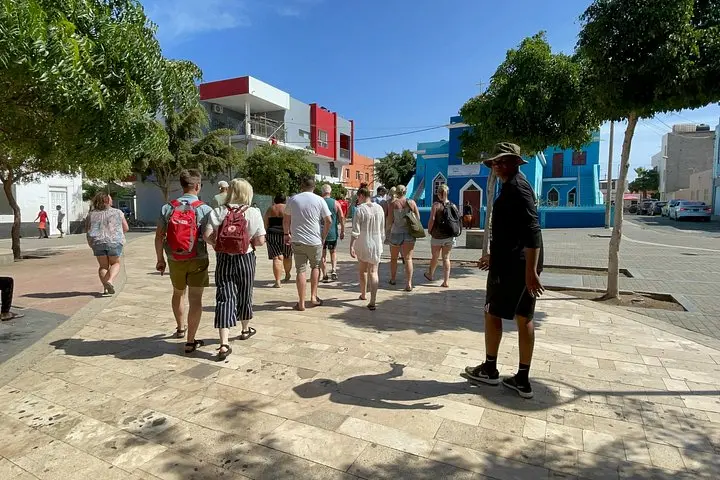
Sal’s story is blunt and practical: volcanic uplift created the flat, arid plain and an extinct crater at Pedra de Lume became a natural salt basin exploited since Portuguese colonial times. The island’s geology is young and brutal — basalt ridges, wind-polished sand and pockets of arable Terra Boa where date palms and small farms persist. Culturally, Sal stitches together Cape Verdean Creole life, fishing traditions and a growing surf-and-kite tourism economy centered in Santa Maria.
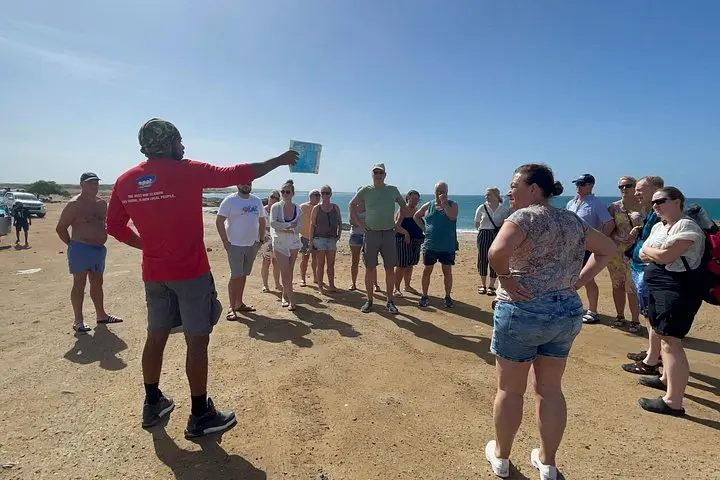
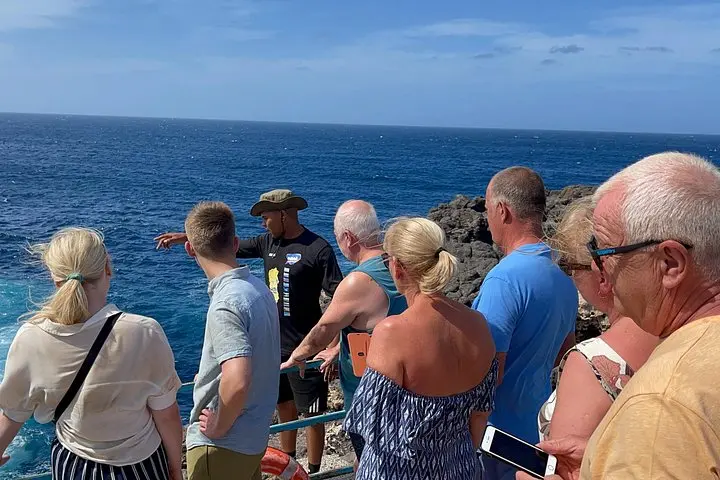
On this guided full-day loop, expect short walks, panoramic viewpoints, a boat or shoreline stop to observe juvenile lemon sharks in Parda Bay, and a float in the buoyant salt pans at Pedra de Lume. The Blue Eye at Buracona is best late morning to early afternoon when sunlight hits the cave.
Practical notes: wear reef shoes for rocky tide edges, bring reef-safe sunscreen and a light wind layer for late-afternoon breezes. Stay hydrated — water is scarce between stops — and listen to guides about marine wildlife etiquette. Hotel pickup and an air-conditioned vehicle make logistics simple; plan for a roughly seven-hour day with moderate mobility required.
Frequently asked questions
The tour is approximately seven hours (420 minutes) and includes hotel pickup and drop-off in an air-conditioned vehicle.
You can observe juvenile lemon sharks in Parda Bay from recommended vantage points; swimming or interacting is done only when guided and considered safe by the operator — follow staff instructions.
Lunch is typically at a local restaurant in Espargos or Santa Maria; inform the operator of dietary restrictions at booking so they can advise or arrange options.
Children are welcome but must be accompanied by an adult; moderate mobility is required for short walks and getting on/off the vehicle — travelers should disclose mobility needs when booking.
About This Experience
Spot Travel Tours operates guided outdoor trips and adventures with an emphasis on safety, stewardship, and memorable experiences.
Adventure tips
Recommended gear
- Reef-safe sunscreen: Protects your skin while minimizing harm to corals and marine life.
- Water shoes: Essential for walking on volcanic rock, tidal pools and boarding small boats.
- Light wind shell or hoodie: Evenings and coastal stretches can be breezy, especially in winter months.
- Small daypack with water bottle: Keeps hydration, camera, and personal items organized during the seven-hour tour.
Photos of the experience
Related adventures & guides
Read the full experience
Salt air hits first — a dry, warm rush off the Atlantic that pushes through car windows as the island unfolds. Travelers begin at Ponta Preta with a quick orientation, then curve along a coastline of black volcanic rock and cobalt bays. Murdeira’s clear shallows glint; Palmeira’s fishing boats creak; Buracona’s Blue Eye waits like a secret reflected in a cave.
Salt air hits first — a dry, warm rush off the Atlantic that pushes through car windows as the island unfolds. Travelers begin at Ponta Preta with a quick orientation, then curve along a coastline of black volcanic rock and cobalt bays. Murdeira’s clear shallows glint; Palmeira’s fishing boats creak; Buracona’s Blue Eye waits like a secret reflected in a cave.
Sal’s story is blunt and practical: volcanic uplift created the flat, arid plain and an extinct crater at Pedra de Lume became a natural salt basin exploited since Portuguese colonial times. The island’s geology is young and brutal — basalt ridges, wind-polished sand and pockets of arable Terra Boa where date palms and small farms persist. Culturally, Sal stitches together Cape Verdean Creole life, fishing traditions and a growing surf-and-kite tourism economy centered in Santa Maria.
On this guided full-day loop, expect short walks, panoramic viewpoints, a boat or shoreline stop to observe juvenile lemon sharks in Parda Bay, and a float in the buoyant salt pans at Pedra de Lume. The Blue Eye at Buracona is best late morning to early afternoon when sunlight hits the cave.
Practical notes: wear reef shoes for rocky tide edges, bring reef-safe sunscreen and a light wind layer for late-afternoon breezes. Stay hydrated — water is scarce between stops — and listen to guides about marine wildlife etiquette. Hotel pickup and an air-conditioned vehicle make logistics simple; plan for a roughly seven-hour day with moderate mobility required.
Make a day of it nearby.
Verified experiences and guided adventures in the surrounding area.