THE ADVENTURE COLLECTIVE® · Independent discovery and booking for outdoor travel

Explore Sal Island in a private full-day tour that hits Pedra de Lume salt pans, Buracona’s Olho Azul and Shark Bay — all with local hospitality and flexible pacing. Perfect for travelers who want an efficient, immersive introduction to Sal’s landscapes and culture.
Explore Sal Island in a private full-day tour that hits Pedra de Lume salt pans, Buracona’s Olho Azul and Shark Bay — all with local hospitality and flexible pacing. Perfect for travelers who want an efficient, immersive introduction to Sal’s landscapes and culture.
You step out of the van and the Atlantic wind takes the heat off your neck, carrying salt and a low hum of distant surf. The road threads across flat white pans and ochre scrub; wind-polished dunes rise on the horizon and a narrow ribbon of reef darkens the sea.
Verified experiences and guided adventures in the surrounding area.
Operated by Logan Tours · Santa Maria, Sal
You step out of the van and the Atlantic wind takes the heat off your neck, carrying salt and a low hum of distant surf. The road threads across flat white pans and ochre scrub; wind-polished dunes rise on the horizon and a narrow ribbon of reef darkens the sea.
Sal Island’s story is plain in the landscape: volcanic uplift shaped the rim, seawater filled an old crater and humans built salt pans here in the 19th century that once shipped tens of thousands of tons of salt. Fishing communities grew around natural harbors like Palmeira, and Espargos became the island’s practical center. The geology is simple and striking — basalt ridges, sand flats and coastal limestone shelves — and the culture follows the sea: relaxed, communal and full of morabeza hospitality.
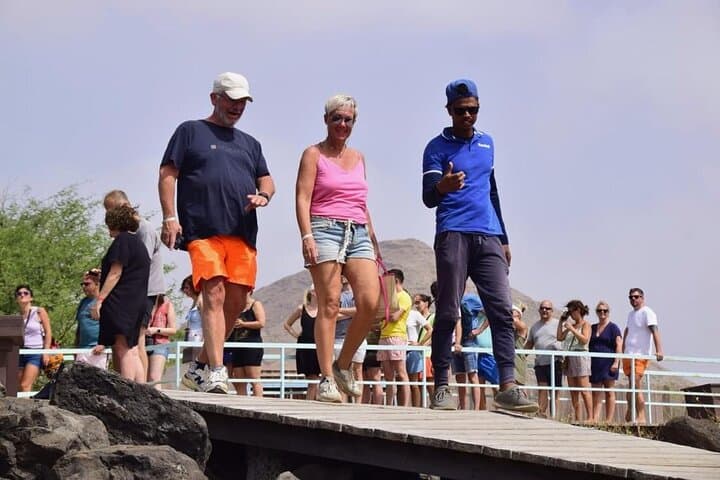
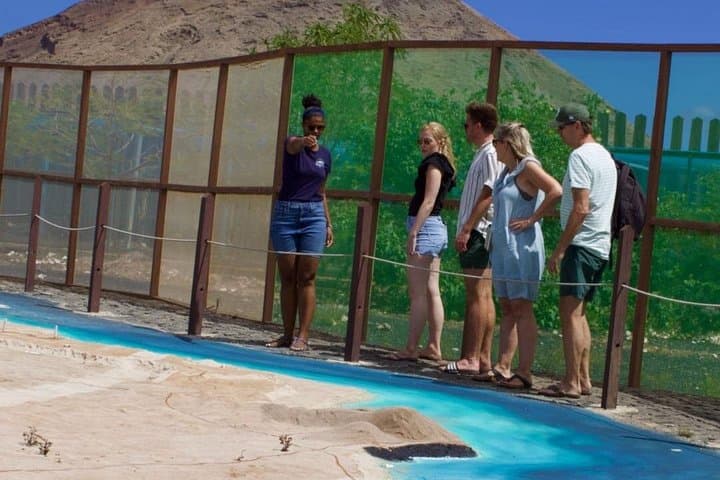
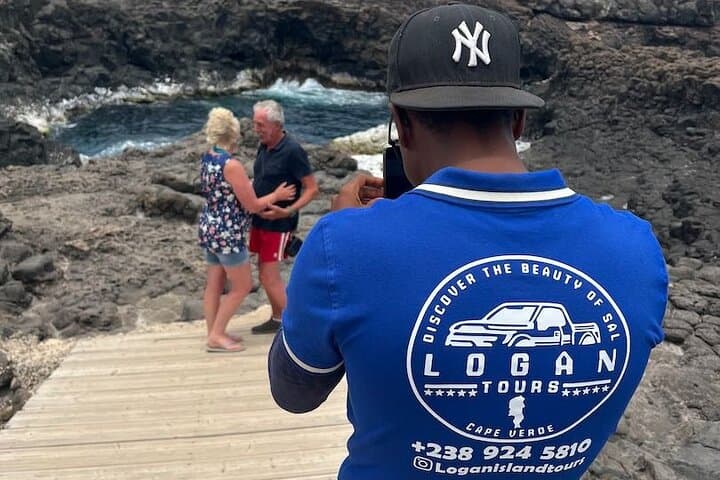
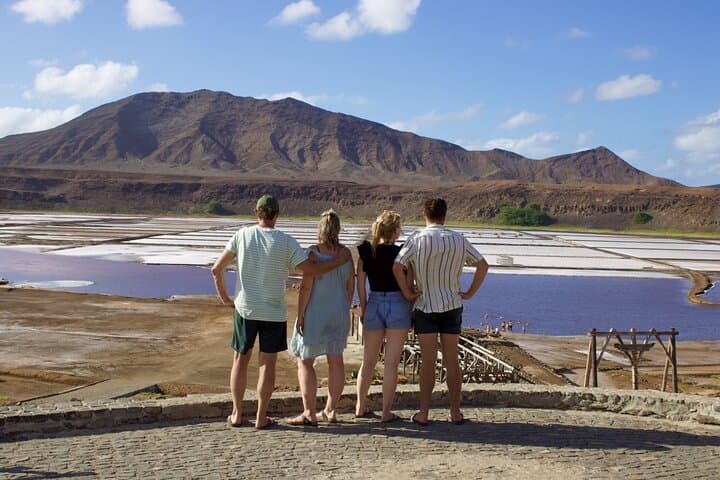
On a private full-day tour you’ll move at your pace: float in the dense saltwater of Pedra de Lume, stand at Buracona’s Olho Azul when the light punches through around midday, scan Baia de Parda (Shark Bay) for lemon sharks, and take a slow walk on the Santa Maria salt flats. Expect easy terrain — paved roads, short rocky viewpoints and a few sandy walks — and typically 6–7 hours on the road, covering roughly 50–80 km depending on stops.
Practical guidance: carry reef shoes for shallow entries, strong sun protection, a refillable water bottle and a light wind layer. Midday is best for Olho Azul’s blue flash; mornings and late afternoons are cooler for driving and photography. The tour is wheelchair- and family-friendly, but bring motion-sickness remedies if you’re sensitive to coastal winding stretches.
easy.
6–7 hours.
Minimal fitness required — mainly a day of short walks and periods of standing; suitable for families and most travelers.
The tour lasts about 6–7 hours, covering coastal and inland highlights with several short stops for walks, photos and optional swims.
Yes — the salt concentration is high and floating is a common stop; bring a towel and biodegradable sunscreen.
Yes — Shark Bay (Baia de Parda) often has small lemon sharks in shallow water and you may spot sea birds and fish along reefs.
Yes — the operator lists wheelchair and stroller accessibility, and the itinerary is paced with short, easy walks.
Sal’s name and early economy were built on salt: Pedra de Lume’s salt pans sit in an old volcanic crater where salt was harvested and exported since the 19th century.
Marine habitats and the fragile dune systems are sensitive — use reef-safe sunscreen, avoid trampling vegetation and follow local guidance when interacting with wildlife.
Logan Tours operates guided outdoor trips and adventures with an emphasis on safety, stewardship, and memorable experiences.
You step out of the van and the Atlantic wind takes the heat off your neck, carrying salt and a low hum of distant surf. The road threads across flat white pans and ochre scrub; wind-polished dunes rise on the horizon and a narrow ribbon of reef darkens the sea.
You step out of the van and the Atlantic wind takes the heat off your neck, carrying salt and a low hum of distant surf. The road threads across flat white pans and ochre scrub; wind-polished dunes rise on the horizon and a narrow ribbon of reef darkens the sea.
Sal Island’s story is plain in the landscape: volcanic uplift shaped the rim, seawater filled an old crater and humans built salt pans here in the 19th century that once shipped tens of thousands of tons of salt. Fishing communities grew around natural harbors like Palmeira, and Espargos became the island’s practical center. The geology is simple and striking — basalt ridges, sand flats and coastal limestone shelves — and the culture follows the sea: relaxed, communal and full of morabeza hospitality.
On a private full-day tour you’ll move at your pace: float in the dense saltwater of Pedra de Lume, stand at Buracona’s Olho Azul when the light punches through around midday, scan Baia de Parda (Shark Bay) for lemon sharks, and take a slow walk on the Santa Maria salt flats. Expect easy terrain — paved roads, short rocky viewpoints and a few sandy walks — and typically 6–7 hours on the road, covering roughly 50–80 km depending on stops.
Practical guidance: carry reef shoes for shallow entries, strong sun protection, a refillable water bottle and a light wind layer. Midday is best for Olho Azul’s blue flash; mornings and late afternoons are cooler for driving and photography. The tour is wheelchair- and family-friendly, but bring motion-sickness remedies if you’re sensitive to coastal winding stretches.