THE ADVENTURE COLLECTIVE® · Independent discovery and booking for outdoor travel

A full-day guided run from Safaga to the Dendera and Abydos temple complexes that pairs well-preserved reliefs, the famed Dendera zodiac and the Abydos King List with an easy, well-supported itinerary. Ideal for history-minded travelers who want a compact look at Upper Egypt’s ancient cult centers.
A full-day guided run from Safaga to the Dendera and Abydos temple complexes that pairs well-preserved reliefs, the famed Dendera zodiac and the Abydos King List with an easy, well-supported itinerary. Ideal for history-minded travelers who want a compact look at Upper Egypt’s ancient cult centers.
The air-conditioned minivan slips away from Safaga at dawn, the Red Sea coast shrinking behind a line of salt flats while the desert hills press toward the horizon. By mid-morning you arrive at Dendera’s low-lying complex, where sandstone walls hold carved figures that stare through millennia and the carved zodiac on the ceiling still draws close inspection.
Verified experiences and guided adventures in the surrounding area.
Operated by Egypt Luxury Trips · Safaga, Red Sea Governorate
The air-conditioned minivan slips away from Safaga at dawn, the Red Sea coast shrinking behind a line of salt flats while the desert hills press toward the horizon. By mid-morning you arrive at Dendera’s low-lying complex, where sandstone walls hold carved figures that stare through millennia and the carved zodiac on the ceiling still draws close inspection.
Dendera and Abydos sit along the fertile fringe of the Nile Valley, where limestone plateaus meet river silts. Dendera’s Temple of Hathor preserves color-filled reliefs and a compact hypostyle hall; Abydos, dedicated to Osiris, reads like a roll call of early pharaohs — the Abydos King List here underlines the site’s political and religious weight. This corridor of temples reflects Pharaonic ritual, Greco-Roman reuse and later protective measures against flood and sand.
Culturally, expect articulate local guides who place goddess cults, funerary rites and relief iconography into context; archaeologists still debate construction phases and the role of subsidiary chapels. The land itself feels patient — wind scours lintels and the desert edges seem to dare travelers to listen closely.
Practically: set out early to avoid the heat, wear sturdy shoes for uneven stone and bring sun protection and water. Entry and lunch are typically included on organized day tours, but carry small change for site donations or museum shop purchases. Photography rules vary by temple area; follow your guide to protect fragile reliefs and preserve the experience for future visitors.
easy.
6 hours.
Suitable for most fitness levels; involves walking on uneven stone and short steps.
Most organized full-day tours include entry fees to Dendera and Abydos; always confirm on booking and keep your ticket stubs.
Expect several hours of combined driving for the round trip—this itinerary is typically a 6‑hour day including guided visits and lunch.
Photography rules vary by chamber—non-flash photos are generally permitted in exterior areas, but follow your guide’s instructions for restricted spaces.
Yes—this tour is classified as easy, but it involves walking on uneven surfaces; bring assistance for those with mobility issues and notify the operator in advance.
Dendera’s main temple honors Hathor and preserves a famed astronomical zodiac, while Abydos grew into a major cult center for Osiris and records an early pharaonic king list important to Egyptology.
Both sites are sensitive to foot traffic and salt weathering; visitors should stay on designated paths, avoid touching reliefs and support licensed guides who follow conservation rules.
Egypt Luxury Trips operates guided outdoor trips and adventures with an emphasis on safety, stewardship, and memorable experiences.
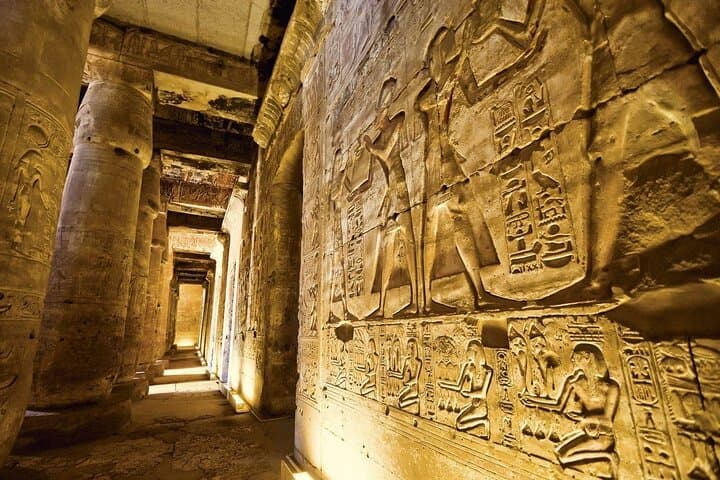
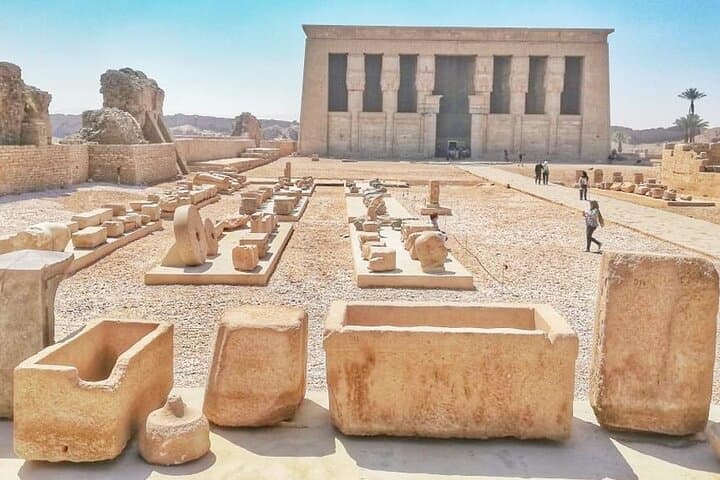
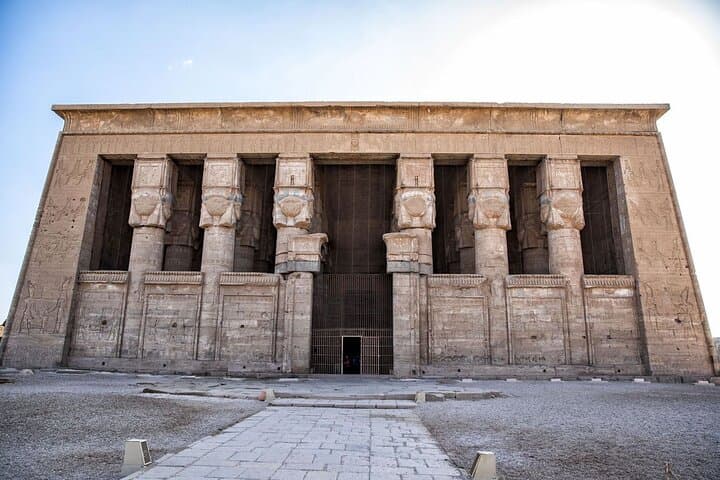
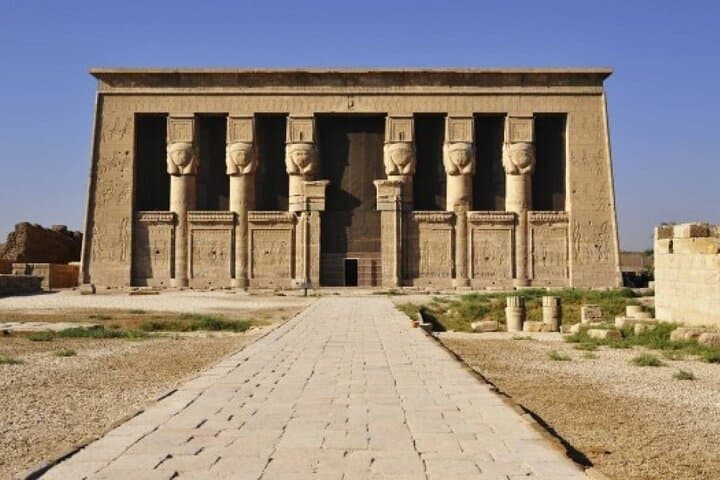
The air-conditioned minivan slips away from Safaga at dawn, the Red Sea coast shrinking behind a line of salt flats while the desert hills press toward the horizon. By mid-morning you arrive at Dendera’s low-lying complex, where sandstone walls hold carved figures that stare through millennia and the carved zodiac on the ceiling still draws close inspection.
The air-conditioned minivan slips away from Safaga at dawn, the Red Sea coast shrinking behind a line of salt flats while the desert hills press toward the horizon. By mid-morning you arrive at Dendera’s low-lying complex, where sandstone walls hold carved figures that stare through millennia and the carved zodiac on the ceiling still draws close inspection.
Dendera and Abydos sit along the fertile fringe of the Nile Valley, where limestone plateaus meet river silts. Dendera’s Temple of Hathor preserves color-filled reliefs and a compact hypostyle hall; Abydos, dedicated to Osiris, reads like a roll call of early pharaohs — the Abydos King List here underlines the site’s political and religious weight. This corridor of temples reflects Pharaonic ritual, Greco-Roman reuse and later protective measures against flood and sand.
Culturally, expect articulate local guides who place goddess cults, funerary rites and relief iconography into context; archaeologists still debate construction phases and the role of subsidiary chapels. The land itself feels patient — wind scours lintels and the desert edges seem to dare travelers to listen closely.
Practically: set out early to avoid the heat, wear sturdy shoes for uneven stone and bring sun protection and water. Entry and lunch are typically included on organized day tours, but carry small change for site donations or museum shop purchases. Photography rules vary by temple area; follow your guide to protect fragile reliefs and preserve the experience for future visitors.