THE ADVENTURE COLLECTIVE® · Independent discovery and booking for outdoor travel

Spend a full day tracing Rio’s skyline from the cable cars of Sugarloaf to the colorful Lapa Steps, historic Paço Imperial and the giant murals of Olympic Boulevard. This private, eight-hour tour blends coastal views, colonial history and modern street art with practical pacing and local insight.
Spend a full day tracing Rio’s skyline from the cable cars of Sugarloaf to the colorful Lapa Steps, historic Paço Imperial and the giant murals of Olympic Boulevard. This private, eight-hour tour blends coastal views, colonial history and modern street art with practical pacing and local insight.
The cable car hums and the city unfolds beneath you: sugar-white beaches, the Atlantic daring you with a bright, restless horizon, and granite domes rising like old guardians. From sea level to Urca and then Sugarloaf Mountain, the climb gives a bracing panorama — the bay sprawled, Corcovado distant — and sets the pace for a day that threads geology, royal history and contemporary street art.
Verified experiences and guided adventures in the surrounding area.
Operated by Claudio Montagna · Rio de Janeiro, Rio de Janeiro
The cable car hums and the city unfolds beneath you: sugar-white beaches, the Atlantic daring you with a bright, restless horizon, and granite domes rising like old guardians. From sea level to Urca and then Sugarloaf Mountain, the climb gives a bracing panorama — the bay sprawled, Corcovado distant — and sets the pace for a day that threads geology, royal history and contemporary street art.
Rio’s story surfaces at the Paço Imperial, where the Portuguese court established a foothold in 1808, and in the ornate façades of the Monastery of Saint Benedict that echo colonial baroque. The Lapa Steps (Escadaria Selarón) are a modern folk chronicle: tiles collected from around the world stitched into a bright public stairway by artist Jorge Selarón. At the Olympic Boulevard the city shows a different face — large-scale murals, including Kobra’s expansive works, turning asphalt into public canvas.
This private, air-conditioned tour balances short walks with drive-time: expect about eight hours total, with multiple stops for photos, a historic café lunch and brief on-foot exploration. Bring sunscreen and a light jacket; the ocean wind can push temperatures and the late-afternoon light is best for photography. Be ready for steps, cobbled streets and occasional crowds in Lapa; pockets should be zipped and phones secure.
Practical rhythms matter: start early to beat haze at Sugarloaf or time the descent for golden hour. A local guide born in the city adds visual and cultural context, turning viewpoints into readable chapters of Rio’s layered history and living culture.
easy.
8 hours.
Suitable for most fitness levels; involves short walks, stairs and standing at viewpoints but no sustained hiking.
Cable car tickets are usually purchased on-site; this tour includes stops but admission is paid at the counter the day of the tour.
Yes — pickup and drop-off from any Rio de Janeiro hotel in the city limits is provided as part of the private tour.
Infants and small children can use strollers for much of the route, but expect steps and short walks at some stops where stroller access may be limited.
Admissions and meals are generally not included; the itinerary notes visits and a meal at Colubus Cafe (from 1894) but tickets and food are arranged and paid on the day.
Rio hosted the Portuguese royal court in 1808, temporarily transforming the city into the capital of the Portuguese empire; Paço Imperial served as an administrative center during that period.
Public art and coastal sites face wear from heavy visitation—respect fenced areas and local signage; conservation of Atlantic Forest fragments near the city relies on protected parks and reduced visitor impact.
Claudio Montagna operates guided outdoor trips and adventures with an emphasis on safety, stewardship, and memorable experiences.

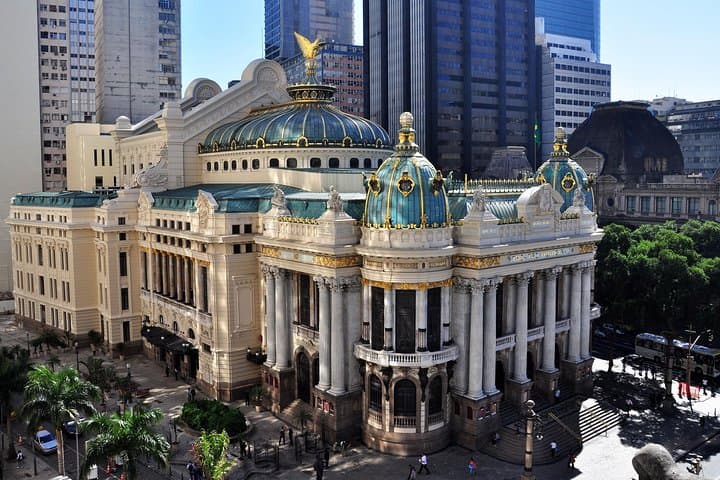


The cable car hums and the city unfolds beneath you: sugar-white beaches, the Atlantic daring you with a bright, restless horizon, and granite domes rising like old guardians. From sea level to Urca and then Sugarloaf Mountain, the climb gives a bracing panorama — the bay sprawled, Corcovado distant — and sets the pace for a day that threads geology, royal history and contemporary street art.
The cable car hums and the city unfolds beneath you: sugar-white beaches, the Atlantic daring you with a bright, restless horizon, and granite domes rising like old guardians. From sea level to Urca and then Sugarloaf Mountain, the climb gives a bracing panorama — the bay sprawled, Corcovado distant — and sets the pace for a day that threads geology, royal history and contemporary street art.
Rio’s story surfaces at the Paço Imperial, where the Portuguese court established a foothold in 1808, and in the ornate façades of the Monastery of Saint Benedict that echo colonial baroque. The Lapa Steps (Escadaria Selarón) are a modern folk chronicle: tiles collected from around the world stitched into a bright public stairway by artist Jorge Selarón. At the Olympic Boulevard the city shows a different face — large-scale murals, including Kobra’s expansive works, turning asphalt into public canvas.
This private, air-conditioned tour balances short walks with drive-time: expect about eight hours total, with multiple stops for photos, a historic café lunch and brief on-foot exploration. Bring sunscreen and a light jacket; the ocean wind can push temperatures and the late-afternoon light is best for photography. Be ready for steps, cobbled streets and occasional crowds in Lapa; pockets should be zipped and phones secure.
Practical rhythms matter: start early to beat haze at Sugarloaf or time the descent for golden hour. A local guide born in the city adds visual and cultural context, turning viewpoints into readable chapters of Rio’s layered history and living culture.