THE ADVENTURE COLLECTIVE® · Independent discovery and booking for outdoor travel

See Rano Kau’s crater, the Rano Raraku quarry and Ahu Tongariki in one full day. This guided route pairs geology, living culture and careful park practices to maximize your time on Rapa Nui.
See Rano Kau’s crater, the Rano Raraku quarry and Ahu Tongariki in one full day. This guided route pairs geology, living culture and careful park practices to maximize your time on Rapa Nui.
You step out onto the wind-scoured plaza of Hanga Roa and the ocean immediately takes the lead — a flat sheet of pale blue that pushes toward the island's eastern cliffs. The guide gathers the small group by the Catholic church while traffic hums low and the smell of baked bread drifts from a nearby shop. From here the day unfolds across volcanic rims, quarry slopes and the long, slow faces of moai.
Verified experiences and guided adventures in the surrounding area.
Operated by RAPA NUI DREAM · Hanga Roa, Valparaíso
You step out onto the wind-scoured plaza of Hanga Roa and the ocean immediately takes the lead — a flat sheet of pale blue that pushes toward the island's eastern cliffs. The guide gathers the small group by the Catholic church while traffic hums low and the smell of baked bread drifts from a nearby shop. From here the day unfolds across volcanic rims, quarry slopes and the long, slow faces of moai.
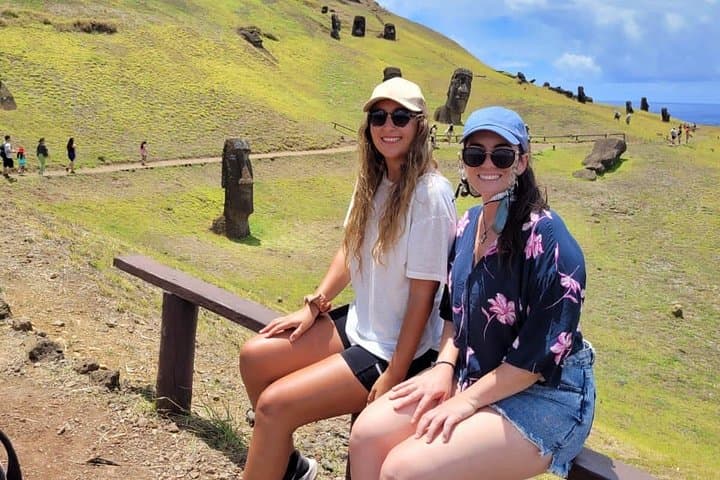
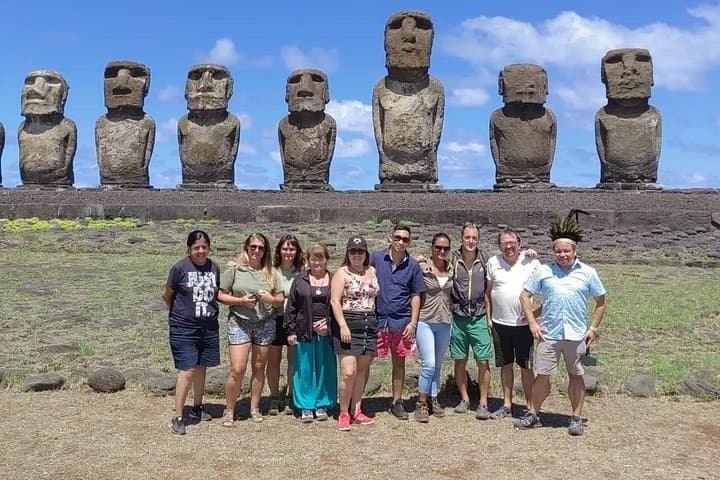
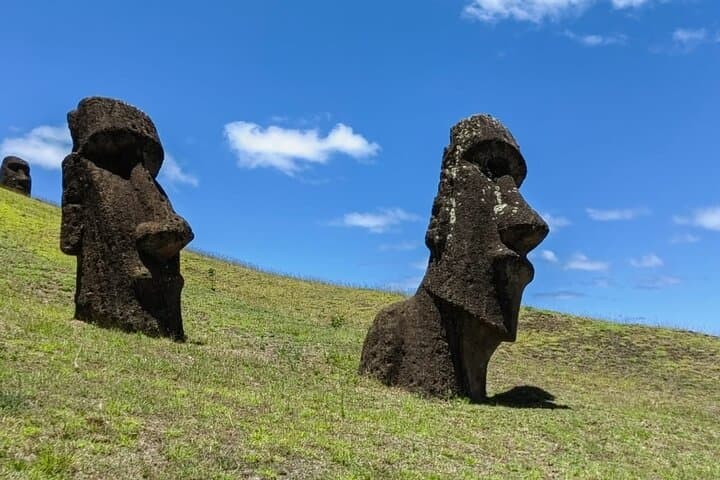
Geology on Rapa Nui is blunt and readable: basalt flows, tuff cones and collapsed craters form the island’s spine. Rano Kau's rim offers a crater lake ringed by sea birds and the ceremonial village of Orongo, home to the 19th-century birdman ritual. At Rano Raraku you'll see hundreds of moai — carved from tuff and left in various stages of completion — which tell a story of skilled quarrying and human movement across the island. Ahu Tongariki presents Polynesian engineering at scale: 15 restored statues anchoring a massive stone platform. Akivi’s seven moai face the sea, a reminder of shifting cosmology and navigation knowledge.
Practicalities matter: this is a 7–8 hour excursion with uneven trails, short steep sections and exposed viewpoints. Bring sun protection, plenty of water and a camera with extra battery; wear closed shoes with good grip. Purchase the national park ticket before the tour or in advance at Ma'u Henua, and respect fenced areas — guides emphasize low-impact visitation to protect fragile archaeology. Expect frequent photo stops, short walks, and a paced rhythm that alternates explanation with silent observation. By day’s end you'll have a clear sense of why Rapa Nui's stone faces continue to hold attention — not as relics, but as active elements in a living island culture.
moderate.
7–8 hours.
Moderate fitness needed — able to walk several short trails, stand for photo stops and handle uneven ground.
Yes — you must have the ticket before the first site; purchase in person at Ma'u Henua or online to avoid delaying the group.
Yes, the tour includes a provided lunch; notify the operator in advance about allergies or dietary restrictions.
Children can join but infants must sit on laps; sites have uneven terrain and some short steep sections, so it’s not recommended for those with significant mobility challenges.
Basic restroom facilities are available near main sites and in Hanga Roa; bring hand sanitizer and limited cash for small purchases.
Rapa Nui was settled by Polynesian voyagers centuries ago; its moaiculture and later birdman ceremonies at Orongo reflect complex island societies and ritual competition.
Most archaeological zones are within Rapa Nui National Park; visitors must remain on marked paths, carry out waste and follow guide instructions to minimize erosion and cultural damage.
RAPA NUI DREAM operates guided outdoor trips and adventures with an emphasis on safety, stewardship, and memorable experiences.

You step out onto the wind-scoured plaza of Hanga Roa and the ocean immediately takes the lead — a flat sheet of pale blue that pushes toward the island's eastern cliffs. The guide gathers the small group by the Catholic church while traffic hums low and the smell of baked bread drifts from a nearby shop. From here the day unfolds across volcanic rims, quarry slopes and the long, slow faces of moai.
You step out onto the wind-scoured plaza of Hanga Roa and the ocean immediately takes the lead — a flat sheet of pale blue that pushes toward the island's eastern cliffs. The guide gathers the small group by the Catholic church while traffic hums low and the smell of baked bread drifts from a nearby shop. From here the day unfolds across volcanic rims, quarry slopes and the long, slow faces of moai.
Geology on Rapa Nui is blunt and readable: basalt flows, tuff cones and collapsed craters form the island’s spine. Rano Kau's rim offers a crater lake ringed by sea birds and the ceremonial village of Orongo, home to the 19th-century birdman ritual. At Rano Raraku you'll see hundreds of moai — carved from tuff and left in various stages of completion — which tell a story of skilled quarrying and human movement across the island. Ahu Tongariki presents Polynesian engineering at scale: 15 restored statues anchoring a massive stone platform. Akivi’s seven moai face the sea, a reminder of shifting cosmology and navigation knowledge.
Practicalities matter: this is a 7–8 hour excursion with uneven trails, short steep sections and exposed viewpoints. Bring sun protection, plenty of water and a camera with extra battery; wear closed shoes with good grip. Purchase the national park ticket before the tour or in advance at Ma'u Henua, and respect fenced areas — guides emphasize low-impact visitation to protect fragile archaeology. Expect frequent photo stops, short walks, and a paced rhythm that alternates explanation with silent observation. By day’s end you'll have a clear sense of why Rapa Nui's stone faces continue to hold attention — not as relics, but as active elements in a living island culture.