THE ADVENTURE COLLECTIVE® · Independent discovery and booking for outdoor travel

An early-morning, high-altitude day trip from Cusco to Vinicunca (Rainbow Mountain). Expect a challenging walk above 4,800–5,200 m, local Quechua culture, and striking mineral stripes—plan for altitude, sun, and cold winds.
An early-morning, high-altitude day trip from Cusco to Vinicunca (Rainbow Mountain). Expect a challenging walk above 4,800–5,200 m, local Quechua culture, and striking mineral stripes—plan for altitude, sun, and cold winds.
Dawn arrives before the bus leaves Cusco; headlights cut through the thin Andean air as the road climbs toward pale ridgelines. By the time walkers unload near the trailhead the sky is a hard, high blue and the mountain’s stripes—reds, ochres, greens—begin to reveal themselves like layers of Earth put on display. The wind here has a voice, pushing cold and clear across the moraine, and the snow-capped peak of Ausangate watches the valley like an old guardian.
Verified experiences and guided adventures in the surrounding area.
Operated by Illa Kuntur Travel Agency · Cusco, Cusco Region
Dawn arrives before the bus leaves Cusco; headlights cut through the thin Andean air as the road climbs toward pale ridgelines. By the time walkers unload near the trailhead the sky is a hard, high blue and the mountain’s stripes—reds, ochres, greens—begin to reveal themselves like layers of Earth put on display. The wind here has a voice, pushing cold and clear across the moraine, and the snow-capped peak of Ausangate watches the valley like an old guardian.
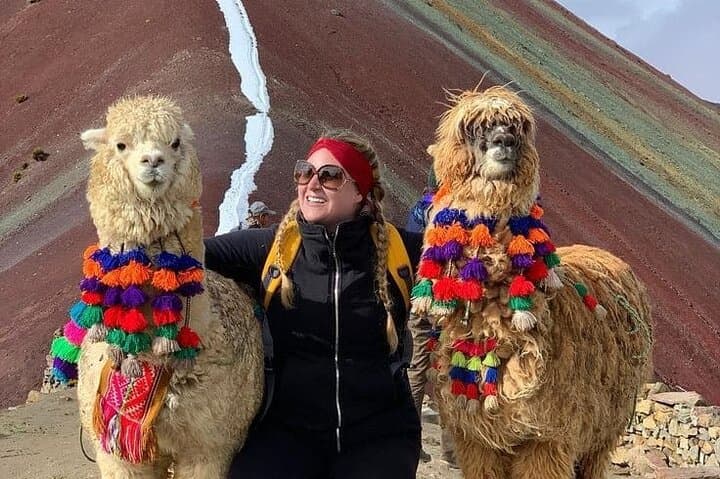
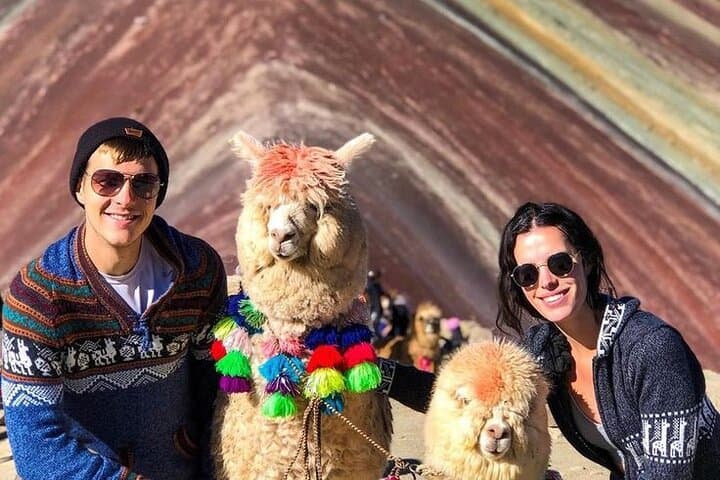
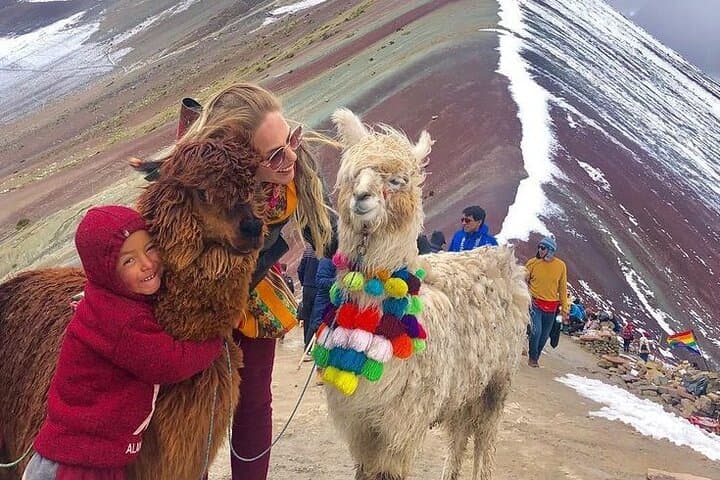
Geologically the colors are iron and copper oxides, a story of uplift and glacial erosion exposed over millions of years. Culturally the slopes belong to Quechua communities who herd llamas and alpacas and maintain alpaca pastures and stone corrals; you’ll see handmade canes and local textiles along the route. Historically the region sits within the high Andean landscape shaped by pre-Columbian and colonial pastoral patterns and ongoing indigenous stewardship.
Practically, expect a 2–3 hour round-trip walk from the trailhead at roughly 4,800–5,200 m elevation. Guides brief groups, provide trekking poles and portable oxygen, and the operator includes pickup from Cusco, breakfast, and lunch. Altitude is the central challenge—pace yourself, drink water, and take breaks; the climb can feel steep even for fit hikers. Wear sturdy boots, warm layers, and sun protection; consider arriving in Cusco one or two days early to acclimatize. Photographers should plan for strong side light mid-morning; afternoons can cloud over rapidly. The experience is straightforward but high: respect the land, give livestock room, and be ready for thin air and unforgettable views.
challenging.
9 hours (approx).
Good cardiovascular fitness recommended; regular walkers comfortable on uphill hikes will fare better, and prior acclimatization is strongly advised.
Vinicunca sits around 4,800–5,200 m depending on the viewpoint; altitude affects many visitors—acclimatize, drink water, move slowly, and consider portable oxygen if you have prior sensitivity.
The on‑foot portion is roughly 2 hours up and 1 hour down for most visitors, though times vary with fitness and weather.
Horses or mule rides are sometimes offered locally for parts of the ascent; availability varies and riders should be comfortable and pay attention to animal welfare and saddle safety.
Typical inclusions are hotel pickup, transportation, breakfast, lunch, bottled water, guide, trekking poles, first aid kit, and sometimes portable oxygen.
The area lies within traditional Quechua grazing lands; the colorful strata are sedimentary layers exposed by Andean uplift and glacial action over millions of years.
High visitor numbers strain fragile high‑altitude vegetation and trails; stick to paths, pack out litter, and choose guides who support local communities.
Illa Kuntur Travel Agency operates guided outdoor trips and adventures with an emphasis on safety, stewardship, and memorable experiences.
Dawn arrives before the bus leaves Cusco; headlights cut through the thin Andean air as the road climbs toward pale ridgelines. By the time walkers unload near the trailhead the sky is a hard, high blue and the mountain’s stripes—reds, ochres, greens—begin to reveal themselves like layers of Earth put on display. The wind here has a voice, pushing cold and clear across the moraine, and the snow-capped peak of Ausangate watches the valley like an old guardian.
Dawn arrives before the bus leaves Cusco; headlights cut through the thin Andean air as the road climbs toward pale ridgelines. By the time walkers unload near the trailhead the sky is a hard, high blue and the mountain’s stripes—reds, ochres, greens—begin to reveal themselves like layers of Earth put on display. The wind here has a voice, pushing cold and clear across the moraine, and the snow-capped peak of Ausangate watches the valley like an old guardian.
Geologically the colors are iron and copper oxides, a story of uplift and glacial erosion exposed over millions of years. Culturally the slopes belong to Quechua communities who herd llamas and alpacas and maintain alpaca pastures and stone corrals; you’ll see handmade canes and local textiles along the route. Historically the region sits within the high Andean landscape shaped by pre-Columbian and colonial pastoral patterns and ongoing indigenous stewardship.
Practically, expect a 2–3 hour round-trip walk from the trailhead at roughly 4,800–5,200 m elevation. Guides brief groups, provide trekking poles and portable oxygen, and the operator includes pickup from Cusco, breakfast, and lunch. Altitude is the central challenge—pace yourself, drink water, and take breaks; the climb can feel steep even for fit hikers. Wear sturdy boots, warm layers, and sun protection; consider arriving in Cusco one or two days early to acclimatize. Photographers should plan for strong side light mid-morning; afternoons can cloud over rapidly. The experience is straightforward but high: respect the land, give livestock room, and be ready for thin air and unforgettable views.