THE ADVENTURE COLLECTIVE® · Independent discovery and booking for outdoor travel

Climb to the top of Vinicunca for a one-of-a-kind alpine spectacle: mineral bands of color cut across high-Andean slopes. This full-day tour from Cusco combines challenging uphill walking, cultural context and practical services like oxygen and a buffet lunch.
Climb to the top of Vinicunca for a one-of-a-kind alpine spectacle: mineral bands of color cut across high-Andean slopes. This full-day tour from Cusco combines challenging uphill walking, cultural context and practical services like oxygen and a buffet lunch.
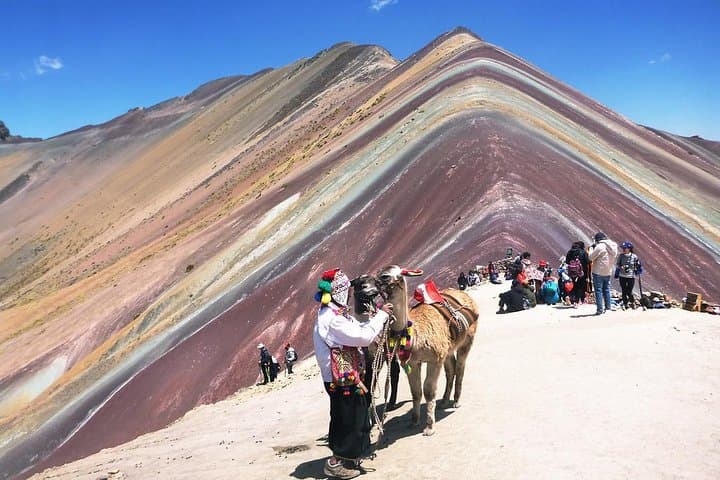
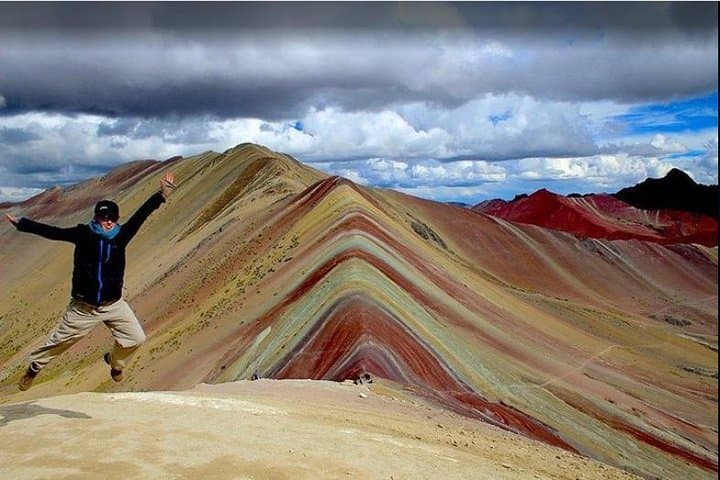
A cold wind brushes across a high puna plain as the bus pulls up to the trailhead and you step out into thin air — the sky feels closer here. Vinicunca, commonly called Rainbow Mountain, rises ahead in bands of iron-rich ochres, rusts and mint greens, a geological stripe that dares hikers to climb to roughly 5,100–5,200 meters for the payoff: an unhindered sweep of color and Andean plateau below.
Verified experiences and guided adventures in the surrounding area.
Operated by Machupicchu cusco · Cusco, Cusco Region
A cold wind brushes across a high puna plain as the bus pulls up to the trailhead and you step out into thin air — the sky feels closer here. Vinicunca, commonly called Rainbow Mountain, rises ahead in bands of iron-rich ochres, rusts and mint greens, a geological stripe that dares hikers to climb to roughly 5,100–5,200 meters for the payoff: an unhindered sweep of color and Andean plateau below.
The colors are the work of sedimentary layers uplifted by the Ausangate range and altered by mineral oxidation over millennia. The mountain sits within Quechua-speaking communities whose herding and pilgrimage practices link to Ausangate, a sacred Apu. Expect puna grasses, scattered livestock, and stone cairns marking ancestral paths as cultural waypoints.
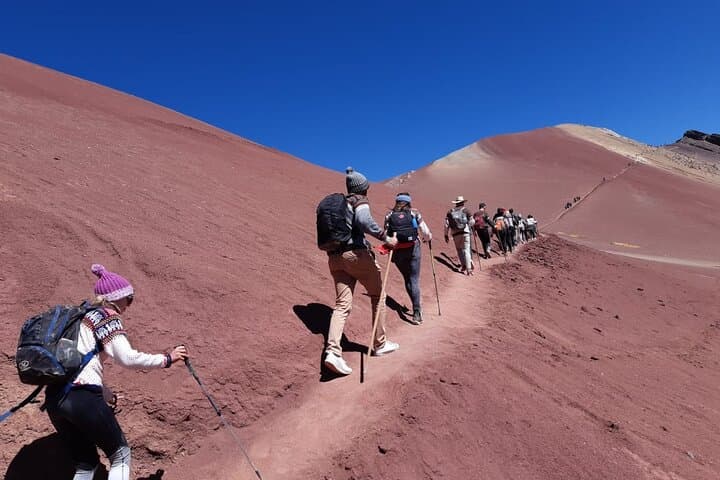
Practically, the standard group tour is a long day (around 10–12 hours door-to-door). From Cusco you’ll drive into highlands, stop at viewpoints and acclimatize briefly, then hike a steep, rocky trail roughly 3–4 km one-way with about 400–600 m of net elevation gain depending on the trailhead. Oxygen assistance and a buffet lunch are commonly provided on commercial tours; guides manage pacing and local context.
Plan for strong sun, rapid weather shifts and slow breathing; use layered clothing, break often, and keep hydration and snacks near. Trails are exposed at the summit; stick to established paths to protect fragile soils. For travelers who handle altitude and steady uphill walking, the reward is raw high-Andean scenery and that surreal ribboned slope that feels almost painted on the mountain’s face.
challenging.
10–12 hours (full day).
Should be in good aerobic shape for continuous uphill hiking at high altitude; regular walkers who can sustain steady climbs will fare best.
The summit area is around 5,100–5,200 m (16,700–17,100 ft); many visitors feel shortness of breath and fatigue — acclimatize in Cusco, ascend slowly, and consider oxygen assistance if you have prior issues.
Typical uphill hike is about 3–4 km one-way with 400–600 m of elevation gain depending on trailhead; the grade is steady and can be steep in sections.
Guided tours usually include breakfast, a buffet lunch, and portable toilets at rest stops, but facilities are basic — bring hand sanitizer and small cash for snacks.
Most operators require moderate fitness; the tour is not recommended for people with serious heart or respiratory conditions due to altitude and exertion.
Vinicunca sits on migration routes below Ausangate, an Apu (sacred mountain) in Quechua cosmology; local communities have herded these highlands for centuries.
The area’s fragile soils and sparse vegetation recover slowly; stick to marked trails, avoid trampling vegetation and carry out all waste to reduce impact.
Machupicchu cusco operates guided outdoor trips and adventures with an emphasis on safety, stewardship, and memorable experiences.
A cold wind brushes across a high puna plain as the bus pulls up to the trailhead and you step out into thin air — the sky feels closer here. Vinicunca, commonly called Rainbow Mountain, rises ahead in bands of iron-rich ochres, rusts and mint greens, a geological stripe that dares hikers to climb to roughly 5,100–5,200 meters for the payoff: an unhindered sweep of color and Andean plateau below.
A cold wind brushes across a high puna plain as the bus pulls up to the trailhead and you step out into thin air — the sky feels closer here. Vinicunca, commonly called Rainbow Mountain, rises ahead in bands of iron-rich ochres, rusts and mint greens, a geological stripe that dares hikers to climb to roughly 5,100–5,200 meters for the payoff: an unhindered sweep of color and Andean plateau below.
The colors are the work of sedimentary layers uplifted by the Ausangate range and altered by mineral oxidation over millennia. The mountain sits within Quechua-speaking communities whose herding and pilgrimage practices link to Ausangate, a sacred Apu. Expect puna grasses, scattered livestock, and stone cairns marking ancestral paths as cultural waypoints.
Practically, the standard group tour is a long day (around 10–12 hours door-to-door). From Cusco you’ll drive into highlands, stop at viewpoints and acclimatize briefly, then hike a steep, rocky trail roughly 3–4 km one-way with about 400–600 m of net elevation gain depending on the trailhead. Oxygen assistance and a buffet lunch are commonly provided on commercial tours; guides manage pacing and local context.
Plan for strong sun, rapid weather shifts and slow breathing; use layered clothing, break often, and keep hydration and snacks near. Trails are exposed at the summit; stick to established paths to protect fragile soils. For travelers who handle altitude and steady uphill walking, the reward is raw high-Andean scenery and that surreal ribboned slope that feels almost painted on the mountain’s face.