THE ADVENTURE COLLECTIVE® · Independent discovery and booking for outdoor travel

A full-day guided trek to Vinicunca (Rainbow Mountain) from Cusco that climbs to 5,036 m, offers geological marvels and cultural encounters, and includes breakfast, lunch, trekking poles and optional oxygen. Ideal for acclimatized hikers ready for a long, high-altitude day.
A full-day guided trek to Vinicunca (Rainbow Mountain) from Cusco that climbs to 5,036 m, offers geological marvels and cultural encounters, and includes breakfast, lunch, trekking poles and optional oxygen. Ideal for acclimatized hikers ready for a long, high-altitude day.
You leave Cusco before dawn, the city’s orange roofs shrinking as the van climbs into puna grasslands and the air thins. By first light the Andes open up: black volcanic ridges, pale moraines and herds of llamas dotting the slopes. The trailhead at Phullawasipata (about 4,626 m) is a raw, wind-cut place where guides help adjust layers and hand out oxygen if you need it.
Verified experiences and guided adventures in the surrounding area.
Operated by Chaska Andina Travel · Cusco, Cusco Region
You leave Cusco before dawn, the city’s orange roofs shrinking as the van climbs into puna grasslands and the air thins. By first light the Andes open up: black volcanic ridges, pale moraines and herds of llamas dotting the slopes. The trailhead at Phullawasipata (about 4,626 m) is a raw, wind-cut place where guides help adjust layers and hand out oxygen if you need it.
Geology here reads like a vertical page of Earth’s history — mineral-rich sediments folded and uplifted by the Vilcanota range. Iron oxides give reds and browns, copper creates greens, and weathering reveals the banded “rainbow” face that shot to fame only in recent years. The area is within traditional Quechua territory; shepherds and farmers still move with the seasons and often appear in bright woven clothing, a living thread of local culture.
Expect 1.5–2 hours of steady climbing to reach Vinicunca’s highest viewpoint (around 5,036 m), and roughly 1.5 hours descending the same route. The company provides breakfast, lunch, trekking poles and optional oxygen, plus hotel pickup early in the morning. Practical priorities are simple: acclimatize in Cusco for 24–48 hours, drink frequently, and layer for wind and sun. Sturdy boots and a slow pace make the difference at altitude. Photography windows are short — plan your summit stop for clear-sky shots, then head down while you still feel steady. Return to Cusco late afternoon, with a long day’s worth of high-Andean landscapes and sharp, memorable views.
challenging.
12–13 hours.
Should be in good aerobic shape; able to walk 2–3 hours at a steady, slow pace on uneven, high-altitude terrain.
The guided itinerary is a long day (about 12–13 hours round trip including transport); the trailhead is ~4,626 m and the main viewpoint is around 5,036 m.
Physically active beginners can do it if adequately acclimatized and willing to move slowly; the altitude makes it more demanding than distance alone suggests.
Typical inclusions are hotel pickup, breakfast, lunch, trekking poles, guide (English/Spanish/Portuguese) and optional oxygen assistance; confirm specifics with the operator.
Yes — bring extra batteries since cold drains power faster; be prepared for brief photo stops due to wind and exposure.
The site sits within Quechua-speaking communities of the Vilcanota range; mining and pastoralism have shaped settlement patterns here for centuries, and tourism is a recent addition.
High visitor numbers have raised erosion and waste concerns; stick to marked paths, pack out trash, and respect local grazing areas to minimize impact.
Chaska Andina Travel operates guided outdoor trips and adventures with an emphasis on safety, stewardship, and memorable experiences.
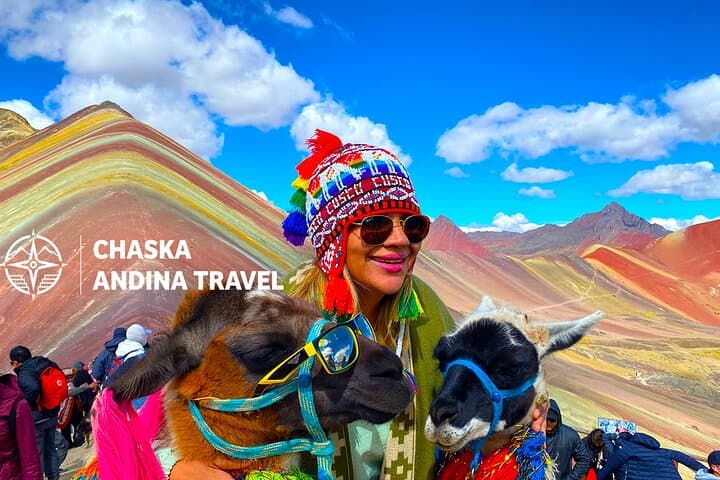


You leave Cusco before dawn, the city’s orange roofs shrinking as the van climbs into puna grasslands and the air thins. By first light the Andes open up: black volcanic ridges, pale moraines and herds of llamas dotting the slopes. The trailhead at Phullawasipata (about 4,626 m) is a raw, wind-cut place where guides help adjust layers and hand out oxygen if you need it.
You leave Cusco before dawn, the city’s orange roofs shrinking as the van climbs into puna grasslands and the air thins. By first light the Andes open up: black volcanic ridges, pale moraines and herds of llamas dotting the slopes. The trailhead at Phullawasipata (about 4,626 m) is a raw, wind-cut place where guides help adjust layers and hand out oxygen if you need it.
Geology here reads like a vertical page of Earth’s history — mineral-rich sediments folded and uplifted by the Vilcanota range. Iron oxides give reds and browns, copper creates greens, and weathering reveals the banded “rainbow” face that shot to fame only in recent years. The area is within traditional Quechua territory; shepherds and farmers still move with the seasons and often appear in bright woven clothing, a living thread of local culture.
Expect 1.5–2 hours of steady climbing to reach Vinicunca’s highest viewpoint (around 5,036 m), and roughly 1.5 hours descending the same route. The company provides breakfast, lunch, trekking poles and optional oxygen, plus hotel pickup early in the morning. Practical priorities are simple: acclimatize in Cusco for 24–48 hours, drink frequently, and layer for wind and sun. Sturdy boots and a slow pace make the difference at altitude. Photography windows are short — plan your summit stop for clear-sky shots, then head down while you still feel steady. Return to Cusco late afternoon, with a long day’s worth of high-Andean landscapes and sharp, memorable views.