THE ADVENTURE COLLECTIVE® · Independent discovery and booking for outdoor travel

Climb from high puna grasslands to the color-banded ridge of Vinicunca (Rainbow Mountain) on a full-day trek from Cusco. Expect steep, high-altitude terrain, sweeping views of Ausangate, and close encounters with Andean village life.
Climb from high puna grasslands to the color-banded ridge of Vinicunca (Rainbow Mountain) on a full-day trek from Cusco. Expect steep, high-altitude terrain, sweeping views of Ausangate, and close encounters with Andean village life.
At first light the bus drops you into high puna grasslands and a thin, biting air. The trail to Rainbow Mountain climbs out of a red-valley bowl, the slope steep and gravelly, with the Ausangate massif—white and glaciated—watching from the skyline. Wind pushes at you; the sun hits hard; color bands of iron-rich sediment cut across the ridge like paint dragged across stone.
Verified experiences and guided adventures in the surrounding area.
Operated by Trip Inka Town · Cusco, Cusco Region
At first light the bus drops you into high puna grasslands and a thin, biting air. The trail to Rainbow Mountain climbs out of a red-valley bowl, the slope steep and gravelly, with the Ausangate massif—white and glaciated—watching from the skyline. Wind pushes at you; the sun hits hard; color bands of iron-rich sediment cut across the ridge like paint dragged across stone.
Geology here is blunt and immediate: uplifted sedimentary layers stained by minerals (iron, copper, sulfates) create the stripes that give Vinicunca its name. The route runs through traditional Quechua territory—herders, corrals, and low stone buildings—so cultural notes come easy: llamas and alpacas grazing, villagers in woven garments, and local reverence for Ausangate as an Apu (sacred mountain).
Expect a 10–12 hour day that includes private transport from Cusco, breakfast, lunch, and entrance fees. The hike is roughly 6–8 km round-trip with 400–600 m of elevation gain depending on starting point; the summit sits around 5,100–5,200 m above sea level. Terrain alternates between rocky switchbacks, loose scree, and packed dirt; footing can be unstable after rain.
Practical guide: acclimatize in Cusco (24–48 hours minimum), carry 2–3 liters of water, wear layered clothing for sun, wind, and cold, and use trekking poles for steep sections. If you feel dizzy or nauseous, descend immediately—oxygen and a first-aid kit are commonly available on guided tours. Timing is everything: arrive early to avoid crowds, maximize visibility, and get the clearest views of the colored strata and the towering Ausangate behind it.
challenging.
11–12 hours.
Participants should have good cardiovascular fitness and be comfortable hiking at high altitude for several hours.
Most groups spend 10–12 hours door-to-door; the walk is 6–8 km round-trip with 400–600 m elevation gain, strenuous mainly because of altitude rather than technical terrain.
Yes—spend at least 24–48 hours in Cusco with low exertion beforehand; symptoms of AMS should be taken seriously and prompt descent.
The site is accessible year-round but the wet season (Dec–Mar) brings rain, clouds, and occasional trail closures; dry season (May–Sep) offers the most reliable views.
Many guided tours include transport, entrance fees, breakfast, and lunch—confirm specifics with your operator before booking.
Ausangate has long been an Apu (sacred mountain) in Quechua cosmology; nearby communities maintain traditional herding and weaving practices that predate Spanish arrival.
The puna ecosystem is fragile—stick to marked trails, avoid disturbing grazing livestock, and support community-based guides who reinvest in local conservation.
Trip Inka Town operates guided outdoor trips and adventures with an emphasis on safety, stewardship, and memorable experiences.
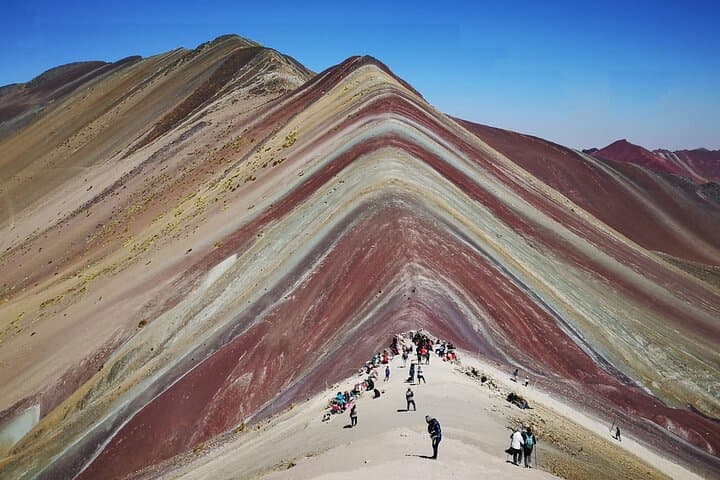
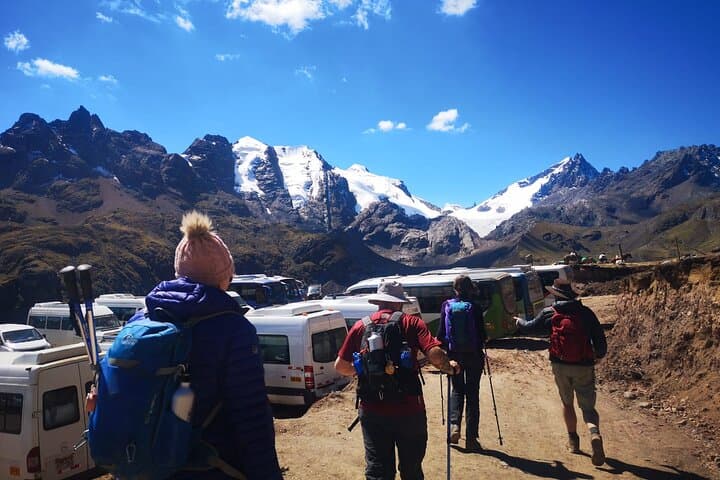
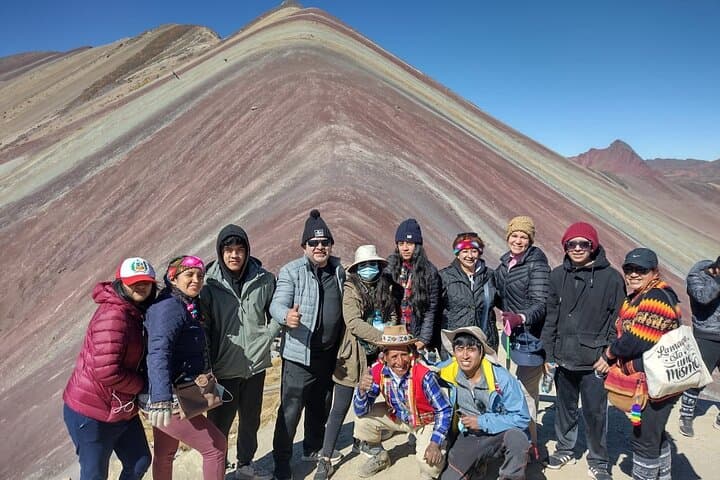
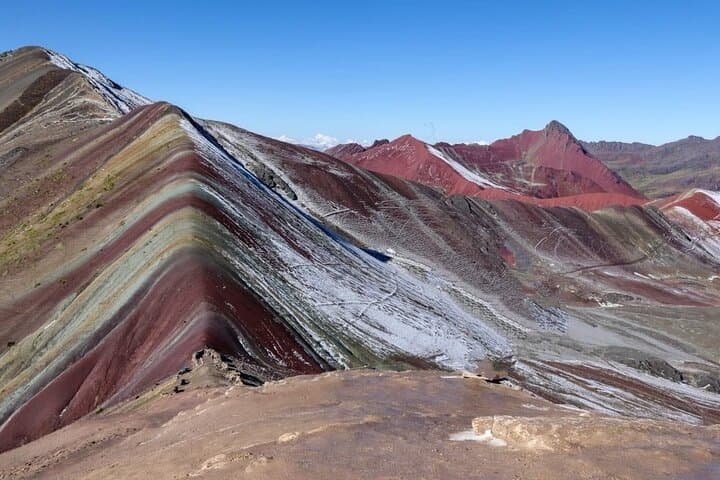
At first light the bus drops you into high puna grasslands and a thin, biting air. The trail to Rainbow Mountain climbs out of a red-valley bowl, the slope steep and gravelly, with the Ausangate massif—white and glaciated—watching from the skyline. Wind pushes at you; the sun hits hard; color bands of iron-rich sediment cut across the ridge like paint dragged across stone.
At first light the bus drops you into high puna grasslands and a thin, biting air. The trail to Rainbow Mountain climbs out of a red-valley bowl, the slope steep and gravelly, with the Ausangate massif—white and glaciated—watching from the skyline. Wind pushes at you; the sun hits hard; color bands of iron-rich sediment cut across the ridge like paint dragged across stone.
Geology here is blunt and immediate: uplifted sedimentary layers stained by minerals (iron, copper, sulfates) create the stripes that give Vinicunca its name. The route runs through traditional Quechua territory—herders, corrals, and low stone buildings—so cultural notes come easy: llamas and alpacas grazing, villagers in woven garments, and local reverence for Ausangate as an Apu (sacred mountain).
Expect a 10–12 hour day that includes private transport from Cusco, breakfast, lunch, and entrance fees. The hike is roughly 6–8 km round-trip with 400–600 m of elevation gain depending on starting point; the summit sits around 5,100–5,200 m above sea level. Terrain alternates between rocky switchbacks, loose scree, and packed dirt; footing can be unstable after rain.
Practical guide: acclimatize in Cusco (24–48 hours minimum), carry 2–3 liters of water, wear layered clothing for sun, wind, and cold, and use trekking poles for steep sections. If you feel dizzy or nauseous, descend immediately—oxygen and a first-aid kit are commonly available on guided tours. Timing is everything: arrive early to avoid crowds, maximize visibility, and get the clearest views of the colored strata and the towering Ausangate behind it.