THE ADVENTURE COLLECTIVE® · Independent discovery and booking for outdoor travel

An early‑start, high‑altitude day hike to Vinicunca (Rainbow Mountain) delivers dramatic mineral bands, Ausangate’s snowy bulk, and close-up encounters with llamas and Andean life. Expect a short but strenuous climb at over 5,000 m—plan for acclimatization and layered gear.
An early‑start, high‑altitude day hike to Vinicunca (Rainbow Mountain) delivers dramatic mineral bands, Ausangate’s snowy bulk, and close-up encounters with llamas and Andean life. Expect a short but strenuous climb at over 5,000 m—plan for acclimatization and layered gear.
A predawn pickup from Cusco, and the road narrows into pampa: wind-carved grass, herds of llamas, and the Andean sky paling to steel. By breakfast in Cusipata you can already see the shoulder of Ausangate—an Apu that watches the Vilcanota range—while the van climbs toward the high trailhead. The final ridge opens to a stripe of colors banded across a saddle: iron reds, copper greens and ochres that catch the sun like layers of painted rock.
Verified experiences and guided adventures in the surrounding area.
Operated by MachuPicchu Journey · Cusco, Cusco Region
A predawn pickup from Cusco, and the road narrows into pampa: wind-carved grass, herds of llamas, and the Andean sky paling to steel. By breakfast in Cusipata you can already see the shoulder of Ausangate—an Apu that watches the Vilcanota range—while the van climbs toward the high trailhead. The final ridge opens to a stripe of colors banded across a saddle: iron reds, copper greens and ochres that catch the sun like layers of painted rock.
Geologically, Vinicunca’s colors come from oxidized mineral deposits laid down by ancient glacial and fluvial action; culture here is living, too—local communities still herd camelids and honor Ausangate in seasonal rituals. The walk from the trailhead to the viewpoint is short but sharp: expect roughly 6 km round-trip with about 500–600 m of elevation gain, topping out around 5,200 m. The landscape shifts fast—tussock grass gives way to stony scree and glacially carved basins—and weather can change faster than the colors on the mountain.
Practically: acclimatize in Cusco for 48 hours if possible, carry high‑calorie snacks, layered clothing, and sunscreen, and move steadily to manage altitude. Trekking poles and a lightweight rain shell make the day easier; many travelers choose a private guide or horseback for part of the climb. Aim for the morning light for the best colors and quieter viewpoints; be prepared for crowds mid‑day. Respect grazing lands and leave no trace—the mountain’s fragile soils recover slowly. For a single, high‑altitude day trip from Cusco, Vinicunca delivers unmistakable geology and a close encounter with Andean alpine life.
challenging.
13–14 hours.
Suitable for travelers with good cardiovascular fitness and some high‑altitude experience; expect steep uphill sections at >4,500 m.
The walking section from the trailhead to the Rainbow Mountain viewpoint is typically 1.5–2 hours each way, with a round-trip distance around 6 km and roughly 500–600 m of elevation gain.
Yes—Vinicunca tops out near 5,200 m. Spending 48 hours in Cusco and avoiding alcohol the night before reduces the risk of altitude sickness.
Horseback is often available for part of the ascent for an additional fee, but most operators recommend walking the final sections to avoid overexertion at high altitude.
The dry season (May–September) offers the most reliable weather and clearer skies; daytime sun enhances the mineral colors but mornings are cold.
Ausangate is considered an Apu—sacred mountain—in Andean cosmology, and surrounding communities maintain ritual offerings and seasonal herding traditions.
Visitor pressure and off-trail traffic can damage fragile soils; stick to established paths, avoid littering, and support local guides who practice sustainable tourism.
MachuPicchu Journey operates guided outdoor trips and adventures with an emphasis on safety, stewardship, and memorable experiences.
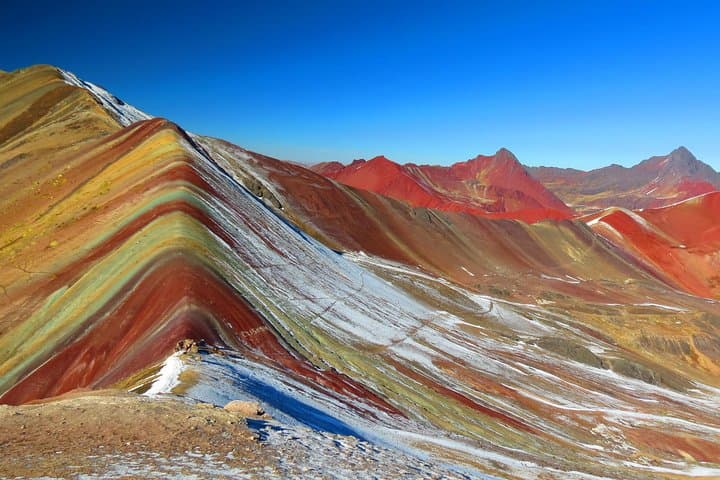
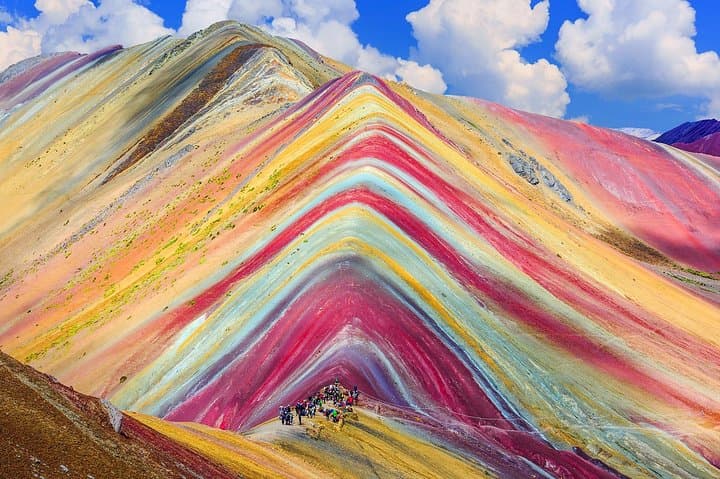
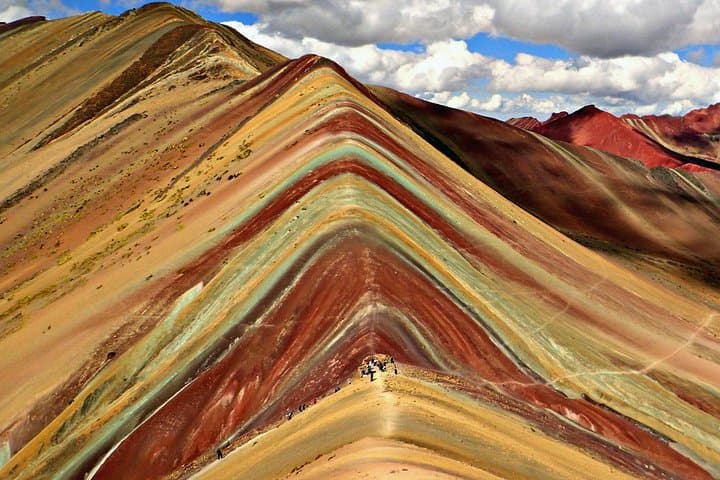
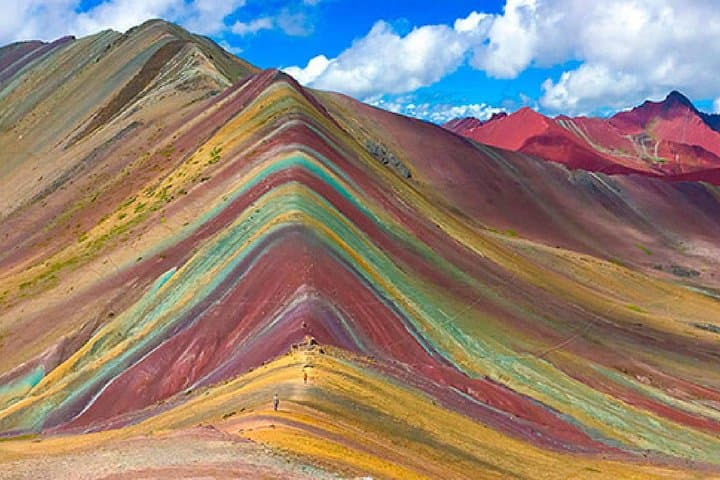
A predawn pickup from Cusco, and the road narrows into pampa: wind-carved grass, herds of llamas, and the Andean sky paling to steel. By breakfast in Cusipata you can already see the shoulder of Ausangate—an Apu that watches the Vilcanota range—while the van climbs toward the high trailhead. The final ridge opens to a stripe of colors banded across a saddle: iron reds, copper greens and ochres that catch the sun like layers of painted rock.
A predawn pickup from Cusco, and the road narrows into pampa: wind-carved grass, herds of llamas, and the Andean sky paling to steel. By breakfast in Cusipata you can already see the shoulder of Ausangate—an Apu that watches the Vilcanota range—while the van climbs toward the high trailhead. The final ridge opens to a stripe of colors banded across a saddle: iron reds, copper greens and ochres that catch the sun like layers of painted rock.
Geologically, Vinicunca’s colors come from oxidized mineral deposits laid down by ancient glacial and fluvial action; culture here is living, too—local communities still herd camelids and honor Ausangate in seasonal rituals. The walk from the trailhead to the viewpoint is short but sharp: expect roughly 6 km round-trip with about 500–600 m of elevation gain, topping out around 5,200 m. The landscape shifts fast—tussock grass gives way to stony scree and glacially carved basins—and weather can change faster than the colors on the mountain.
Practically: acclimatize in Cusco for 48 hours if possible, carry high‑calorie snacks, layered clothing, and sunscreen, and move steadily to manage altitude. Trekking poles and a lightweight rain shell make the day easier; many travelers choose a private guide or horseback for part of the climb. Aim for the morning light for the best colors and quieter viewpoints; be prepared for crowds mid‑day. Respect grazing lands and leave no trace—the mountain’s fragile soils recover slowly. For a single, high‑altitude day trip from Cusco, Vinicunca delivers unmistakable geology and a close encounter with Andean alpine life.