THE ADVENTURE COLLECTIVE® · Independent discovery and booking for outdoor travel

See ancient Egypt’s greatest monuments and modern museum in a single day, then trade stone for sand on a desert buggy ride. This practical guide explains what to expect, how to prepare, and local tips for making the most of the Giza experience.
See ancient Egypt’s greatest monuments and modern museum in a single day, then trade stone for sand on a desert buggy ride. This practical guide explains what to expect, how to prepare, and local tips for making the most of the Giza experience.
The day opens with the plateau’s horizon cutting a clean line against Cairo’s heat — limestone giants standing like chapters of a history book you can walk into. You arrive under a wide sky, the Sphinx watching the approach as the desert air pulls at your clothes and the stones seem to hum with age.
Verified experiences and guided adventures in the surrounding area.
Operated by EG Traveo · Giza, Giza Governorate
The day opens with the plateau’s horizon cutting a clean line against Cairo’s heat — limestone giants standing like chapters of a history book you can walk into. You arrive under a wide sky, the Sphinx watching the approach as the desert air pulls at your clothes and the stones seem to hum with age.
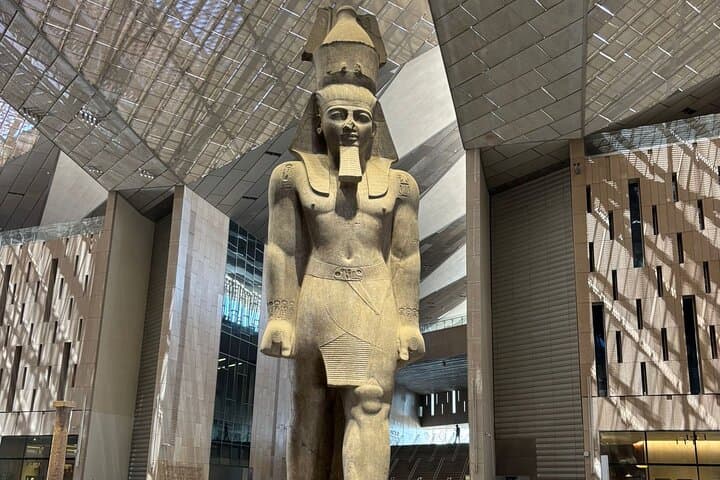
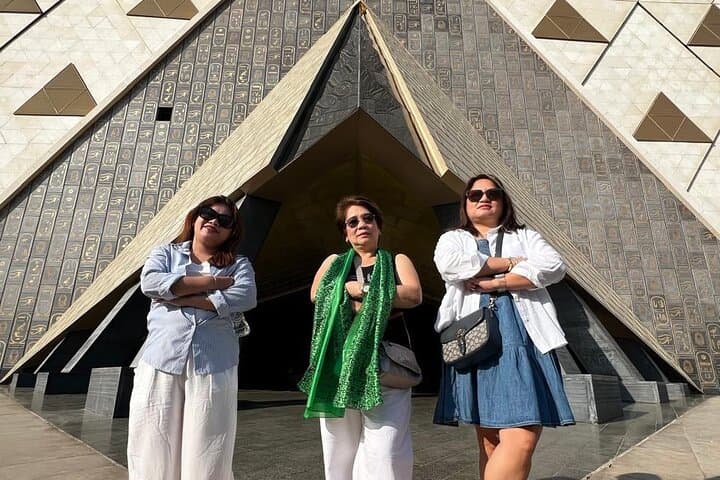
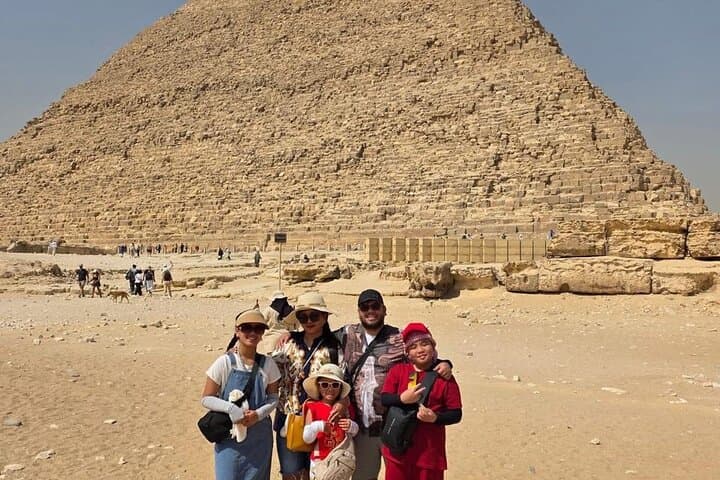
Start at the Grand Egyptian Museum, a modern vault for millennia of artifacts where sunlight and glass meet gilded tomb goods. Move to the Giza Plateau to study the geometry of Khufu, Khafre, and Menkaure; geology here is visible in the faces of quarried limestone and the faint sweep of Nile-deposited silt below. The Sphinx, worn by wind and time, opens a conversation about religion, power, and early Egyptian craftsmanship.
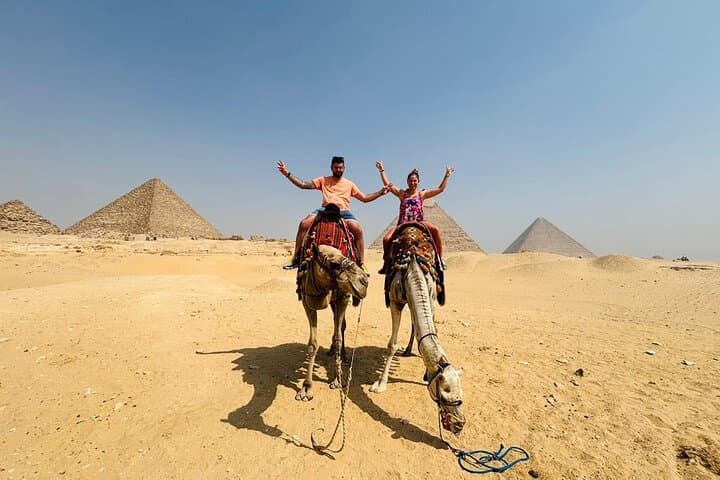
Cultural notes: an Egyptologist guide decodes hieroglyphs, funerary practice, and the 19th–20th century excavations that shaped modern Egyptology. The desert around the pyramids is active — Bedouin communities and local camel handlers operate tours and short rides.
Practical guidance: the tour runs most of the day with private transport and a lunch stop; entrance tickets are typically purchased on site unless an all-inclusive option is chosen. Expect a mix of paved paths and loose sand — good walking shoes, a hat, sunscreen, and plenty of water make the difference. If you add the buggy option, prepare for a brief, bumpy high-energy section of fast sand tracks; optional camel rides are short and often involve extra fees. Time your visit for morning or late afternoon to avoid peak heat and to catch the best light on the stone faces.
easy.
6–8 hours.
Suitable for travelers in average physical condition; includes several short walks and standing periods.
Not by default — entrance fees are included only if you select an all-inclusive ticket option; otherwise the guide will help you buy tickets on site and you pay separately.
Buggy rides are bumpy and fast and may not be suitable for pregnant travelers or very young children; check with the operator and consider alternatives like a short camel ride.
The tour is a full-day experience (roughly 6–8 hours) and typically includes private air-conditioned pickup and drop-off from Cairo/Giza hotels.
Yes — short camel or horse rides (often around 30 minutes) are commonly offered as optional extras and usually involve an additional fee negotiated locally.
The Giza Plateau dates to the Fourth Dynasty (c. 2600–2500 BCE); the Great Pyramid was long the world’s tallest man-made structure and remains a central piece of ancient engineering.
Increased tourism and urban expansion threaten the plateau’s setting; stick to marked paths, avoid climbing monuments, and follow local guides to minimize impact.
EG Traveo operates guided outdoor trips and adventures with an emphasis on safety, stewardship, and memorable experiences.
The day opens with the plateau’s horizon cutting a clean line against Cairo’s heat — limestone giants standing like chapters of a history book you can walk into. You arrive under a wide sky, the Sphinx watching the approach as the desert air pulls at your clothes and the stones seem to hum with age.
The day opens with the plateau’s horizon cutting a clean line against Cairo’s heat — limestone giants standing like chapters of a history book you can walk into. You arrive under a wide sky, the Sphinx watching the approach as the desert air pulls at your clothes and the stones seem to hum with age.
Start at the Grand Egyptian Museum, a modern vault for millennia of artifacts where sunlight and glass meet gilded tomb goods. Move to the Giza Plateau to study the geometry of Khufu, Khafre, and Menkaure; geology here is visible in the faces of quarried limestone and the faint sweep of Nile-deposited silt below. The Sphinx, worn by wind and time, opens a conversation about religion, power, and early Egyptian craftsmanship.
Cultural notes: an Egyptologist guide decodes hieroglyphs, funerary practice, and the 19th–20th century excavations that shaped modern Egyptology. The desert around the pyramids is active — Bedouin communities and local camel handlers operate tours and short rides.
Practical guidance: the tour runs most of the day with private transport and a lunch stop; entrance tickets are typically purchased on site unless an all-inclusive option is chosen. Expect a mix of paved paths and loose sand — good walking shoes, a hat, sunscreen, and plenty of water make the difference. If you add the buggy option, prepare for a brief, bumpy high-energy section of fast sand tracks; optional camel rides are short and often involve extra fees. Time your visit for morning or late afternoon to avoid peak heat and to catch the best light on the stone faces.