THE ADVENTURE COLLECTIVE® · Independent discovery and booking for outdoor travel

Spend a full day exploring Egypt’s oldest stone monuments: the Giza pyramids, the Step Pyramid at Saqqara, and the ruins of ancient Memphis. This practical guide outlines what to expect, how to prepare, and how to make the most of an 8-hour cultural loop from Cairo.
Spend a full day exploring Egypt’s oldest stone monuments: the Giza pyramids, the Step Pyramid at Saqqara, and the ruins of ancient Memphis. This practical guide outlines what to expect, how to prepare, and how to make the most of an 8-hour cultural loop from Cairo.
You arrive before the heat peaks, the limestone plateau of Giza flat and bright under a hard sun. The three pyramid silhouettes—Khufu, Khafre and Menkaure—cut the skyline like deliberate geometry. A guide meets you and the day accelerates: the Sphinx stares forward, the desert wind moves through the valley temple stones, and the hum of Cairo recedes into distance.
Verified experiences and guided adventures in the surrounding area.
Operated by Excursies Egypte-Day Tours · Giza, Giza Governorate
You arrive before the heat peaks, the limestone plateau of Giza flat and bright under a hard sun. The three pyramid silhouettes—Khufu, Khafre and Menkaure—cut the skyline like deliberate geometry. A guide meets you and the day accelerates: the Sphinx stares forward, the desert wind moves through the valley temple stones, and the hum of Cairo recedes into distance.
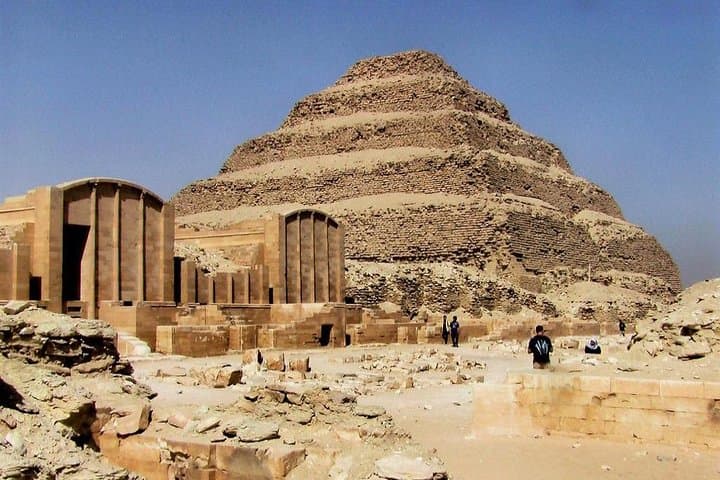
This loop stitches together three ages of ancient Egypt. Giza’s pyramids are Fourth Dynasty giants built as royal tombs; Saqqara’s Step Pyramid at Djoser predates them by centuries as the world’s earliest large stone structure; Memphis, once Egypt’s first capital, preserves fragments like the colossal Ramses II statue. Geologically the sites sit on limestone bedrock with wind-polished sand between, evidence of a landscape that alternated between river plain and arid plain over millennia.
Culturally the route is intimate: local guides narrate pharaonic power, funerary practices and the artisans who cut the blocks. Expect short walks over uneven flagstone, close-up views of carved reliefs, and a midday restaurant lunch that offers a modern counterpoint.
Practical guidance: wear sturdy closed shoes, sun protection and bring water — sites are exposed with minimal shade. Entrance often includes basic admissions; plan for an 8-hour day with hotel pickup and private transport between sites. Morning visits avoid crowds and heat; late afternoon light is best for photos. Respect site rules, avoid touching fragile carvings and budget time for security lines. This is a full, accessible day that condenses Egypt’s ancient power into a single, walkable circuit.
easy.
8 hours.
Basic walking fitness is sufficient; expect 1–3 miles of on-foot exploration over uneven ground.
This is a full-day experience of about 8 hours including hotel pickup, transfers and time at each site.
The itinerary indicates admissions are included for the listed sites; confirm at booking for any optional extras.
Yes—physical demands are low, but the tour is not recommended for those with serious spinal, heart, or pregnancy restrictions per operator guidance.
There are photo stops at each site; access inside pyramids is subject to separate tickets and limited availability—ask the guide in advance.
Memphis served as Egypt’s first capital under King Menes and was a political and religious center through the Old Kingdom; Saqqara’s Step Pyramid marks the transition to monumental stone architecture.
Visitor pressure and wind-driven erosion threaten surface reliefs; stick to marked paths, avoid touching carvings and support local guides who practice responsible site access.
Excursies Egypte-Day Tours operates guided outdoor trips and adventures with an emphasis on safety, stewardship, and memorable experiences.
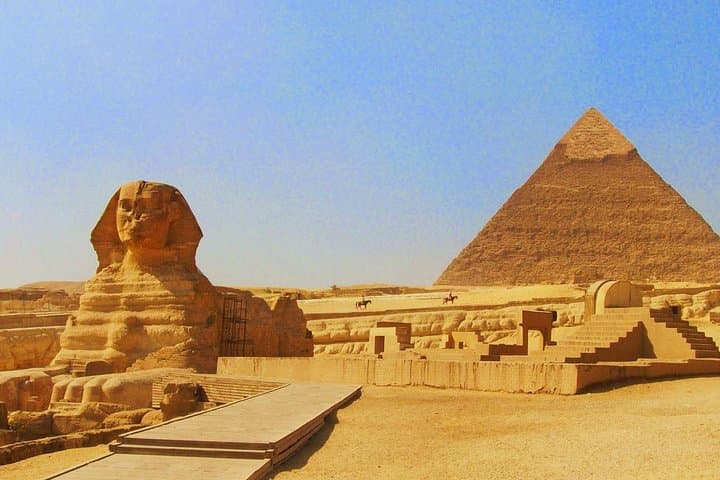
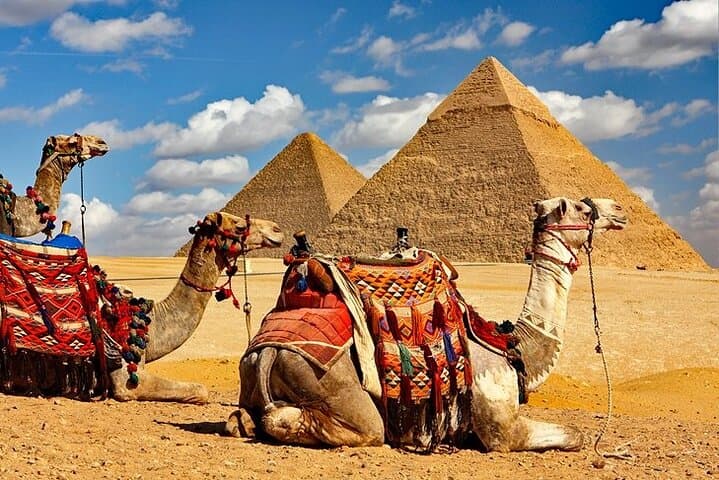
You arrive before the heat peaks, the limestone plateau of Giza flat and bright under a hard sun. The three pyramid silhouettes—Khufu, Khafre and Menkaure—cut the skyline like deliberate geometry. A guide meets you and the day accelerates: the Sphinx stares forward, the desert wind moves through the valley temple stones, and the hum of Cairo recedes into distance.
You arrive before the heat peaks, the limestone plateau of Giza flat and bright under a hard sun. The three pyramid silhouettes—Khufu, Khafre and Menkaure—cut the skyline like deliberate geometry. A guide meets you and the day accelerates: the Sphinx stares forward, the desert wind moves through the valley temple stones, and the hum of Cairo recedes into distance.
This loop stitches together three ages of ancient Egypt. Giza’s pyramids are Fourth Dynasty giants built as royal tombs; Saqqara’s Step Pyramid at Djoser predates them by centuries as the world’s earliest large stone structure; Memphis, once Egypt’s first capital, preserves fragments like the colossal Ramses II statue. Geologically the sites sit on limestone bedrock with wind-polished sand between, evidence of a landscape that alternated between river plain and arid plain over millennia.
Culturally the route is intimate: local guides narrate pharaonic power, funerary practices and the artisans who cut the blocks. Expect short walks over uneven flagstone, close-up views of carved reliefs, and a midday restaurant lunch that offers a modern counterpoint.
Practical guidance: wear sturdy closed shoes, sun protection and bring water — sites are exposed with minimal shade. Entrance often includes basic admissions; plan for an 8-hour day with hotel pickup and private transport between sites. Morning visits avoid crowds and heat; late afternoon light is best for photos. Respect site rules, avoid touching fragile carvings and budget time for security lines. This is a full, accessible day that condenses Egypt’s ancient power into a single, walkable circuit.