THE ADVENTURE COLLECTIVE® · Independent discovery and booking for outdoor travel

Travel from Alexandria to Cairo for a full-day exploration of the Pyramids of Giza and the Grand Egyptian Museum. This guided tour pairs sweeping outdoor views with museum galleries and hands-on cultural stops.
Travel from Alexandria to Cairo for a full-day exploration of the Pyramids of Giza and the Grand Egyptian Museum. This guided tour pairs sweeping outdoor views with museum galleries and hands-on cultural stops.
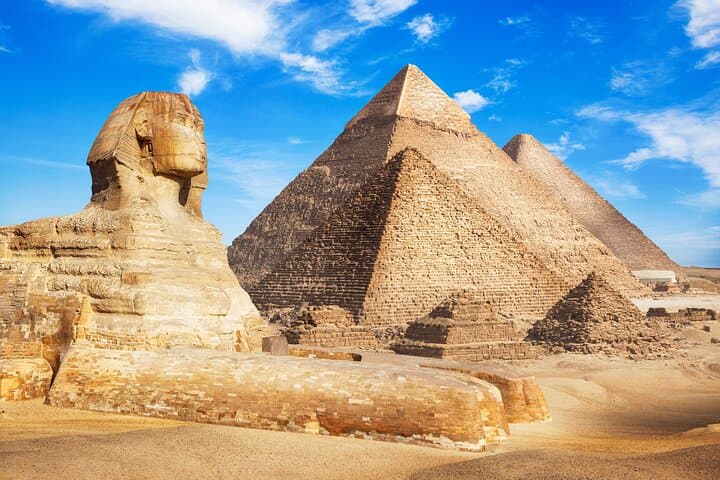
The day opens on a low, limestone plateau where wind and sand seem to dare you to look away — the Pyramids of Giza rise like engineered mountains against a wide Egyptian sky.
Verified experiences and guided adventures in the surrounding area.
Operated by NORTH AFRICAN SHIPPING AND TOURISM COMPANY (NASCO TOURS) · Giza, Giza Governorate
The day opens on a low, limestone plateau where wind and sand seem to dare you to look away — the Pyramids of Giza rise like engineered mountains against a wide Egyptian sky.
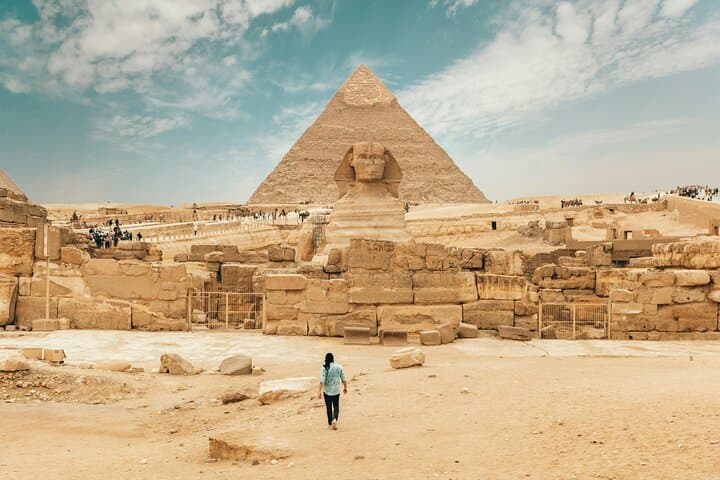
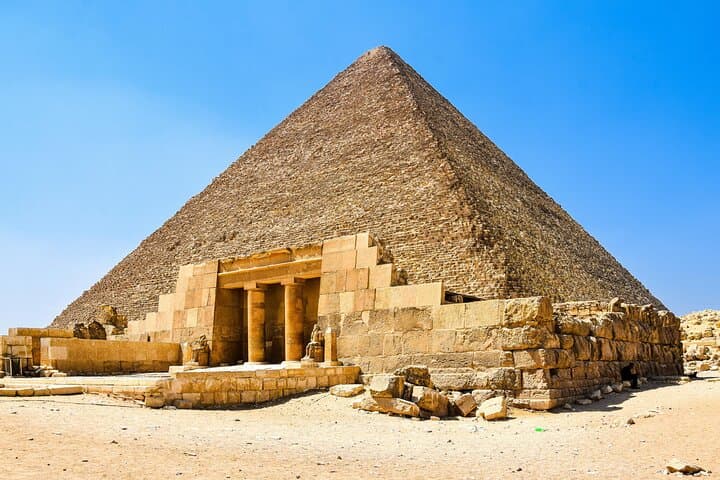
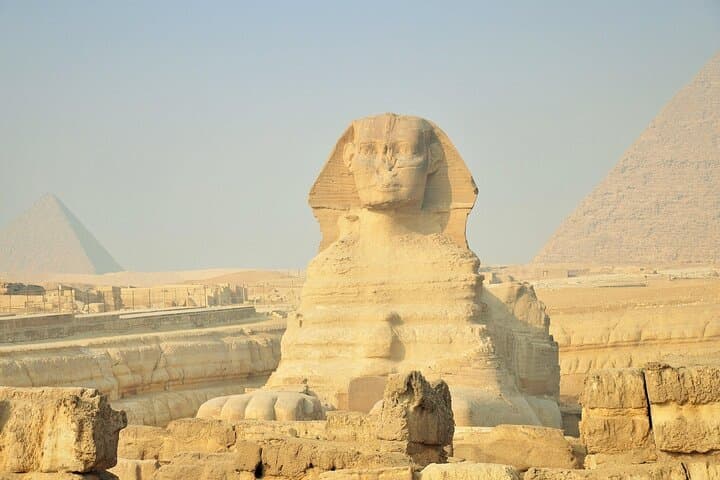
Start at the Western Plateau to photograph the Great Pyramid’s massive silhouette, then move closer to Chephren’s angled masonry and the stoic Great Sphinx. Geologically the plateau is a band of Eocene limestone and softer sedimentary layers, carved by millennia of wind; historically these structures were built in the Fourth Dynasty (c. 2600–2500 BCE) as monumental tombs for pharaohs and remain the last surviving Wonder of the Ancient World.
Culture threads through the day: a stop at the Papyrus Institute demonstrates hand-pressed paper recipes that have endured since Pharaonic times, while the Oriental Bazaar and local eateries showcase street-level Cairo life. Tahrir Square and the new Grand Egyptian Museum provide modern context — the museum concentrates fragile collections, easing pressure on the pyramids and offering climate-controlled displays including much of Tutankhamun’s treasure.
Practical guidance: expect a long, guided day (about 10–11 hours) with several short walks across uneven, sandy ground and museum galleries. Wear sturdy walking shoes, sun protection, and bring a refillable water bottle. Arrive early at outdoor sites to avoid midday heat, carry a photocopy of your passport for admissions, and follow on-site rules — no touching artifacts and stay behind ropes on the plateau. The itinerary blends big-picture history with hands-on cultural stops, making it a full, manageable day for travelers ready to cover ground and time in both open desert and modern galleries.
moderate.
10–11 hours.
Comfortable standing and walking for several hours; ability to negotiate short uneven stretches and steps
This private tour is approximately 10–11 hours and includes hotel pickup, entrance to the Pyramids and Grand Egyptian Museum (as stated), papyrus demonstration, lunch, and transportation in an air-conditioned vehicle.
The itinerary indicates admissions to some attractions are included; confirm specific ticket inclusions with the tour operator at booking.
The tour is suitable for most fitness levels, but the plateau involves uneven ground; travelers with serious mobility limitations should notify the operator in advance to arrange alternatives.
Yes, the itinerary includes a stop at the Oriental Bazaar and the Papyrus Institute where you can purchase local crafts and papyrus souvenirs.
The Pyramids date to Egypt’s Old Kingdom (Fourth Dynasty) and the Grand Egyptian Museum was built to centralize and protect artifacts, including large Tutankhamun displays.
The new museum aims to reduce visitor pressure on the Giza plateau and improve conservation; visitors should follow signage, avoid touching artifacts, and minimize plastic waste.
NORTH AFRICAN SHIPPING AND TOURISM COMPANY (NASCO TOURS) operates guided outdoor trips and adventures with an emphasis on safety, stewardship, and memorable experiences.
The day opens on a low, limestone plateau where wind and sand seem to dare you to look away — the Pyramids of Giza rise like engineered mountains against a wide Egyptian sky.
The day opens on a low, limestone plateau where wind and sand seem to dare you to look away — the Pyramids of Giza rise like engineered mountains against a wide Egyptian sky.
Start at the Western Plateau to photograph the Great Pyramid’s massive silhouette, then move closer to Chephren’s angled masonry and the stoic Great Sphinx. Geologically the plateau is a band of Eocene limestone and softer sedimentary layers, carved by millennia of wind; historically these structures were built in the Fourth Dynasty (c. 2600–2500 BCE) as monumental tombs for pharaohs and remain the last surviving Wonder of the Ancient World.
Culture threads through the day: a stop at the Papyrus Institute demonstrates hand-pressed paper recipes that have endured since Pharaonic times, while the Oriental Bazaar and local eateries showcase street-level Cairo life. Tahrir Square and the new Grand Egyptian Museum provide modern context — the museum concentrates fragile collections, easing pressure on the pyramids and offering climate-controlled displays including much of Tutankhamun’s treasure.
Practical guidance: expect a long, guided day (about 10–11 hours) with several short walks across uneven, sandy ground and museum galleries. Wear sturdy walking shoes, sun protection, and bring a refillable water bottle. Arrive early at outdoor sites to avoid midday heat, carry a photocopy of your passport for admissions, and follow on-site rules — no touching artifacts and stay behind ropes on the plateau. The itinerary blends big-picture history with hands-on cultural stops, making it a full, manageable day for travelers ready to cover ground and time in both open desert and modern galleries.