THE ADVENTURE COLLECTIVE® · Independent discovery and booking for outdoor travel

Spend a private eight-hour day on Moorea’s waters searching for migrating humpbacks, with snorkeling stops and an onboard lunch. Small groups and local guides prioritize respectful, close observations.
Spend a private eight-hour day on Moorea’s waters searching for migrating humpbacks, with snorkeling stops and an onboard lunch. Small groups and local guides prioritize respectful, close observations.
The day begins with the boat slipping off Moorea’s lee shore, the lagoon polishing light beneath a wide, open sky. Passengers watch reef flats blur into deep blue; the air takes on salt and a low, expectant hush as the captain reads the horizon. When a spout appears, the ocean seems to hold its breath.
Verified experiences and guided adventures in the surrounding area.
Operated by Moorea Sea Experience · Moorea, Society Islands
The day begins with the boat slipping off Moorea’s lee shore, the lagoon polishing light beneath a wide, open sky. Passengers watch reef flats blur into deep blue; the air takes on salt and a low, expectant hush as the captain reads the horizon. When a spout appears, the ocean seems to hold its breath.
Moorea sits on an ancient volcanic ridge carved by waves and time; its bays—formed by drowned valleys—make the surrounding waters a predictable corridor for migrating humpbacks. Polynesian seafaring tradition and modern cetacean science meet here: local guides combine cultural respect for the animals with best practices shaped by researchers and park rules.
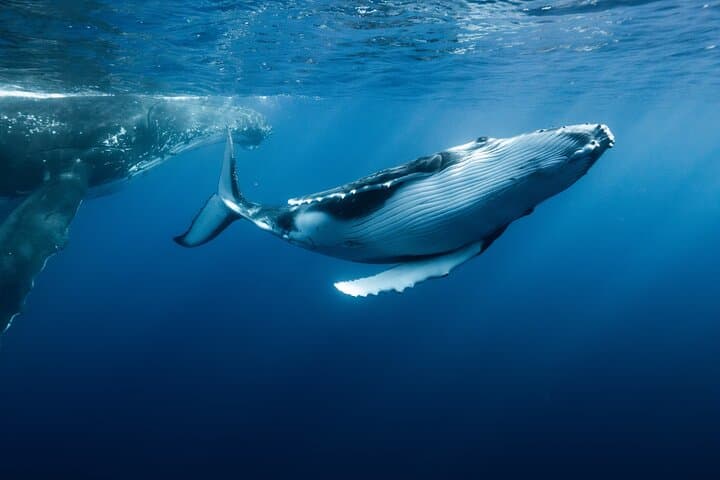
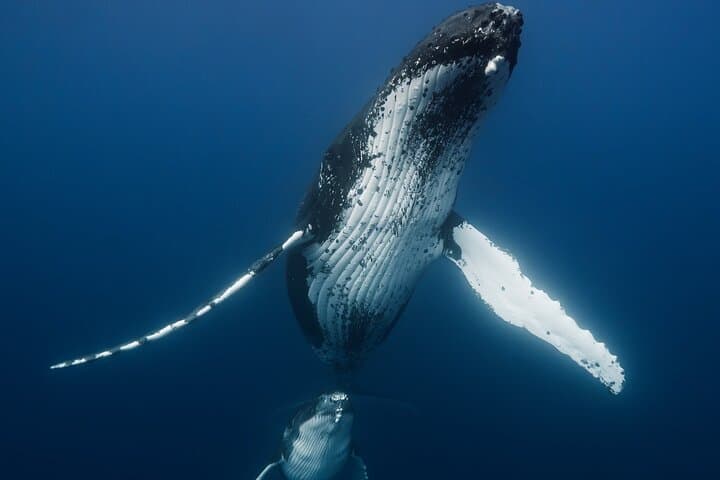
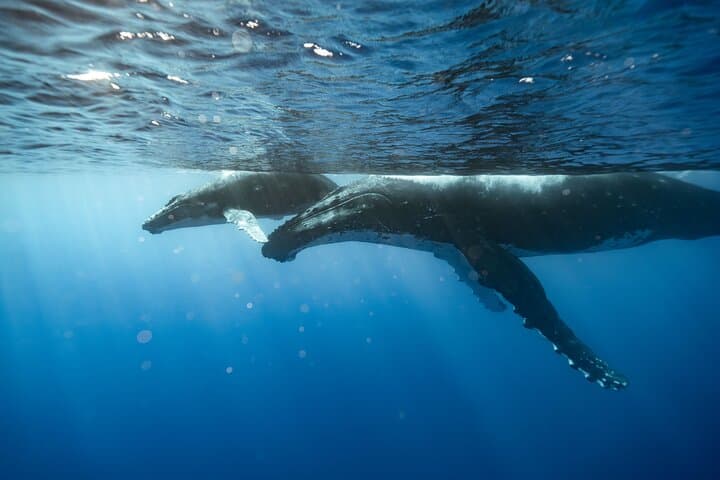
Expect long stretches of patient observation punctuated by sudden displays — breaches, tail slaps, and the slow, curious approach of a mother and calf. The operator limits groups to six, reducing disturbance and increasing the chances of quiet, close encounters. Lunch is served aboard: locally sourced raw fish or tuna sashimi with rice, fresh fruit, and tropical punch, with snorkeling gear available for calmer stops.
Practical guidance: book during the humpback season (roughly August–November) for the highest probability of sightings, bring reef-safe sunscreen and a windproof layer, and plan for an eight-hour day on the water. Seas can be choppy; motion-sickness measures and a basic level of fitness are recommended for getting in and out of the water.
This is a slow, attentive marine expedition—less adrenaline ride, more sustained, respectful encounter with one of the ocean’s most charismatic travelers.
moderate.
8 hours.
Moderate fitness for extended periods on a boat and optional snorkeling; able to board a small vessel and enter water from a ladder.
Humpback sightings are most likely from roughly August through November when whales migrate through the area to breed and calf.
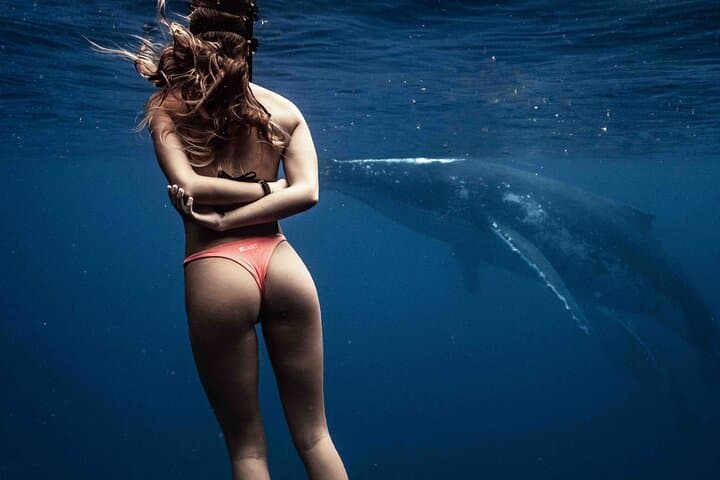
Snorkeling equipment (mask, fins, snorkel) is provided; beginners with basic swimming ability can usually participate during calm stops under guide supervision.
The operator limits bookings to a maximum of six guests to minimize disturbance and improve the quality of observation.
Lunch includes a choice of raw fish in coconut milk or fresh tuna sashimi with rice, plus fresh fruit, biscuits, cakes, bottled water and a tropical punch.
Moorea’s bays are former river valleys drowned by tectonic and sea-level changes; Polynesian navigators have visited these passages for centuries, and local knowledge guides modern whale-friendly practices.
Operators follow small-group protocols and local guidelines to minimize disturbance; choose tours that brief guests on responsible viewing and use reef-safe products.
Moorea Sea Experience operates guided outdoor trips and adventures with an emphasis on safety, stewardship, and memorable experiences.
The day begins with the boat slipping off Moorea’s lee shore, the lagoon polishing light beneath a wide, open sky. Passengers watch reef flats blur into deep blue; the air takes on salt and a low, expectant hush as the captain reads the horizon. When a spout appears, the ocean seems to hold its breath.
The day begins with the boat slipping off Moorea’s lee shore, the lagoon polishing light beneath a wide, open sky. Passengers watch reef flats blur into deep blue; the air takes on salt and a low, expectant hush as the captain reads the horizon. When a spout appears, the ocean seems to hold its breath.
Moorea sits on an ancient volcanic ridge carved by waves and time; its bays—formed by drowned valleys—make the surrounding waters a predictable corridor for migrating humpbacks. Polynesian seafaring tradition and modern cetacean science meet here: local guides combine cultural respect for the animals with best practices shaped by researchers and park rules.
Expect long stretches of patient observation punctuated by sudden displays — breaches, tail slaps, and the slow, curious approach of a mother and calf. The operator limits groups to six, reducing disturbance and increasing the chances of quiet, close encounters. Lunch is served aboard: locally sourced raw fish or tuna sashimi with rice, fresh fruit, and tropical punch, with snorkeling gear available for calmer stops.
Practical guidance: book during the humpback season (roughly August–November) for the highest probability of sightings, bring reef-safe sunscreen and a windproof layer, and plan for an eight-hour day on the water. Seas can be choppy; motion-sickness measures and a basic level of fitness are recommended for getting in and out of the water.
This is a slow, attentive marine expedition—less adrenaline ride, more sustained, respectful encounter with one of the ocean’s most charismatic travelers.