THE ADVENTURE COLLECTIVE® · Independent discovery and booking for outdoor travel

Trek a 25 km private circuit through Angkor’s quieter monuments—start at Spean Neak bridge, walk an 8 m laterite wall to the East Gate, and explore Angkor Wat, Angkor Thom, Ta Prohm and rarely visited temple groups. Early starts, good footwear and a local guide make this full-day route both manageable and richly rewarding.
Trek a 25 km private circuit through Angkor’s quieter monuments—start at Spean Neak bridge, walk an 8 m laterite wall to the East Gate, and explore Angkor Wat, Angkor Thom, Ta Prohm and rarely visited temple groups. Early starts, good footwear and a local guide make this full-day route both manageable and richly rewarding.
Morning mist lifts over crumbling laterite as you step off at Spean Neak bridge and set out on a full-day trek through the Angkor Archaeological Park. The first strides on an 8‑meter high laterite wall bring a slow reveal: through canopy gaps you can glimpse Angkor Thom’s moat below, and across the slope the jungle presses close. The path threads past rarely visited groups—Khleang and Preah Pithu—before Angkor Wat and the root-choked galleries of Ta Prohm.
Verified experiences and guided adventures in the surrounding area.
Operated by Tour Guide-Siem Reap · Siem Reap, Siem Reap
Morning mist lifts over crumbling laterite as you step off at Spean Neak bridge and set out on a full-day trek through the Angkor Archaeological Park. The first strides on an 8‑meter high laterite wall bring a slow reveal: through canopy gaps you can glimpse Angkor Thom’s moat below, and across the slope the jungle presses close. The path threads past rarely visited groups—Khleang and Preah Pithu—before Angkor Wat and the root-choked galleries of Ta Prohm.
These stone cities were sculpted during the Angkorian era (9th–15th centuries): Angkor Wat rose in the 12th century under Suryavarman II, while later kings like Jayavarman VII left the Buddhist face towers and avenues of Angkor Thom. Geologically, the park sits on compacted sandstone and lateritic cores that weather into uneven surfaces and exposed tree roots; culturally, temples remain active symbols for Cambodians and require respectful behavior.
For a practical trek: plan 25 km of walking over soft forest trails, compacted earth, and rocky temple floors. Start before 7:00 AM to avoid heat and crowds, carry 2–3 liters of water, sun protection, and a guide to navigate off-the-beaten ruins. Expect shaded sections and sudden open views, mossy steps, and occasional local traffic moving firewood or produce.
Respect temple dress codes, stay on established paths to limit erosion, and pack insect repellent for shaded stretches. With moderate fitness and steady pacing, this private route rewards focused explorers with solitude among some of Angkor’s most evocative, less-visited monuments.
moderate.
6–9 hours.
Moderate — you should be comfortable walking 20–30 km on mixed terrain and standing for extended temple visits
Yes — all visitors must purchase an Angkor Archaeological Park pass (available at the park entrance); keep it with you while touring.
The full itinerary covers about 25 km at a moderate pace; your private guide can shorten the loop or add rest stops to match fitness levels.
Much of the route is shaded by forest canopy, but facilities are limited between major temple sites—use restrooms at main complexes and carry tissues and hand sanitizer.
Families with active children can do sections of the route; older travelers or those with mobility issues should discuss a customized, shorter itinerary with the operator.
Angkor’s monuments were built by successive Khmer kings between the 9th and 15th centuries; Angkor Wat and the Bayon are highlights of different royal eras.
Angkor is a UNESCO World Heritage site with active conservation; stay on marked paths, avoid touching carvings, and follow guide instructions to reduce erosion and wear.
Tour Guide-Siem Reap operates guided outdoor trips and adventures with an emphasis on safety, stewardship, and memorable experiences.
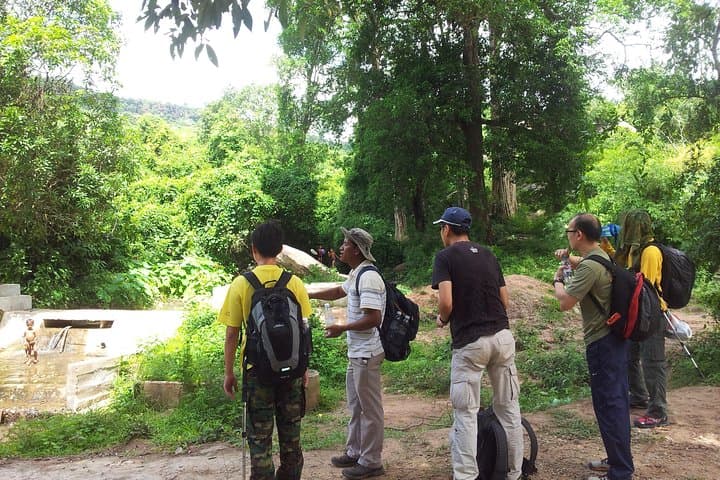
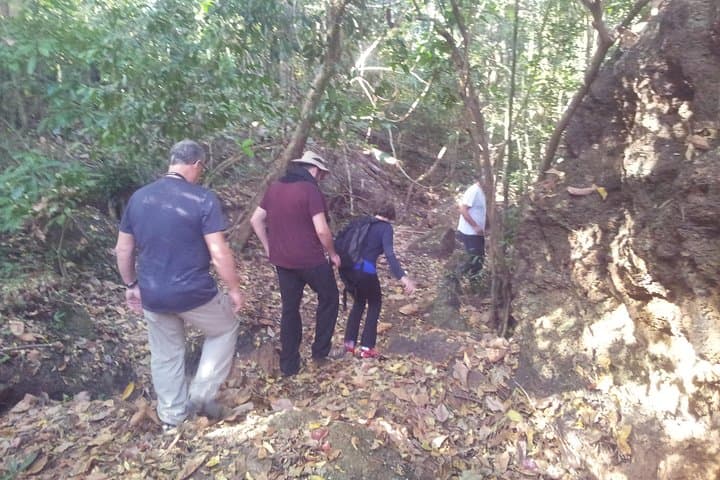
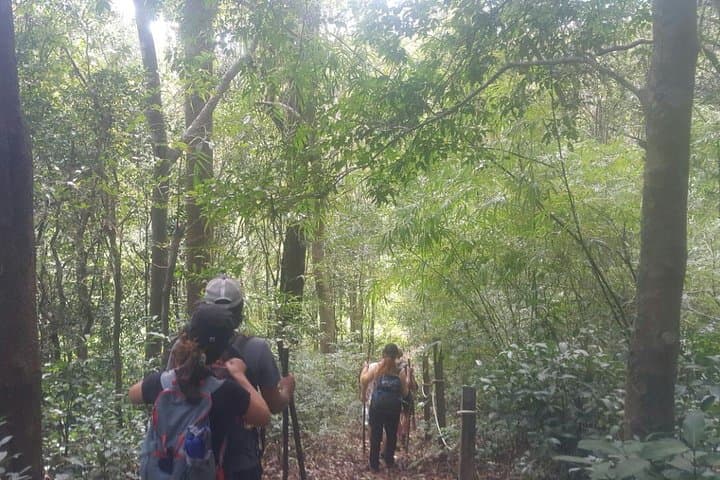
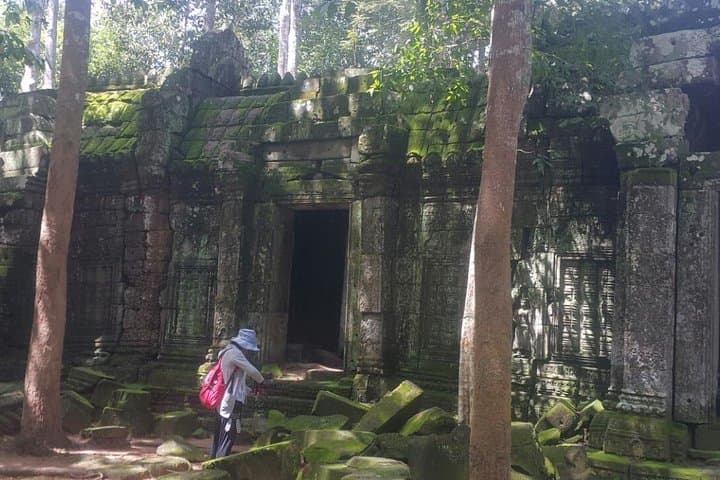
Morning mist lifts over crumbling laterite as you step off at Spean Neak bridge and set out on a full-day trek through the Angkor Archaeological Park. The first strides on an 8‑meter high laterite wall bring a slow reveal: through canopy gaps you can glimpse Angkor Thom’s moat below, and across the slope the jungle presses close. The path threads past rarely visited groups—Khleang and Preah Pithu—before Angkor Wat and the root-choked galleries of Ta Prohm.
Morning mist lifts over crumbling laterite as you step off at Spean Neak bridge and set out on a full-day trek through the Angkor Archaeological Park. The first strides on an 8‑meter high laterite wall bring a slow reveal: through canopy gaps you can glimpse Angkor Thom’s moat below, and across the slope the jungle presses close. The path threads past rarely visited groups—Khleang and Preah Pithu—before Angkor Wat and the root-choked galleries of Ta Prohm.
These stone cities were sculpted during the Angkorian era (9th–15th centuries): Angkor Wat rose in the 12th century under Suryavarman II, while later kings like Jayavarman VII left the Buddhist face towers and avenues of Angkor Thom. Geologically, the park sits on compacted sandstone and lateritic cores that weather into uneven surfaces and exposed tree roots; culturally, temples remain active symbols for Cambodians and require respectful behavior.
For a practical trek: plan 25 km of walking over soft forest trails, compacted earth, and rocky temple floors. Start before 7:00 AM to avoid heat and crowds, carry 2–3 liters of water, sun protection, and a guide to navigate off-the-beaten ruins. Expect shaded sections and sudden open views, mossy steps, and occasional local traffic moving firewood or produce.
Respect temple dress codes, stay on established paths to limit erosion, and pack insect repellent for shaded stretches. With moderate fitness and steady pacing, this private route rewards focused explorers with solitude among some of Angkor’s most evocative, less-visited monuments.