THE ADVENTURE COLLECTIVE® · Independent discovery and booking for outdoor travel

Drive from Muscat into Oman’s rugged interior on a private full-day tour visiting Nizwa Fort, an ancient souk, Al Hamra’s old village, and the dizzying viewpoints of Jebel Shams. Expect cultural highlights, geological spectacle, and an active day with short walks and significant driving.
Drive from Muscat into Oman’s rugged interior on a private full-day tour visiting Nizwa Fort, an ancient souk, Al Hamra’s old village, and the dizzying viewpoints of Jebel Shams. Expect cultural highlights, geological spectacle, and an active day with short walks and significant driving.
The morning begins on the Muscat coast, headlights cutting through pale desert light as the 4x4 hums toward the interior. Roads flatten then climb; the air cools and the mountains of Ad Dakhiliyah grow like pages turning. By mid-morning the group is walking the battlements of Nizwa Fort, its circular tower watching over date palms and a market where spice aromas braid with cattle calls.
Verified experiences and guided adventures in the surrounding area.
Operated by Sunshine Tours Oman · Nizwa, Ad Dakhiliyah Governorate
The morning begins on the Muscat coast, headlights cutting through pale desert light as the 4x4 hums toward the interior. Roads flatten then climb; the air cools and the mountains of Ad Dakhiliyah grow like pages turning. By mid-morning the group is walking the battlements of Nizwa Fort, its circular tower watching over date palms and a market where spice aromas braid with cattle calls.
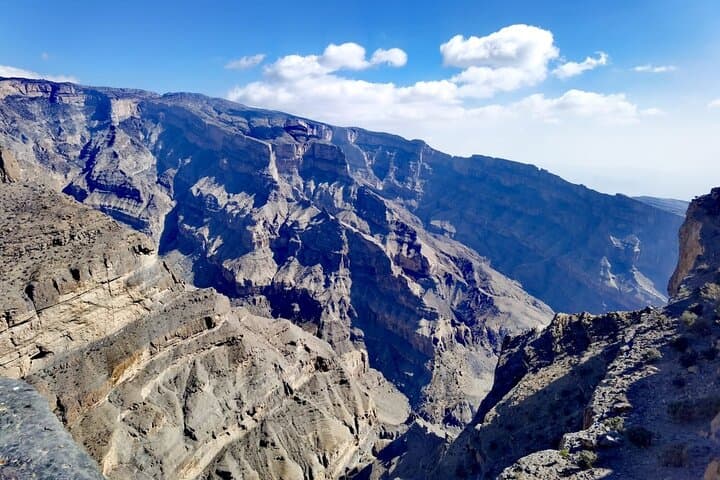
This route threads history and geology: Nizwa was a center of learning and trade for centuries, its 17th-century fort built to repel sieges. Further inland, the Hajar Mountains rise from limestone and ophiolite, their folded strata exposed by uplift and erosion. Jebel Shams — Oman’s highest peak at about 3,009 meters — gives visitors a raw sense of elevation; its steep terraces and gravelly tracks show a landscape still being shaped.
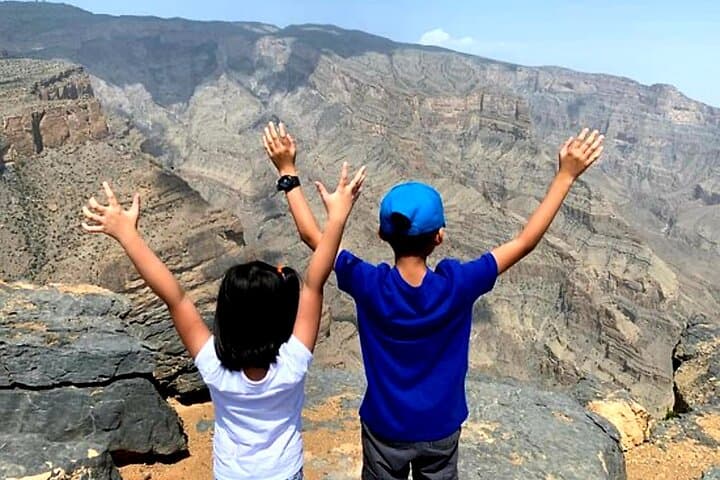
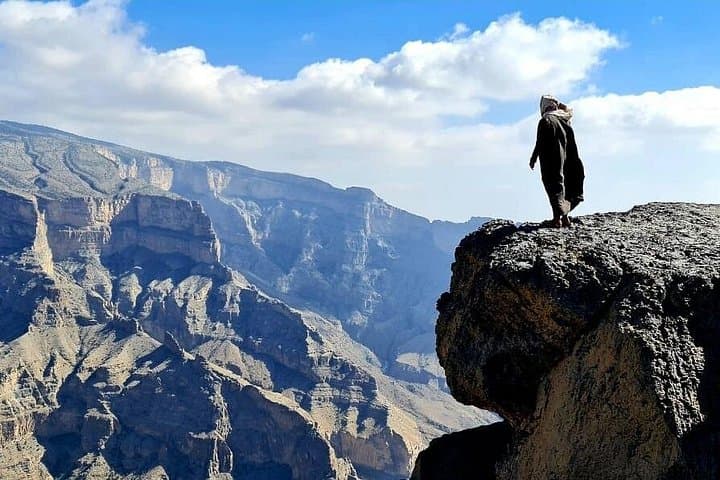
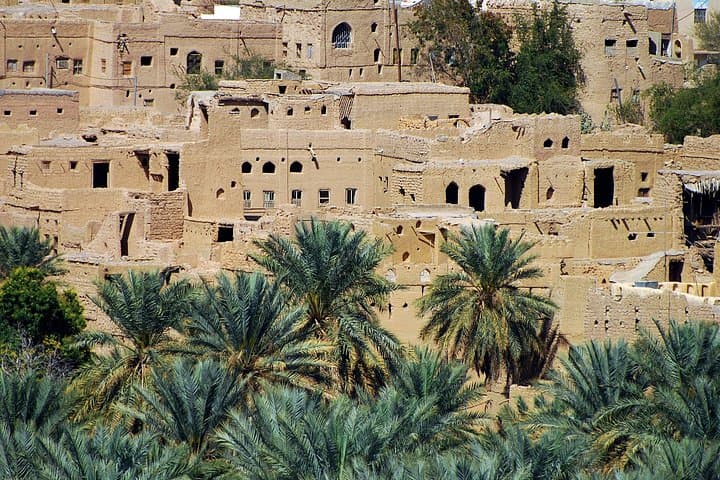
Local culture is tactile here: souk bargaining, traditional coffee cups, and mud-brick villages like Al Hamra that retain solar-warmed walls and wooden lattices. The canyon at Jebel Shams, sometimes called Oman’s Grand Canyon, dares you to step to the rim and watch shadow and light negotiate the cliffs.
Practical guidance: expect an eight-hour day with long drives (Muscat–Nizwa ~1.5–2 hours, Nizwa–Jebel Shams ~1 hour), short walked sections and uneven high-altitude viewpoints. Bring sun protection, sturdy shoes for rocky paths, layers for the temperature swing, and a refillable water bottle; a 4WD vehicle and bottled water are typically provided. Morning departures avoid afternoon heat and give better light for photos and safer mountain driving.
moderate.
8 hours.
Suitable for travelers in reasonable health who can manage short, uneven walks and travel by vehicle for several hours.
Expect about 1.5–2 hours each way depending on traffic and stops; the route covers roughly 150 km.
Yes—it's family-friendly with mostly short walks, but those with mobility or heart issues should check with the operator due to uneven terrain and altitude changes.
The tour typically uses a comfortable 4WD for mountain access; passengers do not need to drive themselves.
Yes—this tour commonly includes the Nizwa Fort entry fee as part of the itinerary.
Nizwa was a regional capital and religious center for centuries; its fort was fortified in the 17th century to control trade and regional security.
The Hajar range faces pressures from tourism and development; travelers can reduce impact by staying on marked tracks, using local guides, and minimizing single-use plastics.
Sunshine Tours Oman operates guided outdoor trips and adventures with an emphasis on safety, stewardship, and memorable experiences.
The morning begins on the Muscat coast, headlights cutting through pale desert light as the 4x4 hums toward the interior. Roads flatten then climb; the air cools and the mountains of Ad Dakhiliyah grow like pages turning. By mid-morning the group is walking the battlements of Nizwa Fort, its circular tower watching over date palms and a market where spice aromas braid with cattle calls.
The morning begins on the Muscat coast, headlights cutting through pale desert light as the 4x4 hums toward the interior. Roads flatten then climb; the air cools and the mountains of Ad Dakhiliyah grow like pages turning. By mid-morning the group is walking the battlements of Nizwa Fort, its circular tower watching over date palms and a market where spice aromas braid with cattle calls.
This route threads history and geology: Nizwa was a center of learning and trade for centuries, its 17th-century fort built to repel sieges. Further inland, the Hajar Mountains rise from limestone and ophiolite, their folded strata exposed by uplift and erosion. Jebel Shams — Oman’s highest peak at about 3,009 meters — gives visitors a raw sense of elevation; its steep terraces and gravelly tracks show a landscape still being shaped.
Local culture is tactile here: souk bargaining, traditional coffee cups, and mud-brick villages like Al Hamra that retain solar-warmed walls and wooden lattices. The canyon at Jebel Shams, sometimes called Oman’s Grand Canyon, dares you to step to the rim and watch shadow and light negotiate the cliffs.
Practical guidance: expect an eight-hour day with long drives (Muscat–Nizwa ~1.5–2 hours, Nizwa–Jebel Shams ~1 hour), short walked sections and uneven high-altitude viewpoints. Bring sun protection, sturdy shoes for rocky paths, layers for the temperature swing, and a refillable water bottle; a 4WD vehicle and bottled water are typically provided. Morning departures avoid afternoon heat and give better light for photos and safer mountain driving.