THE ADVENTURE COLLECTIVE® · Independent discovery and booking for outdoor travel

A full-day private excursion from Siem Reap that pairs Koh Ker’s stepped pyramids with the overgrown grandeur of Beng Mealea and an ancient stone quarry. Perfect for travelers who want history, hands-on archaeology lessons, and jungle-framed temple exploration in one day.
A full-day private excursion from Siem Reap that pairs Koh Ker’s stepped pyramids with the overgrown grandeur of Beng Mealea and an ancient stone quarry. Perfect for travelers who want history, hands-on archaeology lessons, and jungle-framed temple exploration in one day.
The morning drive leaves Siem Reap behind and the landscape changes from rice paddies to scattered scrub and low forest; by the time the van pulls into the shadow of Prasat Thom at Koh Ker, sunlight has already begun to pick out the temple’s stepped silhouette. Visitors step off the vehicle into warm air and a quieter kind of history, where stone stairways rise through trees and views open over jungle-hemmed reservoirs.
Verified experiences and guided adventures in the surrounding area.
Operated by Journey2 Angkor · Siem Reap, Siem Reap Province
The morning drive leaves Siem Reap behind and the landscape changes from rice paddies to scattered scrub and low forest; by the time the van pulls into the shadow of Prasat Thom at Koh Ker, sunlight has already begun to pick out the temple’s stepped silhouette. Visitors step off the vehicle into warm air and a quieter kind of history, where stone stairways rise through trees and views open over jungle-hemmed reservoirs.
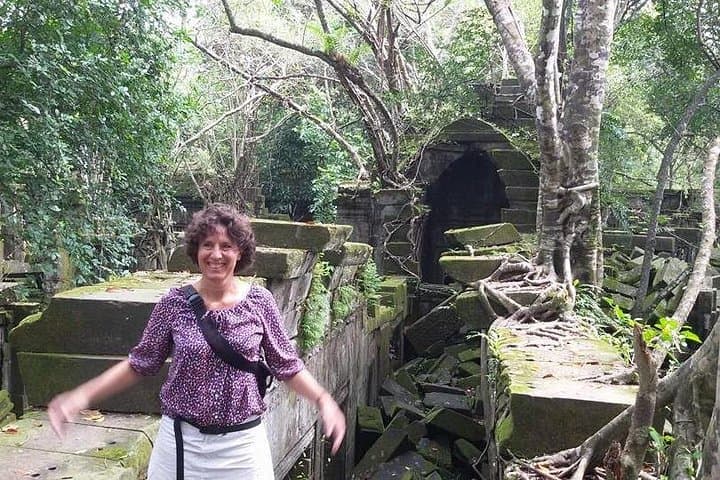
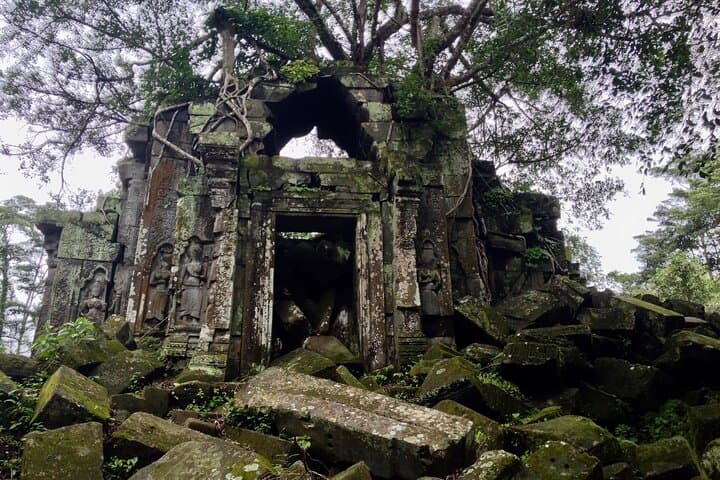
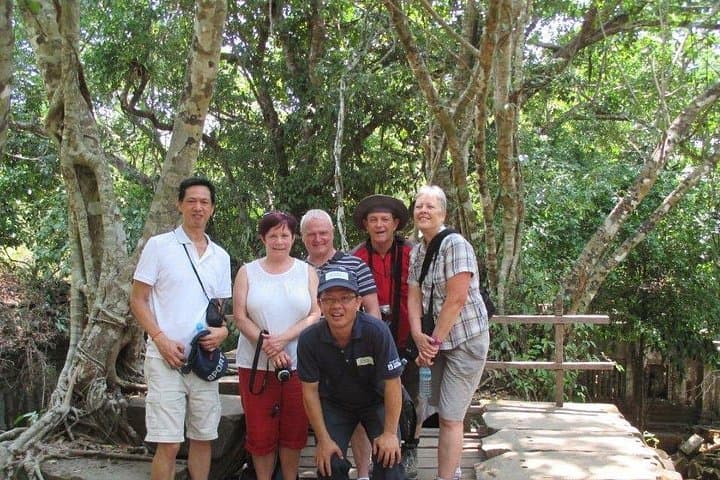
Koh Ker was briefly the 10th-century Angkorian capital and its centerpiece, the seven-tiered Prasat Thom pyramid, was built of sandstone and laterite stacked into a steep, almost brutal form that rewards those willing to climb for panoramic viewpoints. Beng Mealea, by contrast, reads more like an archaeological novel—walls crumbled, galleries swallowed by roots, and passages that force careful footing as you thread through vaulted chambers. Between them sits the ancient quarry where massive blocks were cut and left, offering a tangible lesson in premodern engineering and logistics.
Expect uneven stone, steep steps, humid heat, and a guide narrating both myth and method: how stones were quarried, how water management shaped Khmer life, and how civil conflict re-silenced many sites until recent conservation efforts.
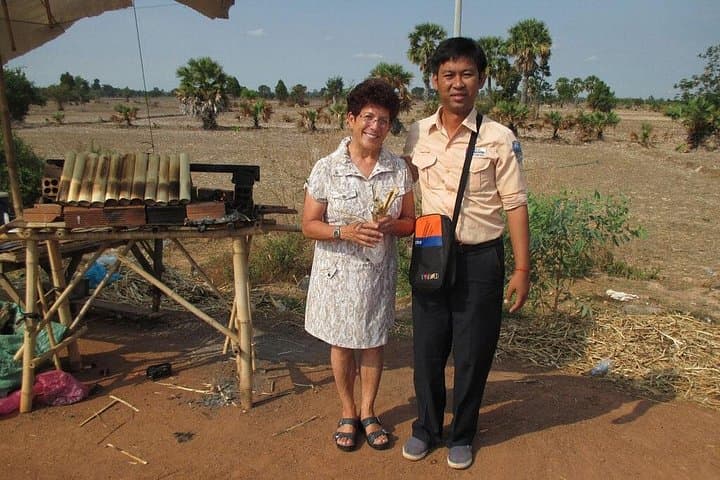
Practicalities: start early to avoid midday heat, bring sun protection and plenty of water, and wear flat, grippy shoes for climbing and walking on slick mossy blocks. If you plan to photograph, a light tripod and a camera with good dynamic range help capture shadowed interiors. Respect temple etiquette—cover shoulders and knees—and budget time for short local stops: a weaving stall, a market, and the quarry’s open-air classroom.
moderate.
7 hours.
Moderate — able to walk on uneven ground, climb steep stone steps, and be on your feet much of the day.
Each site is reached by road—expect roughly 1.5–2 hours to Koh Ker and about 1 hour from Koh Ker to Beng Mealea depending on traffic and stops.
Entrance e-tickets are typically purchased separately; the guide will send a link ahead of time to buy temple tickets.
The tour is labeled suitable for all fitness levels, but uneven stones and steep steps at temples may be challenging for very young children or those with limited mobility.
There are local restaurants for a set lunch and basic restroom facilities at major sites; facilities can be rudimentary compared with Siem Reap hotels.
Koh Ker served briefly as the Angkorian capital in the 10th century; Beng Mealea is an 11th-century temple that mirrors Angkor Wat’s layout but stands largely unrestored and entwined with forest.
Both sites require careful visitor management to protect fragile masonry and tree-rooted structures; sticking to marked paths and avoiding climbing on fragile carvings helps long-term preservation.
Journey2 Angkor operates guided outdoor trips and adventures with an emphasis on safety, stewardship, and memorable experiences.
The morning drive leaves Siem Reap behind and the landscape changes from rice paddies to scattered scrub and low forest; by the time the van pulls into the shadow of Prasat Thom at Koh Ker, sunlight has already begun to pick out the temple’s stepped silhouette. Visitors step off the vehicle into warm air and a quieter kind of history, where stone stairways rise through trees and views open over jungle-hemmed reservoirs.
The morning drive leaves Siem Reap behind and the landscape changes from rice paddies to scattered scrub and low forest; by the time the van pulls into the shadow of Prasat Thom at Koh Ker, sunlight has already begun to pick out the temple’s stepped silhouette. Visitors step off the vehicle into warm air and a quieter kind of history, where stone stairways rise through trees and views open over jungle-hemmed reservoirs.
Koh Ker was briefly the 10th-century Angkorian capital and its centerpiece, the seven-tiered Prasat Thom pyramid, was built of sandstone and laterite stacked into a steep, almost brutal form that rewards those willing to climb for panoramic viewpoints. Beng Mealea, by contrast, reads more like an archaeological novel—walls crumbled, galleries swallowed by roots, and passages that force careful footing as you thread through vaulted chambers. Between them sits the ancient quarry where massive blocks were cut and left, offering a tangible lesson in premodern engineering and logistics.
Expect uneven stone, steep steps, humid heat, and a guide narrating both myth and method: how stones were quarried, how water management shaped Khmer life, and how civil conflict re-silenced many sites until recent conservation efforts.
Practicalities: start early to avoid midday heat, bring sun protection and plenty of water, and wear flat, grippy shoes for climbing and walking on slick mossy blocks. If you plan to photograph, a light tripod and a camera with good dynamic range help capture shadowed interiors. Respect temple etiquette—cover shoulders and knees—and budget time for short local stops: a weaving stall, a market, and the quarry’s open-air classroom.