THE ADVENTURE COLLECTIVE® · Independent discovery and booking for outdoor travel

Spend a day tracing ancient Egypt’s power centers on a private tour from Cairo. Visit the Giza pyramids, the Sphinx, Memphis artifacts and the Step Pyramid of Djoser at Saqqara with private transport and an expert guide.
Spend a day tracing ancient Egypt’s power centers on a private tour from Cairo. Visit the Giza pyramids, the Sphinx, Memphis artifacts and the Step Pyramid of Djoser at Saqqara with private transport and an expert guide.
You step out onto the Giza plateau with the wind pushing warm grains of sand against your boots; the three great pyramids rise ahead, their faces catching light like ancient, slow-moving tides. Camels chew the horizon and the Sphinx watches the sunrise, its profile summoning questions that keep historians and travelers talking.
Verified experiences and guided adventures in the surrounding area.
Operated by AES Travel · Giza, Giza Governorate
You step out onto the Giza plateau with the wind pushing warm grains of sand against your boots; the three great pyramids rise ahead, their faces catching light like ancient, slow-moving tides. Camels chew the horizon and the Sphinx watches the sunrise, its profile summoning questions that keep historians and travelers talking.
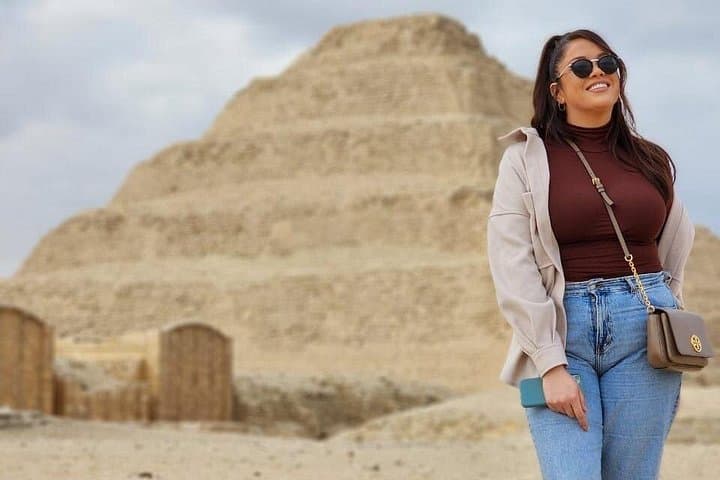
This full-day private itinerary threads the story of Egypt from the Fourth Dynasty to the Old Kingdom: Khufu’s Great Pyramid (c. 2580–2560 BCE), Khafre’s plateau and the enigmatic Sphinx, followed by the Step Pyramid of Djoser at Saqqara, Imhotep’s radical design that launched vertical stone architecture. Geology matters here — the limestone bedrock of the plateau, wind-scarred and fractured, shaped the builders’ choices and the monuments’ current weathered faces. Memphis (Mit Rahina) adds context; open-air statuary and museum pieces show everyday life and royal power in relief.
Practicalities shape the day: total tour time is about eight hours with private transport and a guide; walking distances are modest (expect 2–4 km of on-foot exploring across mixed sand and paved areas) with little elevation gain but uneven surfaces. Start early to avoid peak heat, carry at least 2 liters of water, and wear sturdy shoes and sun protection. Tickets for internal pyramid entry and some museum access can be separate; check inclusions when booking. Respect signage — climbing is prohibited and accelerates erosion. With a good guide, the ruins become a readable landscape of power, craft, and survival, and the day becomes both a lesson and a wide, sunlit walk through history.
easy.
6–8 hours.
Light walking and standing for up to several hours; suitable for most fitness levels
Major sites often require separate entrance fees; the tour lists private transport and guide as included but internal pyramid access or museum admissions may be extra — confirm when booking.
Yes — the tour is rated easy. Infants are required to sit on an adult's lap during transfers; bring sun protection and snacks for young children.
Entering the pyramid interiors usually involves narrow, steep passages; internal access is optional, limited and often requires an additional ticket — ask your guide if you have mobility concerns.
This private tour typically includes hotel pickup in Cairo and Giza; you’ll be asked to provide pickup details at booking so the guide can confirm logistics.
The pyramids and Saqqara date to Egypt’s Old Kingdom (c. 27th–22nd centuries BCE); Imhotep’s Step Pyramid at Saqqara marks a major architectural shift from mastaba to stacked stone design.
Visitor pressure, wind erosion and air pollution threaten exposed stone; stick to marked paths, don’t touch fragile reliefs, and support local museums and conservation fees when offered.
AES Travel operates guided outdoor trips and adventures with an emphasis on safety, stewardship, and memorable experiences.
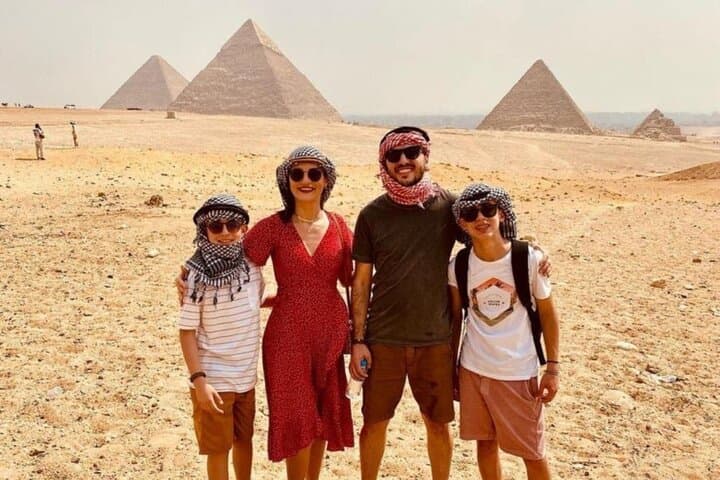

You step out onto the Giza plateau with the wind pushing warm grains of sand against your boots; the three great pyramids rise ahead, their faces catching light like ancient, slow-moving tides. Camels chew the horizon and the Sphinx watches the sunrise, its profile summoning questions that keep historians and travelers talking.
You step out onto the Giza plateau with the wind pushing warm grains of sand against your boots; the three great pyramids rise ahead, their faces catching light like ancient, slow-moving tides. Camels chew the horizon and the Sphinx watches the sunrise, its profile summoning questions that keep historians and travelers talking.
This full-day private itinerary threads the story of Egypt from the Fourth Dynasty to the Old Kingdom: Khufu’s Great Pyramid (c. 2580–2560 BCE), Khafre’s plateau and the enigmatic Sphinx, followed by the Step Pyramid of Djoser at Saqqara, Imhotep’s radical design that launched vertical stone architecture. Geology matters here — the limestone bedrock of the plateau, wind-scarred and fractured, shaped the builders’ choices and the monuments’ current weathered faces. Memphis (Mit Rahina) adds context; open-air statuary and museum pieces show everyday life and royal power in relief.
Practicalities shape the day: total tour time is about eight hours with private transport and a guide; walking distances are modest (expect 2–4 km of on-foot exploring across mixed sand and paved areas) with little elevation gain but uneven surfaces. Start early to avoid peak heat, carry at least 2 liters of water, and wear sturdy shoes and sun protection. Tickets for internal pyramid entry and some museum access can be separate; check inclusions when booking. Respect signage — climbing is prohibited and accelerates erosion. With a good guide, the ruins become a readable landscape of power, craft, and survival, and the day becomes both a lesson and a wide, sunlit walk through history.