THE ADVENTURE COLLECTIVE® · Independent discovery and booking for outdoor travel

Leave Marrakech for a full day at Ouzoud, where a 110‑meter cascade drops through olive‑lined cliffs into plunge pools. This private tour blends a scenic drive, an easy but stair‑steep hike, and a lunch with a view—perfect for travelers who want nature without logisitical hassle.
Leave Marrakech for a full day at Ouzoud, where a 110‑meter cascade drops through olive‑lined cliffs into plunge pools. This private tour blends a scenic drive, an easy but stair‑steep hike, and a lunch with a view—perfect for travelers who want nature without logisitical hassle.
You pull away from Marrakech at dawn and the city’s dust loosens behind you as cedar-streaked foothills climb into view. The road eases through olive groves and villages where children walk to school and men tend terraces; two hours later the air cools and the sound of water arrives before the falls do.
Verified experiences and guided adventures in the surrounding area.
Operated by Morocco Tours 4x4 - Day Tours · Ouzoud, Azilal Province
You pull away from Marrakech at dawn and the city’s dust loosens behind you as cedar-streaked foothills climb into view. The road eases through olive groves and villages where children walk to school and men tend terraces; two hours later the air cools and the sound of water arrives before the falls do.
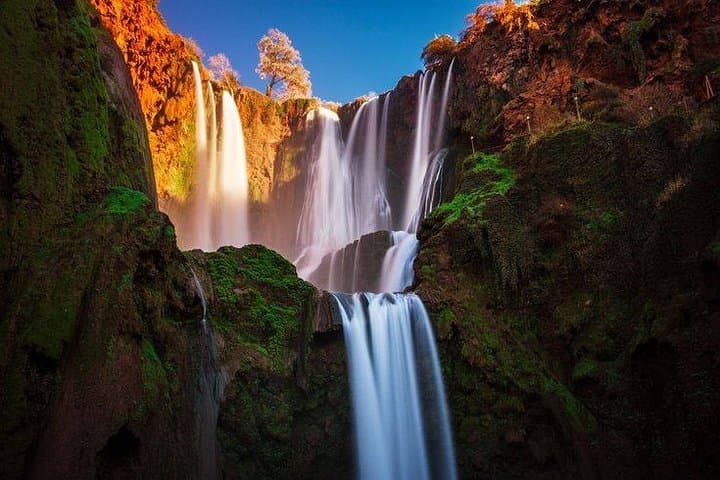
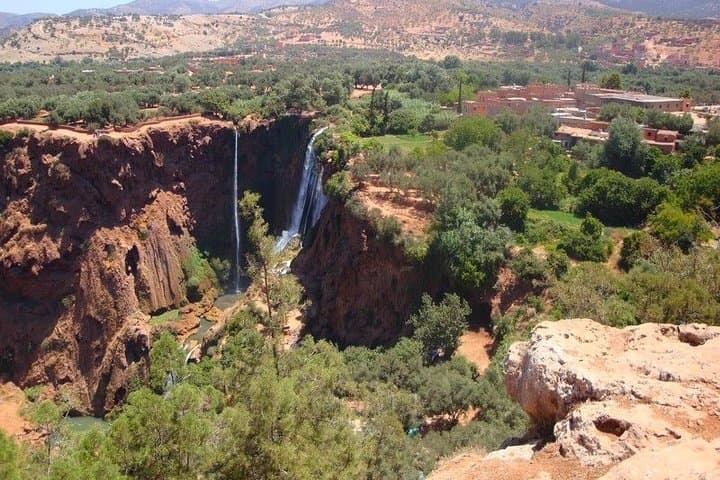
Ouzoud is not a single drop secluded in a canyon but a complex of cataracts that tumble roughly 110 meters over stepped limestone, fanning into ponds where locals bathe and mills still turn. Geologically, the falls mark where the El Abid River has cut through Miocene limestones; softer beds erode into ledges and plunge pools, giving Ouzoud its layered profile. The name itself comes from a Berber reference to the surrounding olive trees — a reminder that this landscape blends human cultivation with raw hydrology.
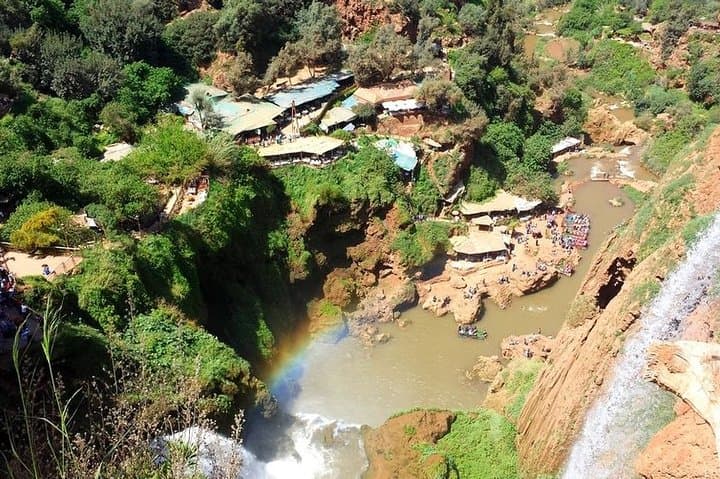
Culture here is conversational and practical. Cafes with terrace views line the upper rim, where families gather for lunch and guides point out Barbary macaques that forage on nuts and discarded fruit. Small mills and irrigation channels hint at centuries of agrarian life; the falls were long a seasonal workplace and a source of grain power before tourism reoriented the local economy.
On the trail you’ll pass viewpoints that seem to dare you closer, then steps that lead down through oleander and pines. The descent to the base is roughly 1–2 kilometers and can take 45–60 minutes depending on stops; expect stone steps, packed earth, and some slippery stretches by spray-saturated rocks. The hike back is steeper, with a sustained return climb that tests legs and lungs but rewards you with new perspectives over the gorges.
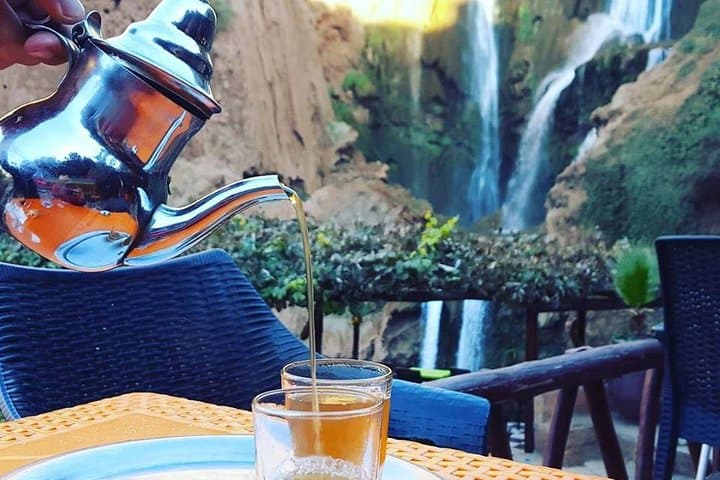
Practical guide: this private tour runs 7–9 hours door-to-door from Marrakech (about 150 km each way, two hours per leg in an A/C vehicle). Wear sturdy shoes with grip for uneven, wet terrain. Bring a refillable water bottle, sun protection and a light layer for windy rims. Lunch is usually at a terrace restaurant where tagines and fresh orange juice feel earned. Respect the wildlife: feed neither monkeys nor other animals; local guides enforce this because human food harms them.
Conservation-minded travelers will notice active local projects to protect the riverbanks and manage visitor impact. Timing matters — visit early in the day to avoid crowds and photograph the falls in the soft morning light, or stay for late afternoon when the sun slants over the cliffs. Whether you come for the dramatic plunge or to walk the river’s loop, Ouzoud offers a full-day reset where geology, culture and motion meet.
moderate.
7–9 hours (round trip from Marrakech).
Comfortable walking fitness—able to manage 45–60 minutes of downhill and a steeper uphill return on uneven stone steps.
Expect about two hours each way in a comfortable A/C vehicle, depending on traffic and stops.
The route involves many stone steps and some slippery sections; it’s moderate—suitable for most people in reasonable fitness but can be tiring on the ascent.
People do bathe in designated lower pools when conditions allow; follow local guidance and avoid strong currents after heavy rain.
This private tour description lists transfers and guide but typically does not include optional local fees or food—confirm with the operator before you go.
Yes — Barbary macaques frequent the tops and terraces; keep a respectful distance and do not feed them.
The activity is rated easy-physical overall, but the stair descent/ascent can be steep; children and seniors should assess mobility and take it slow.
Local communities have used the El Abid River for irrigation and milling for centuries; the falls’ Berber name reflects the surrounding olive groves.
Several local and national associations run riverbank and visitor‑management projects to reduce litter, protect native vegetation, and limit feeding of wildlife.
Morocco Tours 4x4 - Day Tours operates guided outdoor trips and adventures with an emphasis on safety, stewardship, and memorable experiences.
You pull away from Marrakech at dawn and the city’s dust loosens behind you as cedar-streaked foothills climb into view. The road eases through olive groves and villages where children walk to school and men tend terraces; two hours later the air cools and the sound of water arrives before the falls do.
You pull away from Marrakech at dawn and the city’s dust loosens behind you as cedar-streaked foothills climb into view. The road eases through olive groves and villages where children walk to school and men tend terraces; two hours later the air cools and the sound of water arrives before the falls do.
Ouzoud is not a single drop secluded in a canyon but a complex of cataracts that tumble roughly 110 meters over stepped limestone, fanning into ponds where locals bathe and mills still turn. Geologically, the falls mark where the El Abid River has cut through Miocene limestones; softer beds erode into ledges and plunge pools, giving Ouzoud its layered profile. The name itself comes from a Berber reference to the surrounding olive trees — a reminder that this landscape blends human cultivation with raw hydrology.
Culture here is conversational and practical. Cafes with terrace views line the upper rim, where families gather for lunch and guides point out Barbary macaques that forage on nuts and discarded fruit. Small mills and irrigation channels hint at centuries of agrarian life; the falls were long a seasonal workplace and a source of grain power before tourism reoriented the local economy.
On the trail you’ll pass viewpoints that seem to dare you closer, then steps that lead down through oleander and pines. The descent to the base is roughly 1–2 kilometers and can take 45–60 minutes depending on stops; expect stone steps, packed earth, and some slippery stretches by spray-saturated rocks. The hike back is steeper, with a sustained return climb that tests legs and lungs but rewards you with new perspectives over the gorges.
Practical guide: this private tour runs 7–9 hours door-to-door from Marrakech (about 150 km each way, two hours per leg in an A/C vehicle). Wear sturdy shoes with grip for uneven, wet terrain. Bring a refillable water bottle, sun protection and a light layer for windy rims. Lunch is usually at a terrace restaurant where tagines and fresh orange juice feel earned. Respect the wildlife: feed neither monkeys nor other animals; local guides enforce this because human food harms them.
Conservation-minded travelers will notice active local projects to protect the riverbanks and manage visitor impact. Timing matters — visit early in the day to avoid crowds and photograph the falls in the soft morning light, or stay for late afternoon when the sun slants over the cliffs. Whether you come for the dramatic plunge or to walk the river’s loop, Ouzoud offers a full-day reset where geology, culture and motion meet.