THE ADVENTURE COLLECTIVE® · Independent discovery and booking for outdoor travel

Explore Cerveteri’s Banditaccia Necropolis with a private guide: walk among tumuli carved from tufa, then see Etruscan treasures in the local museum. This full-day tour blends outdoor archaeology and museum context—perfect for history-minded travelers based in Rome.
Explore Cerveteri’s Banditaccia Necropolis with a private guide: walk among tumuli carved from tufa, then see Etruscan treasures in the local museum. This full-day tour blends outdoor archaeology and museum context—perfect for history-minded travelers based in Rome.
You step out of the minivan and the hill opens: low scrub, olive trees, and the rounded silhouettes of tumuli that mark the Necropolis of Banditaccia. The air smells of sun-warmed grass and tufa dust; the guide’s voice threads stories through the stones as you move between carved chamber-tombs that once sheltered entire families.
Verified experiences and guided adventures in the surrounding area.
Operated by tour · Cerveteri, Lazio
You step out of the minivan and the hill opens: low scrub, olive trees, and the rounded silhouettes of tumuli that mark the Necropolis of Banditaccia. The air smells of sun-warmed grass and tufa dust; the guide’s voice threads stories through the stones as you move between carved chamber-tombs that once sheltered entire families.
Cerveteri—ancient Caere—was one of the great Etruscan city-states. The necropolis dates from the 9th to 2nd centuries BCE, its burial mounds and rock-cut chambers cut into volcanic tuff and arranged like a funerary neighborhood. Geology matters here: the soft tufa made elaborate tomb architecture possible, and over millennia the material’s grain has preserved incised doors, painted friezes and funerary beds. In town, the Museo Nazionale Cerite holds finds that trace trade with Greece and the wider Mediterranean; the Euphronios krater, a contested masterpiece, anchors modern conversations about archaeology and repatriation.
The day splits between outdoor exploration and museum time—expect uneven paths, open exposures to sun and wind, and a slow, close-up reading of Etruscan funerary life. Practical notes: entrance tickets are usually purchased on-site, the tour provides private transport and a guide, and the pace is gentle but continuous—bring layered clothing, a full water bottle and comfortable shoes. Photography is allowed in many areas but avoid flash in sensitive tombs. Time your visit for morning or late afternoon to avoid the harshest light and to feel the landscape—both living and ancient—push gently at the edges of history.
easy.
6 hours.
Suitable for most fitness levels—light walking on uneven ground with intermittent stops; minimal elevation change.
No—most operators do not include entrance fees; guests typically purchase tickets at the archaeological park and the Museo Nazionale Cerite.
The necropolis has uneven, unpaved paths and steps; some museum areas are more accessible but contact the operator beforehand to arrange accommodations.
Expect several hours of mostly gentle walking with stops for interpretation—total walking distance is moderate but on variable terrain over 3–4 hours outside plus museum time.
Private tours often include pickup from Rome or a meeting point in Cerveteri; confirm your pickup location when booking.
Cerveteri (ancient Caere) was a major Etruscan center; its necropolis records funerary practices from the 9th–2nd centuries BCE and the site’s finds—like the Euphronios krater—reveal long-distance trade links.
The necropolis is a UNESCO site; erosion of tufa and visitor impact are ongoing concerns—stay on marked paths and follow signage to protect archaeological fabric.
tour operates guided outdoor trips and adventures with an emphasis on safety, stewardship, and memorable experiences.
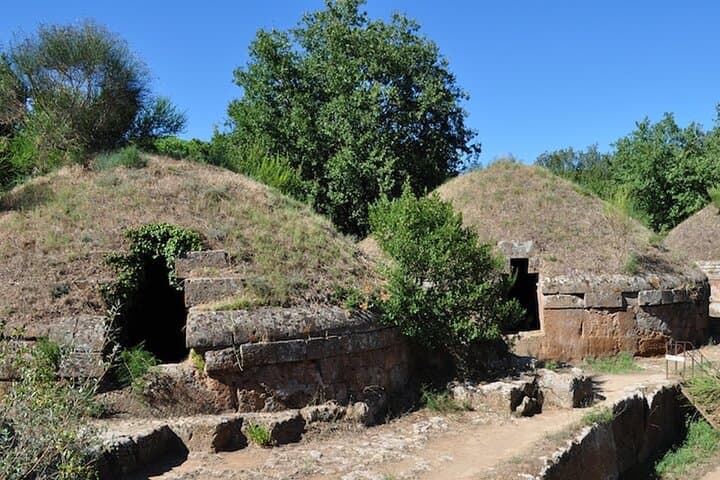
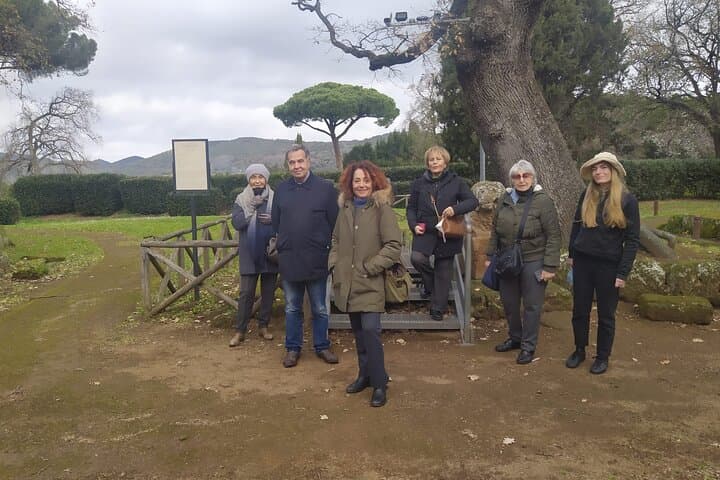
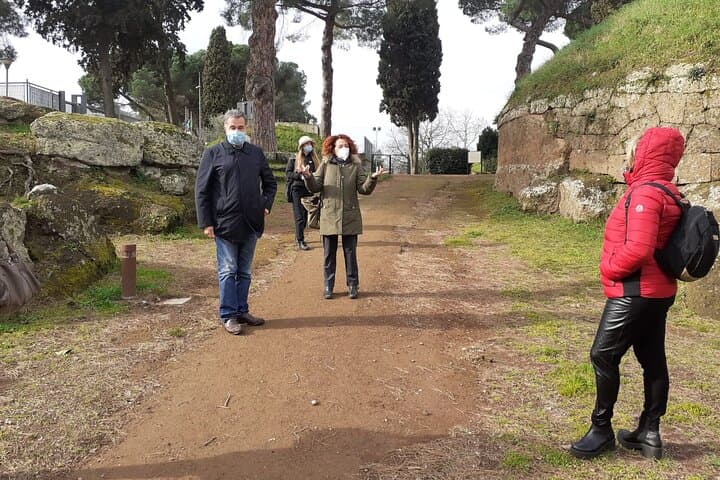
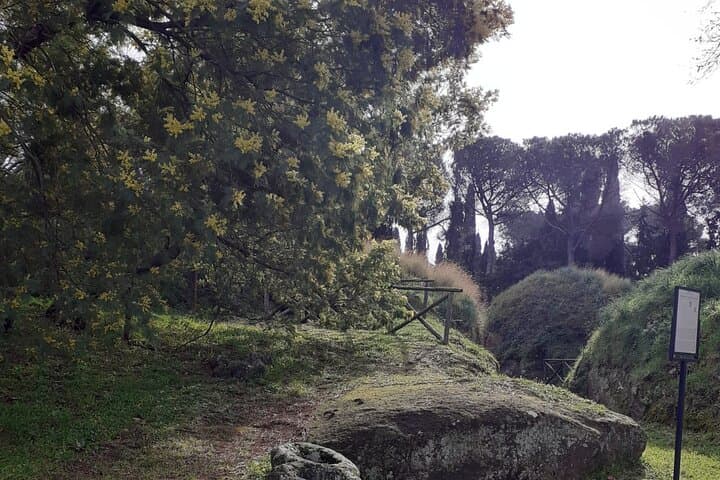
You step out of the minivan and the hill opens: low scrub, olive trees, and the rounded silhouettes of tumuli that mark the Necropolis of Banditaccia. The air smells of sun-warmed grass and tufa dust; the guide’s voice threads stories through the stones as you move between carved chamber-tombs that once sheltered entire families.
You step out of the minivan and the hill opens: low scrub, olive trees, and the rounded silhouettes of tumuli that mark the Necropolis of Banditaccia. The air smells of sun-warmed grass and tufa dust; the guide’s voice threads stories through the stones as you move between carved chamber-tombs that once sheltered entire families.
Cerveteri—ancient Caere—was one of the great Etruscan city-states. The necropolis dates from the 9th to 2nd centuries BCE, its burial mounds and rock-cut chambers cut into volcanic tuff and arranged like a funerary neighborhood. Geology matters here: the soft tufa made elaborate tomb architecture possible, and over millennia the material’s grain has preserved incised doors, painted friezes and funerary beds. In town, the Museo Nazionale Cerite holds finds that trace trade with Greece and the wider Mediterranean; the Euphronios krater, a contested masterpiece, anchors modern conversations about archaeology and repatriation.
The day splits between outdoor exploration and museum time—expect uneven paths, open exposures to sun and wind, and a slow, close-up reading of Etruscan funerary life. Practical notes: entrance tickets are usually purchased on-site, the tour provides private transport and a guide, and the pace is gentle but continuous—bring layered clothing, a full water bottle and comfortable shoes. Photography is allowed in many areas but avoid flash in sensitive tombs. Time your visit for morning or late afternoon to avoid the harshest light and to feel the landscape—both living and ancient—push gently at the edges of history.