THE ADVENTURE COLLECTIVE® · Independent discovery and booking for outdoor travel

Spend a day with an Egyptologist exploring Giza’s pyramids, the Great Sphinx, Saqqara’s Step Pyramid and ancient Memphis. This private full‑day trip combines history, accessible walking and practical local insights for first-time visitors.
Spend a day with an Egyptologist exploring Giza’s pyramids, the Great Sphinx, Saqqara’s Step Pyramid and ancient Memphis. This private full‑day trip combines history, accessible walking and practical local insights for first-time visitors.
A low sun washes the limestone faces of three great pyramids as your vehicle pulls onto the plateau; sand and stone hum with centuries of human intent and the Sphinx watches the city beyond. The day opens on the Giza Plateau — Cheops, Khafre and Menkaure — where scale and geometry still impose a quiet order on an otherwise chaotic horizon.
Verified experiences and guided adventures in the surrounding area.
Operated by Perfect Day Tours · Giza, Cairo Governorate
A low sun washes the limestone faces of three great pyramids as your vehicle pulls onto the plateau; sand and stone hum with centuries of human intent and the Sphinx watches the city beyond. The day opens on the Giza Plateau — Cheops, Khafre and Menkaure — where scale and geometry still impose a quiet order on an otherwise chaotic horizon.
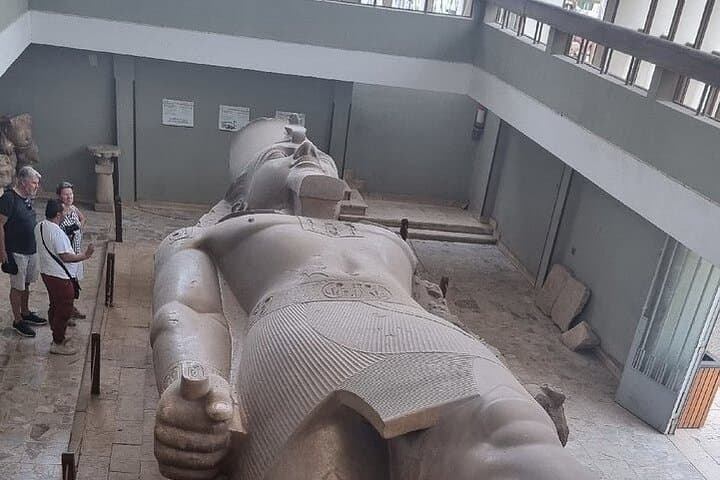
The route moves south to Saqqara, the necropolis that predates Giza. Here the Step Pyramid of Djoser marks the technical leap from flat mastaba tombs to stacked masonry, an innovation attributed to Imhotep. Memphis, the once-capital, offers ruined colossi and a sense of the administrative heart that supported pyramid building. Geologically the area sits on Pliocene limestone; weathering patterns created the distinctive colors and fossil-rich stones that Egyptians quarried for millennia.
Culturally, a licensed Egyptologist frames funerary rituals, pharaonic lineage, and artisan workshops that supplied tomb goods. Expect local rhythms: bargaining at stall fronts, the smell of grilled meat at small cafés, and drivers navigating Cairo traffic with practiced patience.
Practical guidance: plan a five-hour window with comfortable walking and short drives between sites. Wear sturdy closed shoes for uneven limestone surfaces, sun protection for exposed stretches, and carry a refillable water bottle — bottled water is commonly provided on tours but refill stations are limited. Photography is allowed in most outdoor areas; interior tombs can have restrictions. Finally, follow guide instructions around excavations and avoid touching reliefs to protect fragile surfaces.
moderate.
5 hours.
Light to moderate fitness — able to walk 2–4 miles over uneven terrain with occasional short climbs.
Yes — this tour description specifies entrance fees to the mentioned sites are included.
Interior access varies and may require additional tickets or restrictions; ask your guide in advance and expect limited entry options.
Many areas have wheelchair access and the tour lists accessibility options, but surfaces at some tombs and open sites are uneven—check specifics before booking.
Tipping is customary in Egypt; plan to tip your Egyptologist and driver separately at the end of the tour (small bills in local currency are preferred).
Giza’s pyramids date to the Fourth Dynasty (c. 2600–2500 BCE); Saqqara’s Step Pyramid of Djoser is older and represents the earliest large‑scale cut stone construction in Egypt.
Sites are fragile — follow established paths, avoid touching carved surfaces, and use refillable water to reduce plastic; support licensed local guides and official site fees that fund conservation.
Perfect Day Tours operates guided outdoor trips and adventures with an emphasis on safety, stewardship, and memorable experiences.
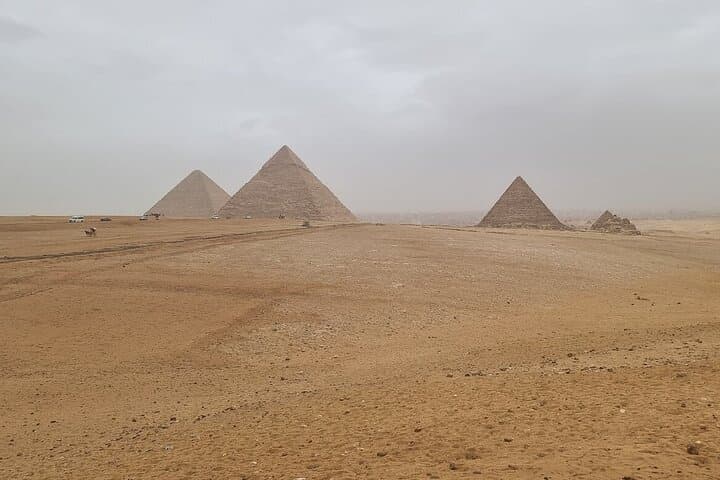
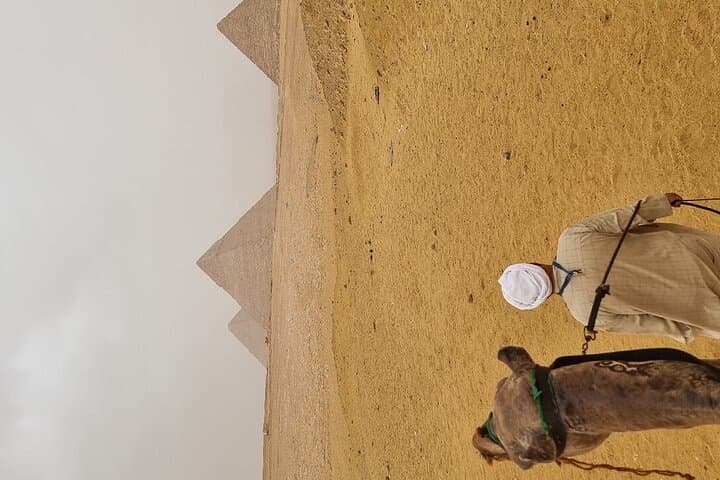
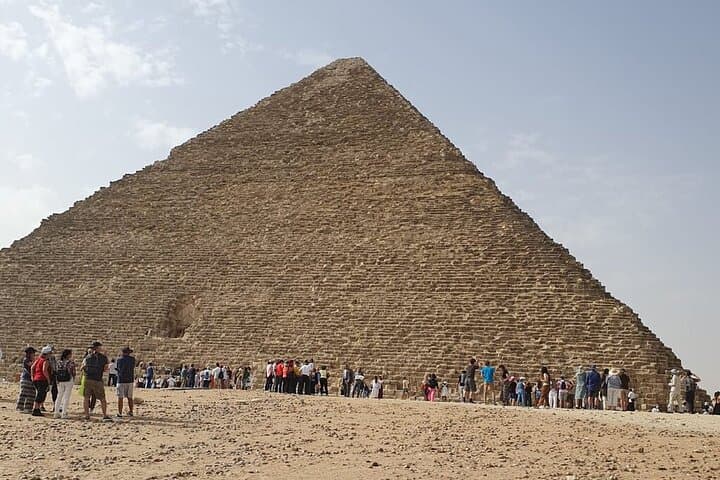
A low sun washes the limestone faces of three great pyramids as your vehicle pulls onto the plateau; sand and stone hum with centuries of human intent and the Sphinx watches the city beyond. The day opens on the Giza Plateau — Cheops, Khafre and Menkaure — where scale and geometry still impose a quiet order on an otherwise chaotic horizon.
A low sun washes the limestone faces of three great pyramids as your vehicle pulls onto the plateau; sand and stone hum with centuries of human intent and the Sphinx watches the city beyond. The day opens on the Giza Plateau — Cheops, Khafre and Menkaure — where scale and geometry still impose a quiet order on an otherwise chaotic horizon.
The route moves south to Saqqara, the necropolis that predates Giza. Here the Step Pyramid of Djoser marks the technical leap from flat mastaba tombs to stacked masonry, an innovation attributed to Imhotep. Memphis, the once-capital, offers ruined colossi and a sense of the administrative heart that supported pyramid building. Geologically the area sits on Pliocene limestone; weathering patterns created the distinctive colors and fossil-rich stones that Egyptians quarried for millennia.
Culturally, a licensed Egyptologist frames funerary rituals, pharaonic lineage, and artisan workshops that supplied tomb goods. Expect local rhythms: bargaining at stall fronts, the smell of grilled meat at small cafés, and drivers navigating Cairo traffic with practiced patience.
Practical guidance: plan a five-hour window with comfortable walking and short drives between sites. Wear sturdy closed shoes for uneven limestone surfaces, sun protection for exposed stretches, and carry a refillable water bottle — bottled water is commonly provided on tours but refill stations are limited. Photography is allowed in most outdoor areas; interior tombs can have restrictions. Finally, follow guide instructions around excavations and avoid touching reliefs to protect fragile surfaces.