THE ADVENTURE COLLECTIVE® · Independent discovery and booking for outdoor travel

Spend a day exploring Egypt’s pivotal pyramid sites on a private, all-inclusive tour with an Egyptologist. Visit Giza’s great pyramids and Sphinx, then continue to Saqqara’s Step Pyramid and Dahshur’s Bent and Red Pyramids for a compact history of early stone architecture.
Spend a day exploring Egypt’s pivotal pyramid sites on a private, all-inclusive tour with an Egyptologist. Visit Giza’s great pyramids and Sphinx, then continue to Saqqara’s Step Pyramid and Dahshur’s Bent and Red Pyramids for a compact history of early stone architecture.
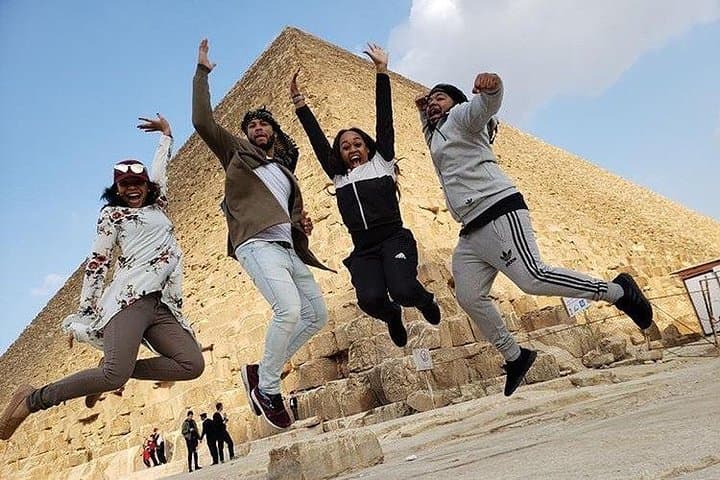
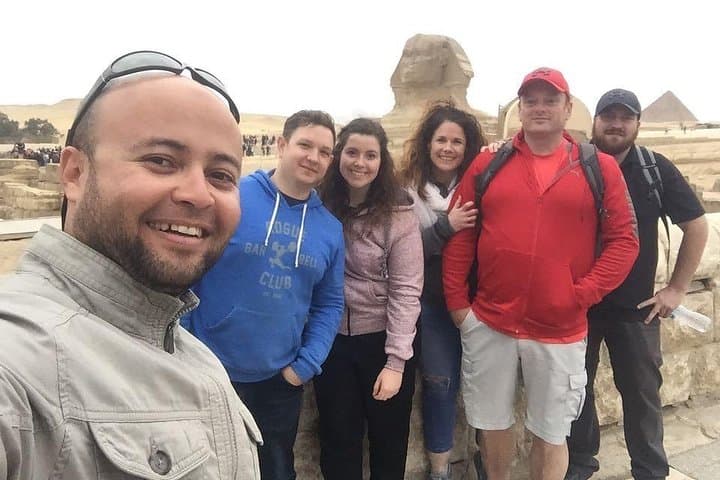
You step off an air-conditioned vehicle onto a wind-swept plateau where stone meets sky: the three great pyramids of Giza rise blunt and geometric against the desert, their angled faces catching the sun. The Sphinx watches eastward, its limestone face wind-polished and inscrutable, while camels shift and snort at the edge of the complex, inviting the tourist pose.
Verified experiences and guided adventures in the surrounding area.
Operated by Wonders of Egypt Tours · Giza, Cairo Governorate
You step off an air-conditioned vehicle onto a wind-swept plateau where stone meets sky: the three great pyramids of Giza rise blunt and geometric against the desert, their angled faces catching the sun. The Sphinx watches eastward, its limestone face wind-polished and inscrutable, while camels shift and snort at the edge of the complex, inviting the tourist pose.
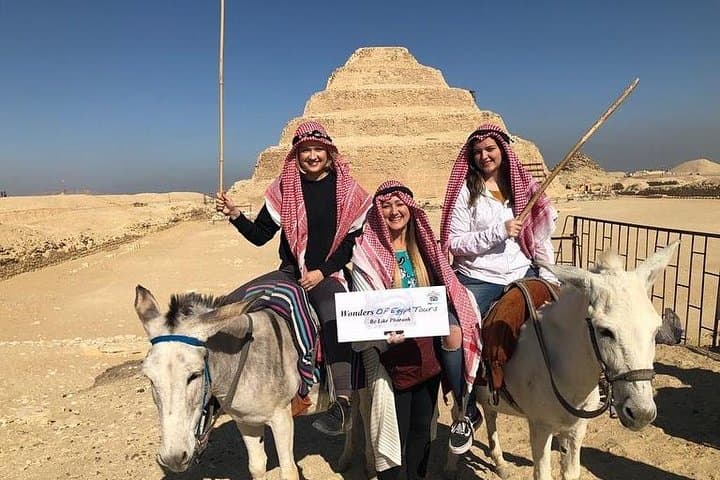
This full-day circuit links sites spanning Egypt’s Old Kingdom and earlier dynasties. Saqqara’s Step Pyramid at Djoser marks a turning point in construction — the first major stone monument designed by Imhotep — while Dahshur showcases experimentation in form with the Bent Pyramid and the Red Pyramid, an early example of the true smooth-sided tomb. Geologically, the monuments sit on a bed of stable limestone quarries; the same stone that gave rise to the plateau’s monuments also shaped the nearby necropolises and worker villages.
Expect expert narration: a private Egyptologist accompanies the day, pointing out architectural detail, funerary inscriptions and the cultural rituals of burial that created these complexes. Practical rhythm matters here: plan for 7–8 hours, sheltered breaks for water and shade, and wide-angle photos from the Giza panorama.
Advice: wear sturdy walking shoes for sandy, uneven ground; bring sun protection and a refillable bottle; budget small bills for restroom tips, camels or souvenirs. Interior access to specific pyramids can be limited and sometimes requires additional tickets; confirm availability ahead. Start early to avoid midday heat and to see the light favoring photography across the plateau.
easy.
7–8 hours.
Suitable for most fitness levels; day involves walking on uneven and sandy ground for several hours.
This itinerary shows admission included for the listed sites, but interior access to specific pyramids can be limited and sometimes requires separate tickets—confirm at booking.
The tour runs about 7–8 hours with multiple stops; expect 60–90 minute visits at major sites and short transfers between locations in an air-conditioned vehicle.
Yes—private transportation and a private Egyptologist guide are included, plus bottled water and lunch per the tour details.
Camel rides are usually offered locally for a fee and photography is allowed in most outdoor areas; interior tombs may restrict photography—ask your guide on arrival.
These sites track the evolution of funerary architecture from mudbrick mastabas to the step monument at Saqqara and the development of true pyramids in Dahshur and Giza during the Old Kingdom.
Erosion, pollution, and visitor pressure are ongoing concerns; stick to designated paths, avoid touching fragile reliefs, and follow guide instructions to reduce impact.
Wonders of Egypt Tours operates guided outdoor trips and adventures with an emphasis on safety, stewardship, and memorable experiences.

You step off an air-conditioned vehicle onto a wind-swept plateau where stone meets sky: the three great pyramids of Giza rise blunt and geometric against the desert, their angled faces catching the sun. The Sphinx watches eastward, its limestone face wind-polished and inscrutable, while camels shift and snort at the edge of the complex, inviting the tourist pose.
You step off an air-conditioned vehicle onto a wind-swept plateau where stone meets sky: the three great pyramids of Giza rise blunt and geometric against the desert, their angled faces catching the sun. The Sphinx watches eastward, its limestone face wind-polished and inscrutable, while camels shift and snort at the edge of the complex, inviting the tourist pose.
This full-day circuit links sites spanning Egypt’s Old Kingdom and earlier dynasties. Saqqara’s Step Pyramid at Djoser marks a turning point in construction — the first major stone monument designed by Imhotep — while Dahshur showcases experimentation in form with the Bent Pyramid and the Red Pyramid, an early example of the true smooth-sided tomb. Geologically, the monuments sit on a bed of stable limestone quarries; the same stone that gave rise to the plateau’s monuments also shaped the nearby necropolises and worker villages.
Expect expert narration: a private Egyptologist accompanies the day, pointing out architectural detail, funerary inscriptions and the cultural rituals of burial that created these complexes. Practical rhythm matters here: plan for 7–8 hours, sheltered breaks for water and shade, and wide-angle photos from the Giza panorama.
Advice: wear sturdy walking shoes for sandy, uneven ground; bring sun protection and a refillable bottle; budget small bills for restroom tips, camels or souvenirs. Interior access to specific pyramids can be limited and sometimes requires additional tickets; confirm availability ahead. Start early to avoid midday heat and to see the light favoring photography across the plateau.