THE ADVENTURE COLLECTIVE® · Independent discovery and booking for outdoor travel

Spend a day moving between Egypt’s most iconic sites: stand by the pyramids, ride a camel across the plateau, explore Tutankhamun’s treasures, and wander the lively Khan el-Khalili bazaar. This private tour pairs convenience with expert context for first-time visitors.
Spend a day moving between Egypt’s most iconic sites: stand by the pyramids, ride a camel across the plateau, explore Tutankhamun’s treasures, and wander the lively Khan el-Khalili bazaar. This private tour pairs convenience with expert context for first-time visitors.
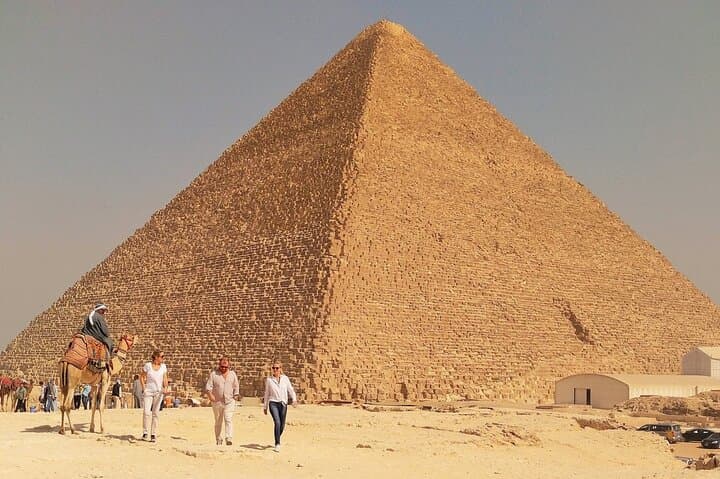
The sun tilts sharp across the Giza Plateau as you step from an air-conditioned vehicle into a landscape that has measured millennia. Sand sifts at the edges of ancient stone; the Pyramids of Khufu, Khafre and Menkaure stand like crafted geometry against sky, while the Sphinx watches the horizon with an unreadable calm. A thirty-minute camel ride lets the desert nudge your pace, the animal’s slow rhythm setting a human counterpoint to the massive, engineered lines of the tombs.
Verified experiences and guided adventures in the surrounding area.
Operated by Alfa Tours Egypt · Giza, Giza Governorate
The sun tilts sharp across the Giza Plateau as you step from an air-conditioned vehicle into a landscape that has measured millennia. Sand sifts at the edges of ancient stone; the Pyramids of Khufu, Khafre and Menkaure stand like crafted geometry against sky, while the Sphinx watches the horizon with an unreadable calm. A thirty-minute camel ride lets the desert nudge your pace, the animal’s slow rhythm setting a human counterpoint to the massive, engineered lines of the tombs.
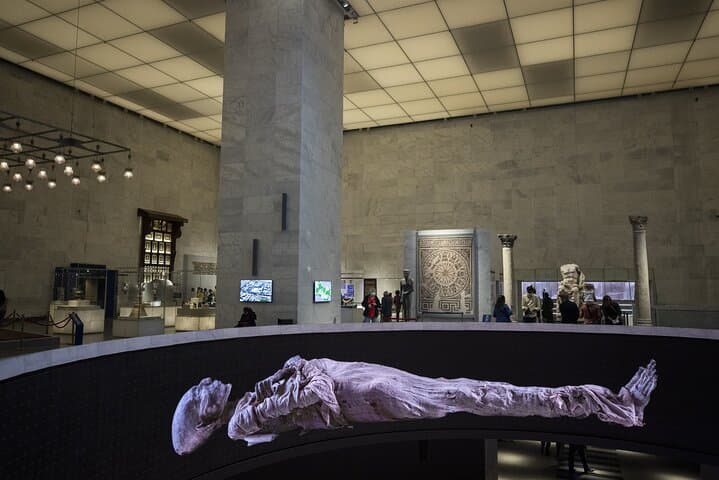
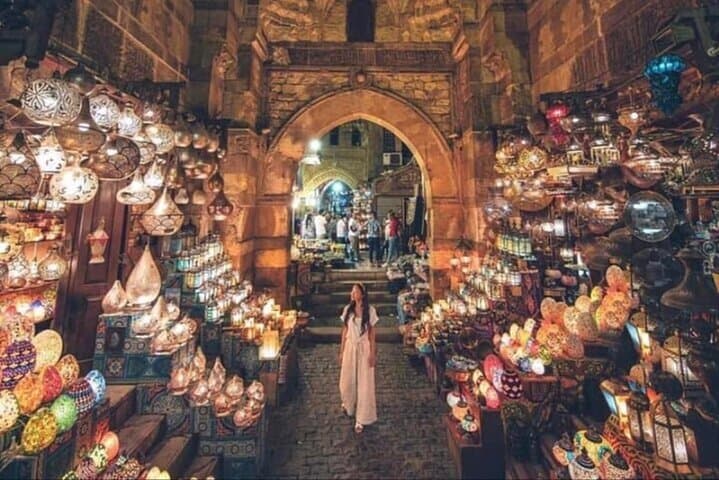
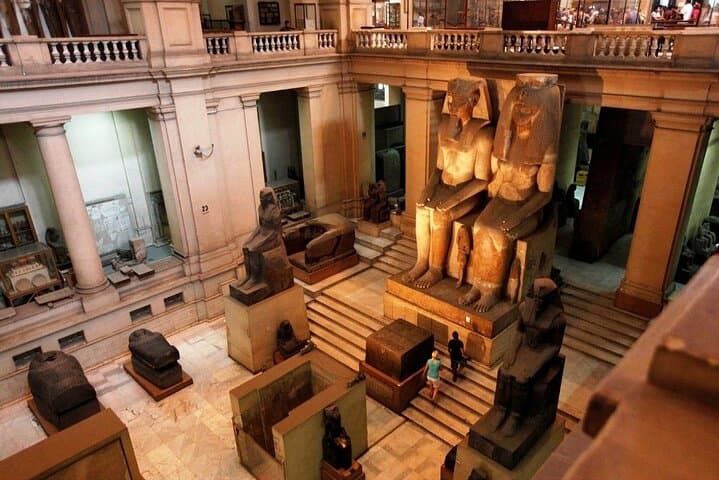
This route stitches visible history with civic life: the pyramids date to Egypt’s Old Kingdom (c. 2600 BCE), built as royal tombs, carved from local limestone that used to be seabed. Nearby, the Egyptian Museum catalogs millennia of funerary craft—Tutankhamun’s mask among its headlines—while Khan el-Khalili bazaar exposes the city’s living commerce, where merchants trade spices, brassware and conversation.
Expect a mostly flat day with 2–4 km of walking across firm limestone, packed sand and uneven stone paths; minimal elevation gain makes it accessible but sun and dust are constant companions. Practical details matter: carry water, sun protection and local currency for small purchases and tipping. The private guide included with this excursion streamlines entry lines and explains museum etiquette and photo restrictions, but visitors should plan for security checks and occasional crowds.
Timing your visit for early morning light or late afternoon softens heat and enhances photography. Respect signage at conservation sites, negotiate politely in markets, and leave no trace on fragile stones—the plateau has weathered enough of human attention already.
easy.
8 hours.
Light walking and standing for several hours; suitable for most fitness levels but take breaks if needed.
Yes—this private tour includes entry to the Pyramids of Giza, the Great Sphinx area and the Egyptian Museum as specified in the itinerary.
Yes—the itinerary includes a 30-minute camel ride on the Giza Plateau; handlers manage the animals and safety briefings are provided.
Hotel pickup and drop-off in Cairo or Giza are included, typically from your lobby at the scheduled start time.
A lunch is included in the tour price; ask your guide about options if you have dietary restrictions.
The Giza pyramids were constructed during Egypt’s Fourth Dynasty (c. 2600–2500 BCE) as monumental royal tombs; the Egyptian Museum aggregates artifacts spanning pharaonic history including Tutankhamun’s treasures.
High visitor numbers and urban pollution stress the limestone monuments; respect restricted areas, avoid touching carved stone, and support licensed guides to reduce unmanaged foot traffic.
Alfa Tours Egypt operates guided outdoor trips and adventures with an emphasis on safety, stewardship, and memorable experiences.
The sun tilts sharp across the Giza Plateau as you step from an air-conditioned vehicle into a landscape that has measured millennia. Sand sifts at the edges of ancient stone; the Pyramids of Khufu, Khafre and Menkaure stand like crafted geometry against sky, while the Sphinx watches the horizon with an unreadable calm. A thirty-minute camel ride lets the desert nudge your pace, the animal’s slow rhythm setting a human counterpoint to the massive, engineered lines of the tombs.
The sun tilts sharp across the Giza Plateau as you step from an air-conditioned vehicle into a landscape that has measured millennia. Sand sifts at the edges of ancient stone; the Pyramids of Khufu, Khafre and Menkaure stand like crafted geometry against sky, while the Sphinx watches the horizon with an unreadable calm. A thirty-minute camel ride lets the desert nudge your pace, the animal’s slow rhythm setting a human counterpoint to the massive, engineered lines of the tombs.
This route stitches visible history with civic life: the pyramids date to Egypt’s Old Kingdom (c. 2600 BCE), built as royal tombs, carved from local limestone that used to be seabed. Nearby, the Egyptian Museum catalogs millennia of funerary craft—Tutankhamun’s mask among its headlines—while Khan el-Khalili bazaar exposes the city’s living commerce, where merchants trade spices, brassware and conversation.
Expect a mostly flat day with 2–4 km of walking across firm limestone, packed sand and uneven stone paths; minimal elevation gain makes it accessible but sun and dust are constant companions. Practical details matter: carry water, sun protection and local currency for small purchases and tipping. The private guide included with this excursion streamlines entry lines and explains museum etiquette and photo restrictions, but visitors should plan for security checks and occasional crowds.
Timing your visit for early morning light or late afternoon softens heat and enhances photography. Respect signage at conservation sites, negotiate politely in markets, and leave no trace on fragile stones—the plateau has weathered enough of human attention already.