THE ADVENTURE COLLECTIVE® · Independent discovery and booking for outdoor travel

Spend a focused day at Giza’s plateau and the Egyptian Museum with a private Egyptologist guide, a short camel ride and time for shopping. This full-day itinerary pairs outdoor exploration of the pyramids with curated museum highlights and local market stops.
Spend a focused day at Giza’s plateau and the Egyptian Museum with a private Egyptologist guide, a short camel ride and time for shopping. This full-day itinerary pairs outdoor exploration of the pyramids with curated museum highlights and local market stops.
You step onto the Giza plateau as the morning sun flattens the shadows of three hulking silhouettes. Sand whispers across worn limestone; a camel’s silhouette nods against the Great Pyramid while the Sphinx watches traffic below with an immovable calm. The air holds dust, diesel and the faint clink of nearby market stalls — an energetic fringe to one of the oldest monuments on Earth.
Verified experiences and guided adventures in the surrounding area.
Operated by Travel Band tours · Giza, Giza
You step onto the Giza plateau as the morning sun flattens the shadows of three hulking silhouettes. Sand whispers across worn limestone; a camel’s silhouette nods against the Great Pyramid while the Sphinx watches traffic below with an immovable calm. The air holds dust, diesel and the faint clink of nearby market stalls — an energetic fringe to one of the oldest monuments on Earth.
These stone giants date to the Fourth Dynasty (around 2500 BCE). The Great Pyramid of Khufu, Khafre’s slightly smaller neighbor and the nearby Sphinx (likely modeled on Khafre’s face) were carved from local Giza limestone and capped with polished casing stones that once reflected the sun. The adjacent Valley Temple and the winding bazaars reveal the modern pulse of Egypt: craftsmen, vendors and cafes as much a part of the place as the monuments.
Practical guidance matters here. Expect an 8‑hour day with extensive walking on uneven, sandy surfaces and open exposure to sun and wind. The Egyptian Museum showcases 5,000 years of antiquities — including Tutankhamen’s treasures — and pairs a cool, indoor contrast to the plateau’s heat. Plan your visit early to avoid midday glare, bring a refillable water bottle, and leave large backpacks and rules-bending curiosity at the gate; preservation rules are enforced.
Camel rides are short, flat-rate experiences on soft sand rather than long desert treks — treat them as photo opportunities and follow handlers’ instructions. Shop with polite bargaining, carry small notes for tips, and allow time at the museum for highlights rather than a race through every gallery. With steady shoes, sun protection and a patient pace, this full-day private tour balances the awe of ancient engineering with local culture and practical comfort.
easy.
8 hours.
Suitable for most fitness levels; involves several hours of walking on uneven ground and standing in galleries
This tour lists admission as included for the Giza complex and the Egyptian Museum; confirm with the operator before booking.
The included camel experience is approximately 15 minutes — a short, guided ride intended for photos and local flavor rather than a long trek.
Yes — the tour is rated easy and suitable for a wide range of fitness levels, but mobility constraints can make plateau walking and museum stairs challenging.
Tipping is customary; plan small local-currency notes for the guide, driver and camel handler to acknowledge service.
The Giza pyramids date to the Old Kingdom (c. 2600–2500 BCE); the plateau functioned as a funerary complex with temples, causeways and workers’ cemeteries.
Visitor pressure, pollution and weathering challenge preservation; follow site rules, avoid touching monuments and use marked paths to reduce impact.
Travel Band tours operates guided outdoor trips and adventures with an emphasis on safety, stewardship, and memorable experiences.
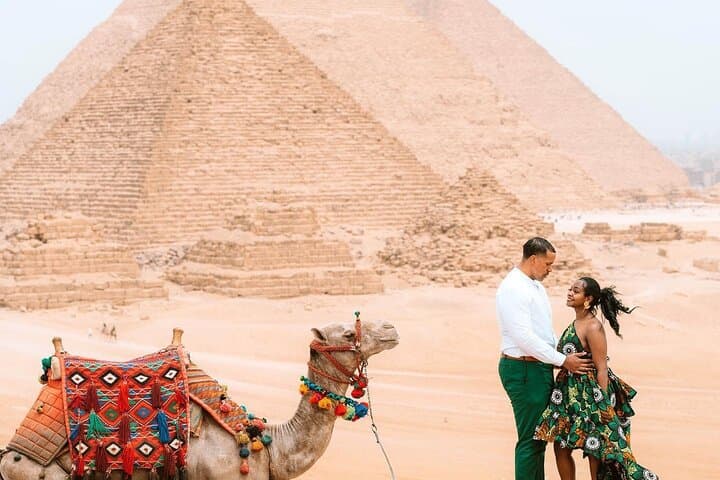


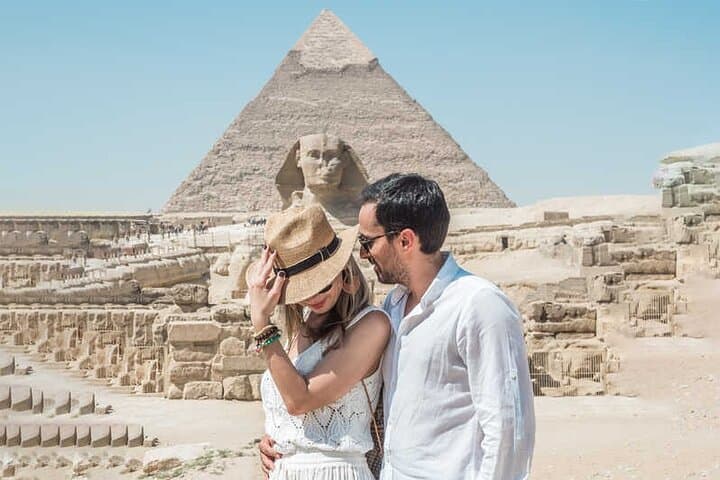
You step onto the Giza plateau as the morning sun flattens the shadows of three hulking silhouettes. Sand whispers across worn limestone; a camel’s silhouette nods against the Great Pyramid while the Sphinx watches traffic below with an immovable calm. The air holds dust, diesel and the faint clink of nearby market stalls — an energetic fringe to one of the oldest monuments on Earth.
You step onto the Giza plateau as the morning sun flattens the shadows of three hulking silhouettes. Sand whispers across worn limestone; a camel’s silhouette nods against the Great Pyramid while the Sphinx watches traffic below with an immovable calm. The air holds dust, diesel and the faint clink of nearby market stalls — an energetic fringe to one of the oldest monuments on Earth.
These stone giants date to the Fourth Dynasty (around 2500 BCE). The Great Pyramid of Khufu, Khafre’s slightly smaller neighbor and the nearby Sphinx (likely modeled on Khafre’s face) were carved from local Giza limestone and capped with polished casing stones that once reflected the sun. The adjacent Valley Temple and the winding bazaars reveal the modern pulse of Egypt: craftsmen, vendors and cafes as much a part of the place as the monuments.
Practical guidance matters here. Expect an 8‑hour day with extensive walking on uneven, sandy surfaces and open exposure to sun and wind. The Egyptian Museum showcases 5,000 years of antiquities — including Tutankhamen’s treasures — and pairs a cool, indoor contrast to the plateau’s heat. Plan your visit early to avoid midday glare, bring a refillable water bottle, and leave large backpacks and rules-bending curiosity at the gate; preservation rules are enforced.
Camel rides are short, flat-rate experiences on soft sand rather than long desert treks — treat them as photo opportunities and follow handlers’ instructions. Shop with polite bargaining, carry small notes for tips, and allow time at the museum for highlights rather than a race through every gallery. With steady shoes, sun protection and a patient pace, this full-day private tour balances the awe of ancient engineering with local culture and practical comfort.