THE ADVENTURE COLLECTIVE® · Independent discovery and booking for outdoor travel

Spend a day moving through Egypt’s foundational sites — Giza’s Great Pyramid, Saqqara’s Step Pyramid and the open-air ruins of Memphis — with door-to-door pickup. This private tour blends close-up archaeology with practical logistics for a hassle-free experience.
Spend a day moving through Egypt’s foundational sites — Giza’s Great Pyramid, Saqqara’s Step Pyramid and the open-air ruins of Memphis — with door-to-door pickup. This private tour blends close-up archaeology with practical logistics for a hassle-free experience.
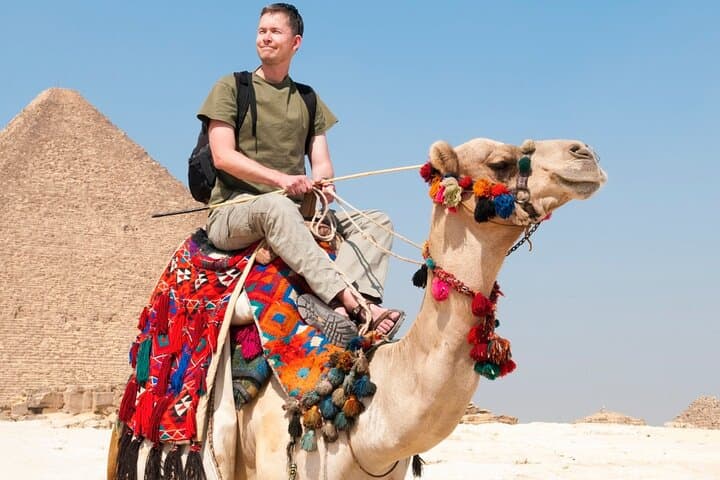
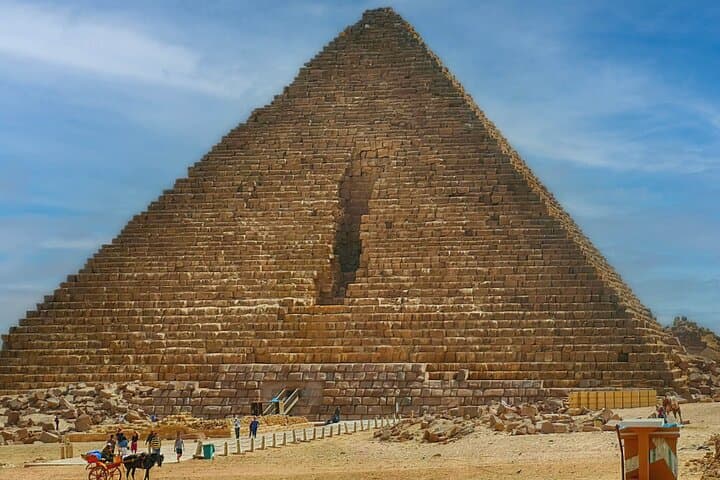
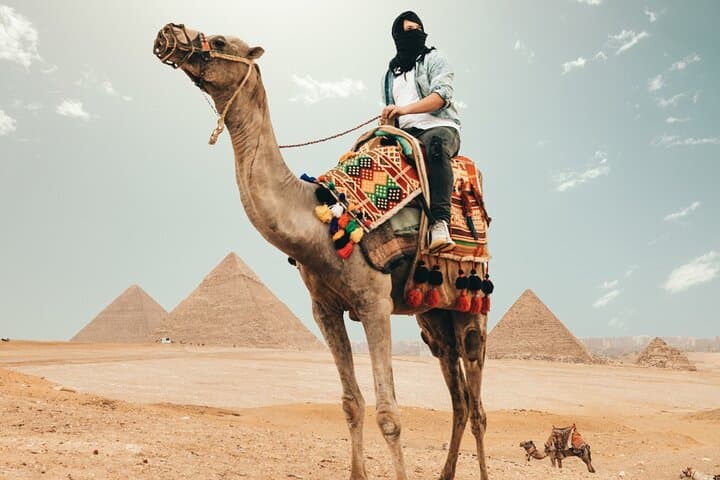
The morning light flattens into gold across the plateau as an air-conditioned vehicle pulls away from a Cairo hotel, the desert wind nudging loose sand like a patient guide. By 9:00 AM you stand beneath the angled faces of Khufu, Khafre and Menkaure — massive geometry that still imposes order on the skyline and on anyone looking up.
Verified experiences and guided adventures in the surrounding area.
Operated by Amwaj · Giza, Giza
The morning light flattens into gold across the plateau as an air-conditioned vehicle pulls away from a Cairo hotel, the desert wind nudging loose sand like a patient guide. By 9:00 AM you stand beneath the angled faces of Khufu, Khafre and Menkaure — massive geometry that still imposes order on the skyline and on anyone looking up.
This full-day route threads three eras of ancient Egypt. Giza’s pyramids and the Sphinx define Old Kingdom ambition. Saqqara’s Step Pyramid of Djoser marks the earliest stone architecture and the beginning of pyramid evolution. Memphis, once the political heart of pharaonic Egypt, offers open-air giants — seated colossi and fragments that tell of a capital that governed the Nile valley.
Geologically the region is Pleistocene limestone and sand, stripped to bedrock at the plateau, which explains the monumental stonework. Culturally, local guides animate the sites with stories of labor, ritual and the administrators who recorded Cairo’s early maps.
Practical guidance: tours run about eight hours with hotel pickup and drop-off; bring sun protection, a refillable water bottle, and comfortable walking shoes. Site interiors — especially the Great Pyramid — may need an extra ticket and can be physically constraining. Expect uneven stone surfaces, occasional dust, and crowds at peak hours; aim for the earlier slot to capture cooler light and clearer photos. Cash helps for small purchases and tips. Respect barriers and follow your guide to protect fragile reliefs. With basic preparation, this private day delivers concentrated access to Egypt’s formative monuments and a compact lesson in how empire, stone and river shaped civilization.
easy.
8 hours.
Suitable for most travelers who can walk short distances and stand for periods; minimal elevation change.
Yes — the tour includes door-to-door transfers from hotels in Cairo and Giza as stated in the itinerary.
Entrance fees are typically not included unless specified; check your booking details and bring cash for tickets like the Great Pyramid interior.
Access to interior chambers is limited and often requires a separate, limited-availability ticket; ask the operator in advance to reserve one.
The provider lists wheelchair-accessible options for transport and many site areas, but some uneven surfaces and steps at ruins may limit access to certain spots.
Saqqara’s Step Pyramid, commissioned by Djoser and designed by Imhotep, is the earliest large-scale cut-stone construction; Memphis served as Egypt’s administrative capital during the Old Kingdom.
Visitor impact is managed through restricted access zones and timed entries; staying on paths, avoiding touching carvings, and following guide instructions helps preserve fragile stone and painted surfaces.
Amwaj operates guided outdoor trips and adventures with an emphasis on safety, stewardship, and memorable experiences.

The morning light flattens into gold across the plateau as an air-conditioned vehicle pulls away from a Cairo hotel, the desert wind nudging loose sand like a patient guide. By 9:00 AM you stand beneath the angled faces of Khufu, Khafre and Menkaure — massive geometry that still imposes order on the skyline and on anyone looking up.
The morning light flattens into gold across the plateau as an air-conditioned vehicle pulls away from a Cairo hotel, the desert wind nudging loose sand like a patient guide. By 9:00 AM you stand beneath the angled faces of Khufu, Khafre and Menkaure — massive geometry that still imposes order on the skyline and on anyone looking up.
This full-day route threads three eras of ancient Egypt. Giza’s pyramids and the Sphinx define Old Kingdom ambition. Saqqara’s Step Pyramid of Djoser marks the earliest stone architecture and the beginning of pyramid evolution. Memphis, once the political heart of pharaonic Egypt, offers open-air giants — seated colossi and fragments that tell of a capital that governed the Nile valley.
Geologically the region is Pleistocene limestone and sand, stripped to bedrock at the plateau, which explains the monumental stonework. Culturally, local guides animate the sites with stories of labor, ritual and the administrators who recorded Cairo’s early maps.
Practical guidance: tours run about eight hours with hotel pickup and drop-off; bring sun protection, a refillable water bottle, and comfortable walking shoes. Site interiors — especially the Great Pyramid — may need an extra ticket and can be physically constraining. Expect uneven stone surfaces, occasional dust, and crowds at peak hours; aim for the earlier slot to capture cooler light and clearer photos. Cash helps for small purchases and tips. Respect barriers and follow your guide to protect fragile reliefs. With basic preparation, this private day delivers concentrated access to Egypt’s formative monuments and a compact lesson in how empire, stone and river shaped civilization.