THE ADVENTURE COLLECTIVE® · Independent discovery and booking for outdoor travel

Spend a private day moving between the monumental Giza Plateau and the National Museum of Egyptian Civilization in Old Cairo. This eight-hour tour pairs outdoor exploration of the pyramids with curated museum displays and a guided look at Egypt’s royal mummies.
Spend a private day moving between the monumental Giza Plateau and the National Museum of Egyptian Civilization in Old Cairo. This eight-hour tour pairs outdoor exploration of the pyramids with curated museum displays and a guided look at Egypt’s royal mummies.
The morning light strips the horizon into hard edges: sandstone blocks, the silhouette of three pyramids, and a wind that pushes grains of sand like an impatient tour guide. On a private eight-hour itinerary you move between that stark desert geometry and the cool, curated halls of the National Museum of Egyptian Civilization, tracing Egypt’s story from stone to city.
Verified experiences and guided adventures in the surrounding area.
Operated by Upper Egypt Services · Giza, Giza Governorate
The morning light strips the horizon into hard edges: sandstone blocks, the silhouette of three pyramids, and a wind that pushes grains of sand like an impatient tour guide. On a private eight-hour itinerary you move between that stark desert geometry and the cool, curated halls of the National Museum of Egyptian Civilization, tracing Egypt’s story from stone to city.
The pyramids at Giza—Khufu, Khafre and Menkaure—date to the Fourth Dynasty (around 2600–2500 BCE). Their limestone and granite faces reveal both monumental engineering and the erosion that centuries of wind and sun have carved into them. The NMEC in Fustat gathers objects across millennia, from funerary assemblages to the royal mummies relocated there for preservation and public study.
Culturally, this pairing shows Egypt’s continuum: funerary landscape and modern museum practice sit within a living urban fabric where vendors, mosque calls and Nile-side rhythms intersect.
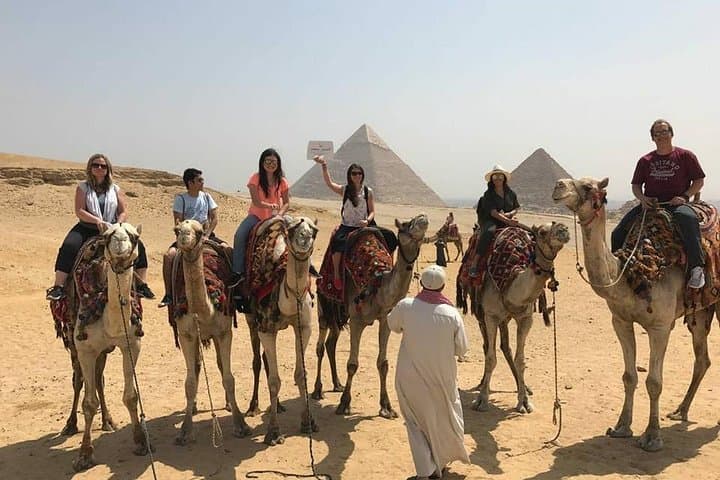
Practical guidance: start early to avoid heat and peak crowds; wear closed, sturdy shoes for uneven stones and compacted sand. Bring a refillable water bottle and sun protection—shade is scarce on the plateau. Photography is generally allowed at Giza but restricted for some museum exhibits; ask your guide about flash or tripod rules. Expect short walks, a camel-ride photo opportunity, and time in climate-controlled galleries where objects are explained alongside conservation efforts.
A private guide and air-conditioned transport make logistics straightforward, leaving you to focus on scale—both the human scale of artifacts and the nearly impossible scale of the pyramids themselves.
easy.
8 hours.
Light to moderate—comfortable walking for several hours, including short stretches on uneven ground and sand
Yes—this private tour typically includes hotel pickup and drop-off by air-conditioned minivan; confirm your pickup point when booking.
Entrance to the Great Pyramid may be offered but often requires an additional ticket and involves narrow passages; check availability and physical requirements with your guide.
Photography policies vary by exhibit; the museum often restricts flash and certain artifact photography—your guide can advise on-site.
Transport and many museum surfaces are wheelchair accessible, but the pyramid plateau and some areas may be challenging—notify the operator in advance for accommodations.
The Giza pyramids date to Egypt’s Fourth Dynasty (c. 2600–2500 BCE) and served as monumental tombs; the NMEC consolidates artifacts from Pharaonic through Coptic and Islamic periods, highlighting continuity in Egyptian civilization.
Visitor pressure and sandblasting can damage exposed stone; follow stay-on-path guidance, avoid climbing structures, and support museums that fund conservation and controlled access.
Upper Egypt Services operates guided outdoor trips and adventures with an emphasis on safety, stewardship, and memorable experiences.

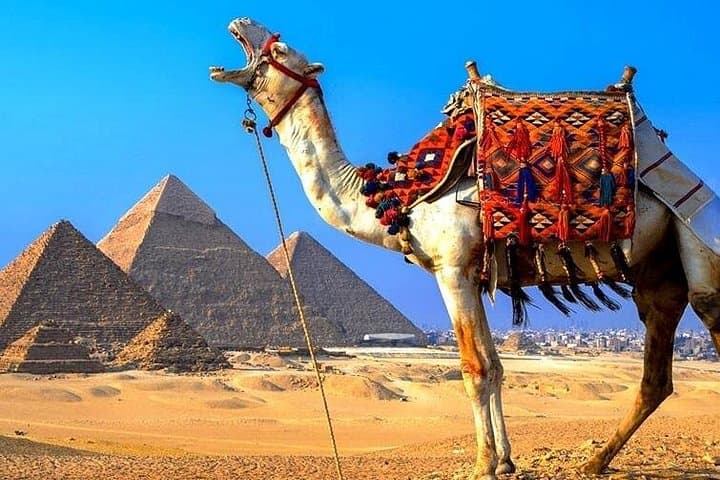
The morning light strips the horizon into hard edges: sandstone blocks, the silhouette of three pyramids, and a wind that pushes grains of sand like an impatient tour guide. On a private eight-hour itinerary you move between that stark desert geometry and the cool, curated halls of the National Museum of Egyptian Civilization, tracing Egypt’s story from stone to city.
The morning light strips the horizon into hard edges: sandstone blocks, the silhouette of three pyramids, and a wind that pushes grains of sand like an impatient tour guide. On a private eight-hour itinerary you move between that stark desert geometry and the cool, curated halls of the National Museum of Egyptian Civilization, tracing Egypt’s story from stone to city.
The pyramids at Giza—Khufu, Khafre and Menkaure—date to the Fourth Dynasty (around 2600–2500 BCE). Their limestone and granite faces reveal both monumental engineering and the erosion that centuries of wind and sun have carved into them. The NMEC in Fustat gathers objects across millennia, from funerary assemblages to the royal mummies relocated there for preservation and public study.
Culturally, this pairing shows Egypt’s continuum: funerary landscape and modern museum practice sit within a living urban fabric where vendors, mosque calls and Nile-side rhythms intersect.
Practical guidance: start early to avoid heat and peak crowds; wear closed, sturdy shoes for uneven stones and compacted sand. Bring a refillable water bottle and sun protection—shade is scarce on the plateau. Photography is generally allowed at Giza but restricted for some museum exhibits; ask your guide about flash or tripod rules. Expect short walks, a camel-ride photo opportunity, and time in climate-controlled galleries where objects are explained alongside conservation efforts.
A private guide and air-conditioned transport make logistics straightforward, leaving you to focus on scale—both the human scale of artifacts and the nearly impossible scale of the pyramids themselves.