THE ADVENTURE COLLECTIVE® · Independent discovery and booking for outdoor travel

Fly from El Gouna to Cairo for a private, full-day sweep of the Giza Pyramids, the Egyptian Museum and Khan el-Khalili bazaar. This guided tour packs the highlights into a long, efficient day with local insight and private transport.
Fly from El Gouna to Cairo for a private, full-day sweep of the Giza Pyramids, the Egyptian Museum and Khan el-Khalili bazaar. This guided tour packs the highlights into a long, efficient day with local insight and private transport.
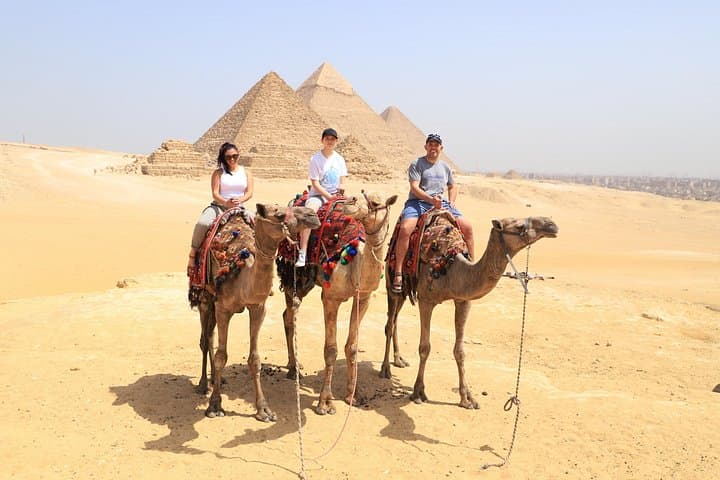
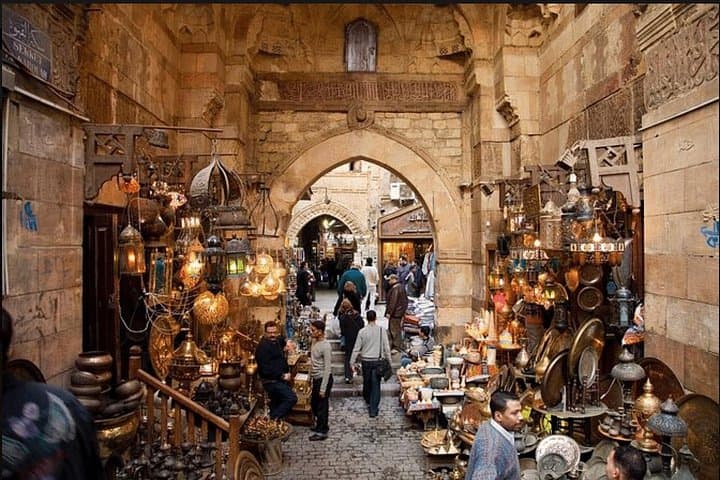
You step out of the Hurghada terminal into a pale desert morning and, within an hour, find the Giza plateau spread before you: sun-bleached limestone slopes, the pyramids’ angles cutting a clean silhouette against Cairo’s distant haze. The day moves with deliberate rhythm — flights, drives, an Egyptologist’s steady commentary — but the moments arrest you: the Sphinx’s stone gaze, the shadowy corridor inside a pyramid, the clamor of Khan el-Khalili where silver and spice stalls crowd narrow lanes.
Verified experiences and guided adventures in the surrounding area.
Operated by Emo Tours Sweden · Giza, Giza Governorate
You step out of the Hurghada terminal into a pale desert morning and, within an hour, find the Giza plateau spread before you: sun-bleached limestone slopes, the pyramids’ angles cutting a clean silhouette against Cairo’s distant haze. The day moves with deliberate rhythm — flights, drives, an Egyptologist’s steady commentary — but the moments arrest you: the Sphinx’s stone gaze, the shadowy corridor inside a pyramid, the clamor of Khan el-Khalili where silver and spice stalls crowd narrow lanes.
This corridor of time blends Old Kingdom engineering with Pharaonic ritual and Ottoman-era commerce. Geologically, the plateau is Pleistocene limestone sculpted into blocks that ancient masons shifted with sledges and manpower; archaeologically the Egyptian Museum houses hundreds of thousands of artifacts that map a continuous civilization. Culturally, the Bazaar remains a live marketplace where bargaining is part ritual, part practical trade.
Practicality governs the visit. Expect long, active hours on your feet, uneven surfaces at the pyramids, and tight museum rooms. Carry water, sun protection, and a lightweight daypack; modest dress is appropriate for public spaces. Timing matters: early morning light is best for photos and cooler for walking; late afternoon returns to El Gouna and Hurghada through the Red Sea plain.
For independent travelers this trip compresses essential Cairo into a disciplined day: major monuments, curator-led context, and an urban market experience. If you prize depth over breadth, consider a follow-up day in Cairo to explore neighborhoods, smaller museums, or the Nile’s quieter banks.
moderate.
12–15 hours.
Able to handle a long day with multiple short walks, uneven ground at archaeological sites, and some standing in museum galleries.
Plan on a full travel day of roughly 12–15 hours door-to-door from El Gouna, including domestic flights, transfers and time at each site.
The tour itinerary indicates admission is included for key sites like the pyramids and the Egyptian Museum; confirm specifics at booking.
The tour is rated as suitable for all fitness levels, but it involves long days, walking on uneven terrain and stairs—assess mobility and stamina before booking.
Modest, lightweight clothing is recommended for respect and comfort in public and religious-adjacent spaces; comfortable, breathable fabrics work best.
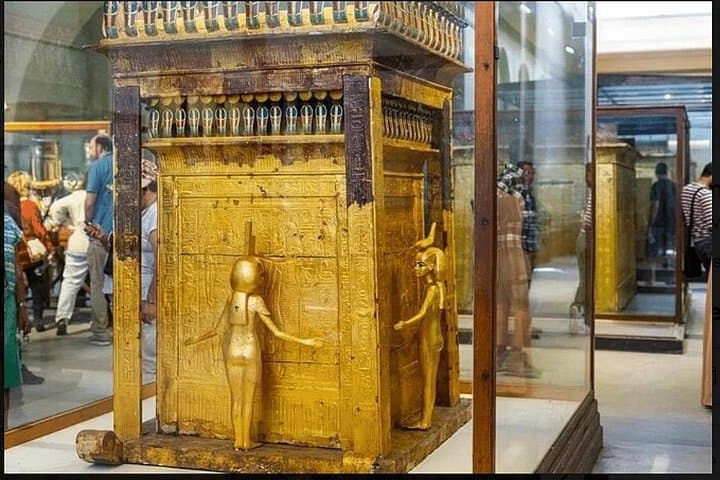
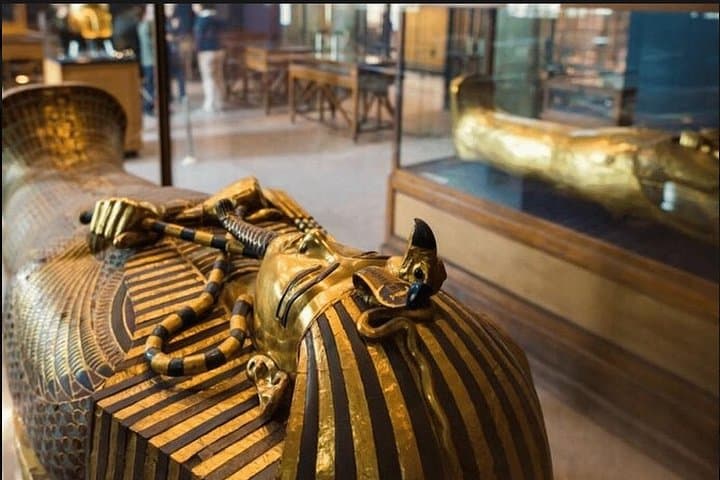
The Giza pyramids date to Egypt’s Fourth Dynasty (c. 2600–2500 BCE); the Egyptian Museum collects artifacts spanning millennia, including Tutankhamun’s treasures.
High visitor traffic can stress ancient sites; stick to designated paths, avoid climbing monuments, and support local guides who practice responsible tourism.
Emo Tours Sweden operates guided outdoor trips and adventures with an emphasis on safety, stewardship, and memorable experiences.
You step out of the Hurghada terminal into a pale desert morning and, within an hour, find the Giza plateau spread before you: sun-bleached limestone slopes, the pyramids’ angles cutting a clean silhouette against Cairo’s distant haze. The day moves with deliberate rhythm — flights, drives, an Egyptologist’s steady commentary — but the moments arrest you: the Sphinx’s stone gaze, the shadowy corridor inside a pyramid, the clamor of Khan el-Khalili where silver and spice stalls crowd narrow lanes.
You step out of the Hurghada terminal into a pale desert morning and, within an hour, find the Giza plateau spread before you: sun-bleached limestone slopes, the pyramids’ angles cutting a clean silhouette against Cairo’s distant haze. The day moves with deliberate rhythm — flights, drives, an Egyptologist’s steady commentary — but the moments arrest you: the Sphinx’s stone gaze, the shadowy corridor inside a pyramid, the clamor of Khan el-Khalili where silver and spice stalls crowd narrow lanes.
This corridor of time blends Old Kingdom engineering with Pharaonic ritual and Ottoman-era commerce. Geologically, the plateau is Pleistocene limestone sculpted into blocks that ancient masons shifted with sledges and manpower; archaeologically the Egyptian Museum houses hundreds of thousands of artifacts that map a continuous civilization. Culturally, the Bazaar remains a live marketplace where bargaining is part ritual, part practical trade.
Practicality governs the visit. Expect long, active hours on your feet, uneven surfaces at the pyramids, and tight museum rooms. Carry water, sun protection, and a lightweight daypack; modest dress is appropriate for public spaces. Timing matters: early morning light is best for photos and cooler for walking; late afternoon returns to El Gouna and Hurghada through the Red Sea plain.
For independent travelers this trip compresses essential Cairo into a disciplined day: major monuments, curator-led context, and an urban market experience. If you prize depth over breadth, consider a follow-up day in Cairo to explore neighborhoods, smaller museums, or the Nile’s quieter banks.