THE ADVENTURE COLLECTIVE® · Independent discovery and booking for outdoor travel

A private full-day drive from Reykjavík along Iceland’s south coast to Jökulsárlón and Diamond Beach, stopping at Seljalandsfoss, Skógafoss and Reynisfjara. Expect long driving stretches balanced by dramatic waterfalls, glacier lagoons and icy beaches.
A private full-day drive from Reykjavík along Iceland’s south coast to Jökulsárlón and Diamond Beach, stopping at Seljalandsfoss, Skógafoss and Reynisfjara. Expect long driving stretches balanced by dramatic waterfalls, glacier lagoons and icy beaches.
You step into the van as a low Atlantic light softens the Reykjavík skyline, and for the next twelve hours the south coast of Iceland is the day’s compass.
Verified experiences and guided adventures in the surrounding area.
Operated by FG private tours · Höfn, South Iceland
You step into the van as a low Atlantic light softens the Reykjavík skyline, and for the next twelve hours the south coast of Iceland is the day’s compass.
The drive east follows the Ring Road past black, wind-sculpted beaches and farmland where volcanic ridges cut the horizon. Early stops at Seljalandsfoss and Skógafoss compress Iceland’s elemental forces into two short walks: Seljalandsfoss lets you walk behind a 60-meter curtain of water while the river throws light back at you, and Skógafoss hits like a shoulder—raw, loud, framed by a spray that often hosts rainbows. Between these, your driver slips in local stories—chapters about long-ago settlements, the 2010 Eyjafjallajökull eruption, and how glaciers shape the coastline.
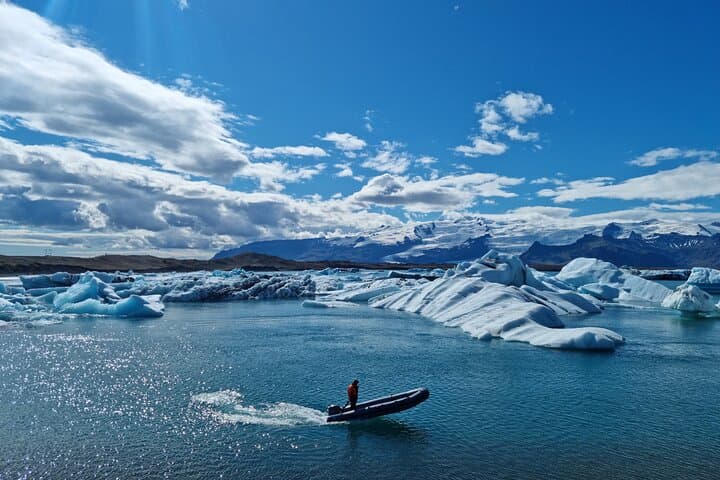
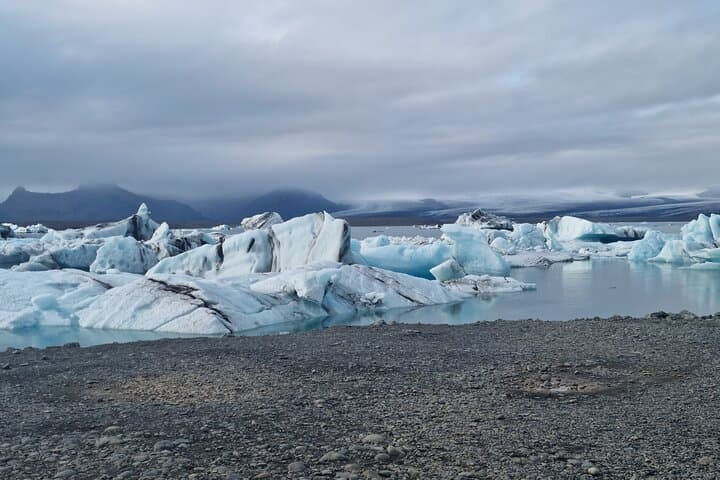
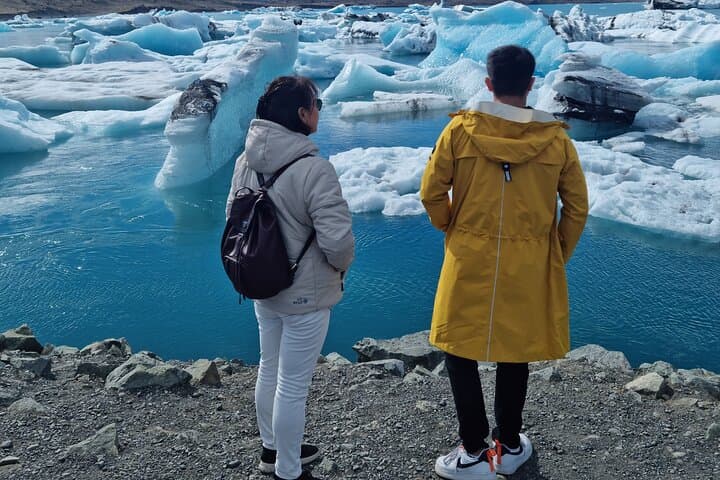
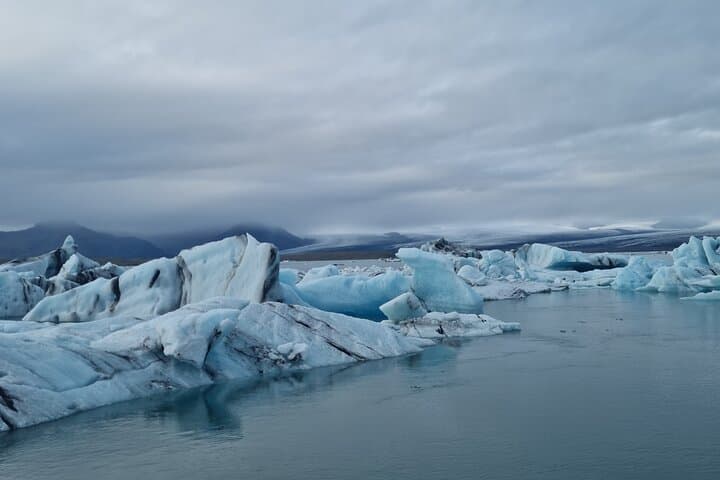
The farther east you go the more the land changes cadence: black sand gives way to gravel plains under the shadow of Vatnajökull, Europe’s largest ice cap. At Jökulsárlón the landscape slows. Icebergs the size of houses calve from Breiðamerkurjökull and lazily spin in a lagoon that feeds the Atlantic. On the adjacent Diamond Beach the tide chisels and deposits crystal-blue ice against the black sand; the pieces glint like scattered gemstones. Seals appear often in the lagoon, curious and unconcerned, popping up to watch visitors.
Geology is visible here on a human scale—layers of ash and lava in cliff faces, glacier-fed waters that erode and redeposit beaches overnight. The tour’s route also passes Eyjafjallajökull and Mýrdalsjökull volcanoes, reminders that the coastline is a live story of fire, ice, and motion.
Practical note: this is a long day—about 11–12 hours total with roughly 4–4.5 hours of driving each way from Reykjavík—so plan for stretches, charging your camera, and a patient tolerance for wet weather. The private format means flexibility: longer photo stops, food breaks in Vík, or short detours to view the glacier’s edge.
Expect easy walks at each stop—boardwalks and short trails—but bring waterproof layers and good boots; waves at Reynisfjara are unpredictable and should be respected. In shoulder seasons daylight and road conditions change quickly; winter brings fewer tourists but more demanding driving and shorter windows for photography.
This tour offers a concentrated view into why Iceland’s south coast draws travelers: active geology, accessible glaciers, and shoreline drama that unfolds slowly enough for you to notice the small things—the way light pools in an iceberg’s cavity, the call of a seabird, the smell of wet stone.
If you want the spectacle without navigating the logistics, a private driver lets you relax into the landscape and let the coast arrange the day.
easy.
11–12 hours.
Suitable for most fitness levels; requires ability to do short walks on uneven ground and stand for photo stops.
Expect about 11–12 hours total, with roughly 4–4.5 hours of driving each way from Reykjavík depending on road and traffic conditions.
Bottled water is provided; food stops are included but meals are at your expense—drivers will stop in towns like Vík for refreshments.
Yes; the tour offers pickup from hotels and guesthouses in Reykjavík—confirm your pickup point when booking.
Yes—physically the tour is easy with short walks, but the long time in a vehicle and variable weather should be considered for those who need frequent breaks.
Seals are commonly seen in the lagoon, though sightings aren’t guaranteed—bring binoculars for the best chance of viewing.
The operator can cancel for severe weather with refund rules that typically require 24-hours notice; safety is prioritized for coastal and winter conditions.
The south coast is shaped by volcanic activity—Eyjafjallajökull’s 2010 eruption made international headlines, and nearby glaciers like Vatnajökull have sculpted coastlines for millennia.
Stay on marked paths, don’t remove ice or stones from beaches, and observe wildlife from a distance to protect fragile coastal ecosystems.
FG private tours operates guided outdoor trips and adventures with an emphasis on safety, stewardship, and memorable experiences.
You step into the van as a low Atlantic light softens the Reykjavík skyline, and for the next twelve hours the south coast of Iceland is the day’s compass.
You step into the van as a low Atlantic light softens the Reykjavík skyline, and for the next twelve hours the south coast of Iceland is the day’s compass.
The drive east follows the Ring Road past black, wind-sculpted beaches and farmland where volcanic ridges cut the horizon. Early stops at Seljalandsfoss and Skógafoss compress Iceland’s elemental forces into two short walks: Seljalandsfoss lets you walk behind a 60-meter curtain of water while the river throws light back at you, and Skógafoss hits like a shoulder—raw, loud, framed by a spray that often hosts rainbows. Between these, your driver slips in local stories—chapters about long-ago settlements, the 2010 Eyjafjallajökull eruption, and how glaciers shape the coastline.
The farther east you go the more the land changes cadence: black sand gives way to gravel plains under the shadow of Vatnajökull, Europe’s largest ice cap. At Jökulsárlón the landscape slows. Icebergs the size of houses calve from Breiðamerkurjökull and lazily spin in a lagoon that feeds the Atlantic. On the adjacent Diamond Beach the tide chisels and deposits crystal-blue ice against the black sand; the pieces glint like scattered gemstones. Seals appear often in the lagoon, curious and unconcerned, popping up to watch visitors.
Geology is visible here on a human scale—layers of ash and lava in cliff faces, glacier-fed waters that erode and redeposit beaches overnight. The tour’s route also passes Eyjafjallajökull and Mýrdalsjökull volcanoes, reminders that the coastline is a live story of fire, ice, and motion.
Practical note: this is a long day—about 11–12 hours total with roughly 4–4.5 hours of driving each way from Reykjavík—so plan for stretches, charging your camera, and a patient tolerance for wet weather. The private format means flexibility: longer photo stops, food breaks in Vík, or short detours to view the glacier’s edge.
Expect easy walks at each stop—boardwalks and short trails—but bring waterproof layers and good boots; waves at Reynisfjara are unpredictable and should be respected. In shoulder seasons daylight and road conditions change quickly; winter brings fewer tourists but more demanding driving and shorter windows for photography.
This tour offers a concentrated view into why Iceland’s south coast draws travelers: active geology, accessible glaciers, and shoreline drama that unfolds slowly enough for you to notice the small things—the way light pools in an iceberg’s cavity, the call of a seabird, the smell of wet stone.
If you want the spectacle without navigating the logistics, a private driver lets you relax into the landscape and let the coast arrange the day.