THE ADVENTURE COLLECTIVE® · Independent discovery and booking for outdoor travel

An eight-hour private circuit of Santorini that stitches caldera viewpoints, Oia’s blue domes, wine tasting, Akrotiri’s ruins and the Red Beach into one panoramic day. Ideal for first-time visitors who want a guided, flexible way to see the island’s highlights.
An eight-hour private circuit of Santorini that stitches caldera viewpoints, Oia’s blue domes, wine tasting, Akrotiri’s ruins and the Red Beach into one panoramic day. Ideal for first-time visitors who want a guided, flexible way to see the island’s highlights.
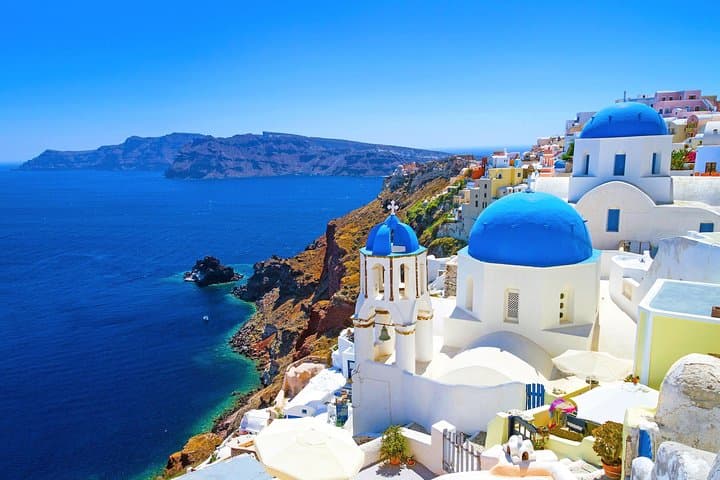
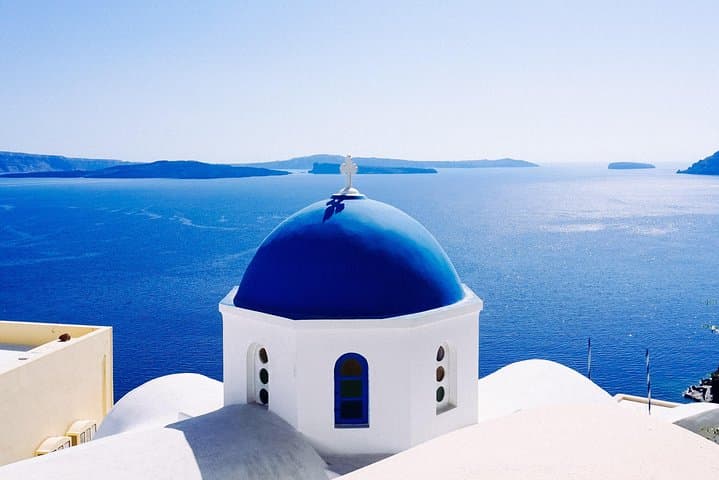
You step off the minibus in Fira and the caldera reaches up to meet you—sheer white villages perched on black volcanic cliffs, the Aegean laying out like a cooled sheet of glass below. Over the next eight hours the island moves around you: narrow alleys that demand a slower pace, a roadside where red and black lava still tells the story of the volcano, and a handful of lookout points where Thirasia and the central crater hold the view.
Verified experiences and guided adventures in the surrounding area.
Operated by Marinakis Tours · Fira, Cyclades
You step off the minibus in Fira and the caldera reaches up to meet you—sheer white villages perched on black volcanic cliffs, the Aegean laying out like a cooled sheet of glass below. Over the next eight hours the island moves around you: narrow alleys that demand a slower pace, a roadside where red and black lava still tells the story of the volcano, and a handful of lookout points where Thirasia and the central crater hold the view.
The tour threads together Santorini’s geological drama and human history. The caldera formed in a catastrophic Minoan eruption; the cliffs you walk along are the hard evidence—layers of ash and basalt that create red, black and yellow bands visible from the road to Oia. Akrotiri, the Bronze Age site on the south coast, preserves a pre-eruption town and offers a window into long-ago life on the island. Religious history appears in compact form at Panagia Episkopi, an 11th-century Byzantine church that houses a prized icon and reflects Santorini’s medieval past.
Culturally, Santorini is both farm and stage: dry-farmed vineyards cling to low-staked terraces, producing intense Assyrtiko wines, and islanders still celebrate namedays and village festivals with a directness that feels immediate. The guide will point out cave houses cut into pumice stone and explain how locals historically sheltered animals and stored wine in underground cellars.
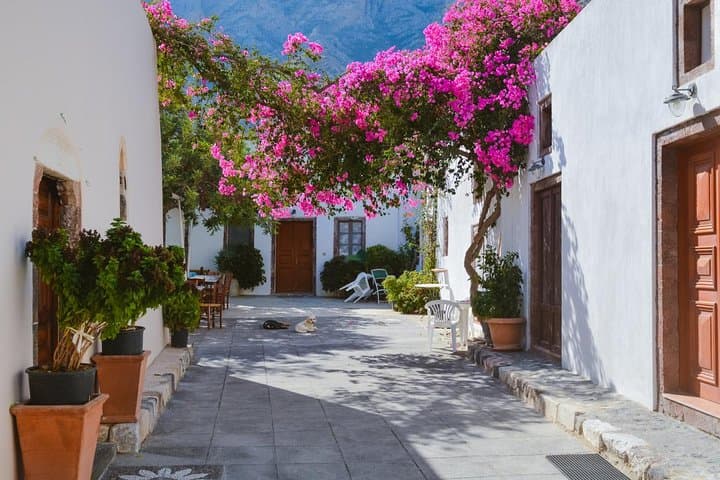
Practical rhythm: the day is mostly driven with short walks—expect 1–2 km of strolling in Oia, narrow staircases on caldera edges, and up to 100–300 m of elevation change at viewpoints like Skaros and Imerovigli. Stops include Firostefani and Imerovigli for caldera views, Oia for shopping and castle views, Pyrgos for a short village walk, a wine-tasting stop with panoramic seating, Akrotiri for exterior viewing of the site (museum entry optional), and a photo stop at Red Beach. Wear sturdy shoes with grip for uneven cobbles and bring sun protection; the island’s light is sharp and unrelenting in summer.
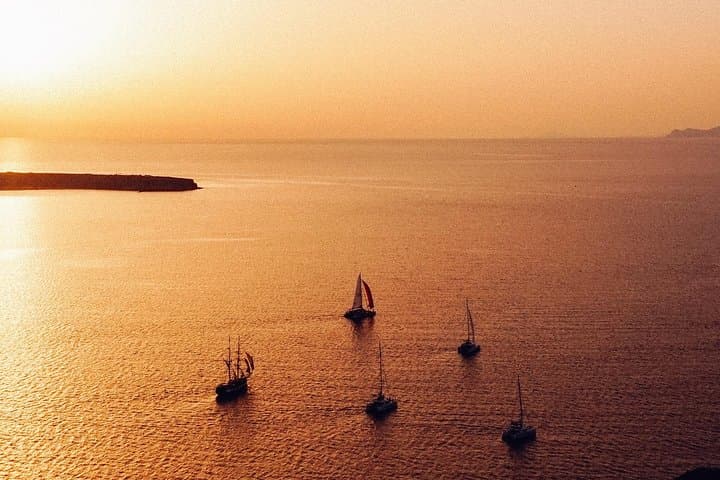
Timing is flexible—the operator will pick you up from hotels, ports or the airport and can tailor the end point. If you want sunset in Oia, plan to schedule the last leg accordingly; expect longer photo stops then. Note that some archaeological areas require ticket purchases and the guide cannot accompany you inside the exhibition halls.
This is a compact, sensory day: the caldera will pull you toward its edges, the sea will press its color into every frame, and the volcanic rocks will remind you that Santorini’s beauty is built on upheaval. Come prepared, move deliberately, and the island will reveal both its panoramas and its quieter historical corners.
easy.
8 hours.
Suitable for most fitness levels; involves short walks and some stair-climbing.
Yes—pick up from hotels, the port or airport is offered; confirm the exact pickup point when you book.
No—museum or archaeological site admissions are not included; you can purchase entry on-site if you wish to enter.
The tour is private and flexible—discuss specific interests (sunset in Oia, longer wine tasting) when booking to adjust the schedule.
Expect brief walks of 1–2 km in villages like Oia plus staircases on the caldera rim; overall exertion is low to moderate.
The tour notes wheelchair-accessible transport, but caldera viewpoints and narrow alleys may limit access—contact the supplier to discuss specific needs.
Language options depend on the operator and should be confirmed at booking; many guides speak English and multiple European languages.
Santorini’s present form was shaped by the massive Minoan eruption circa 1600 BCE; Akrotiri preserves an advanced Bronze Age settlement that pre-dates modern island villages.
Heavy tourism strains footpaths and fragile caldera edges—stay on marked routes, avoid climbing on Skaros and support local businesses that follow sustainable practices.
Marinakis Tours operates guided outdoor trips and adventures with an emphasis on safety, stewardship, and memorable experiences.
You step off the minibus in Fira and the caldera reaches up to meet you—sheer white villages perched on black volcanic cliffs, the Aegean laying out like a cooled sheet of glass below. Over the next eight hours the island moves around you: narrow alleys that demand a slower pace, a roadside where red and black lava still tells the story of the volcano, and a handful of lookout points where Thirasia and the central crater hold the view.
You step off the minibus in Fira and the caldera reaches up to meet you—sheer white villages perched on black volcanic cliffs, the Aegean laying out like a cooled sheet of glass below. Over the next eight hours the island moves around you: narrow alleys that demand a slower pace, a roadside where red and black lava still tells the story of the volcano, and a handful of lookout points where Thirasia and the central crater hold the view.
The tour threads together Santorini’s geological drama and human history. The caldera formed in a catastrophic Minoan eruption; the cliffs you walk along are the hard evidence—layers of ash and basalt that create red, black and yellow bands visible from the road to Oia. Akrotiri, the Bronze Age site on the south coast, preserves a pre-eruption town and offers a window into long-ago life on the island. Religious history appears in compact form at Panagia Episkopi, an 11th-century Byzantine church that houses a prized icon and reflects Santorini’s medieval past.
Culturally, Santorini is both farm and stage: dry-farmed vineyards cling to low-staked terraces, producing intense Assyrtiko wines, and islanders still celebrate namedays and village festivals with a directness that feels immediate. The guide will point out cave houses cut into pumice stone and explain how locals historically sheltered animals and stored wine in underground cellars.
Practical rhythm: the day is mostly driven with short walks—expect 1–2 km of strolling in Oia, narrow staircases on caldera edges, and up to 100–300 m of elevation change at viewpoints like Skaros and Imerovigli. Stops include Firostefani and Imerovigli for caldera views, Oia for shopping and castle views, Pyrgos for a short village walk, a wine-tasting stop with panoramic seating, Akrotiri for exterior viewing of the site (museum entry optional), and a photo stop at Red Beach. Wear sturdy shoes with grip for uneven cobbles and bring sun protection; the island’s light is sharp and unrelenting in summer.
Timing is flexible—the operator will pick you up from hotels, ports or the airport and can tailor the end point. If you want sunset in Oia, plan to schedule the last leg accordingly; expect longer photo stops then. Note that some archaeological areas require ticket purchases and the guide cannot accompany you inside the exhibition halls.
This is a compact, sensory day: the caldera will pull you toward its edges, the sea will press its color into every frame, and the volcanic rocks will remind you that Santorini’s beauty is built on upheaval. Come prepared, move deliberately, and the island will reveal both its panoramas and its quieter historical corners.