THE ADVENTURE COLLECTIVE® · Independent discovery and booking for outdoor travel

Dress as a ninja and spend a day in Iga exploring a ninja house, the Iga-ryu museum, and Iga Ueno Castle. This guided eight-hour urban walk blends hands-on practice with historical interpretation.
Dress as a ninja and spend a day in Iga exploring a ninja house, the Iga-ryu museum, and Iga Ueno Castle. This guided eight-hour urban walk blends hands-on practice with historical interpretation.
You step off the train into a compact city ringed by low, green hills and the faint clatter of tramlines — and the tour hands you a dark hakama. For eight hours in Iga, you move between past and present: slipping into a ninja outfit, ducking through the low doorways of a reconstructed ninja house, and tracing the carved wooden traps that once served as camouflage and escape.
Verified experiences and guided adventures in the surrounding area.
Operated by Nara Guide · Iga, Mie Prefecture
You step off the train into a compact city ringed by low, green hills and the faint clatter of tramlines — and the tour hands you a dark hakama. For eight hours in Iga, you move between past and present: slipping into a ninja outfit, ducking through the low doorways of a reconstructed ninja house, and tracing the carved wooden traps that once served as camouflage and escape.
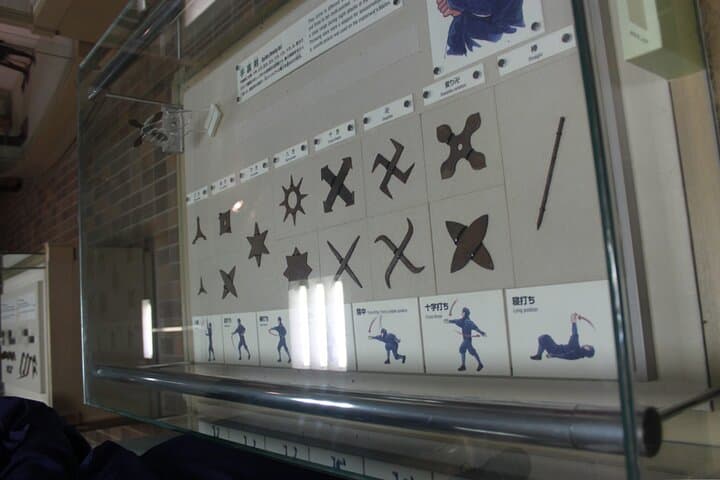
Iga sits at the heart of the Iga-ryu tradition, a feudal-era school of ninjutsu that blended espionage, survival craft and local knowledge of the terrain. The town’s stone-lined streets, castle mound and museum displays make that history tangible: metal tools, throwing implements and illustrated manuals that show a practical, place-based approach to covert movement.
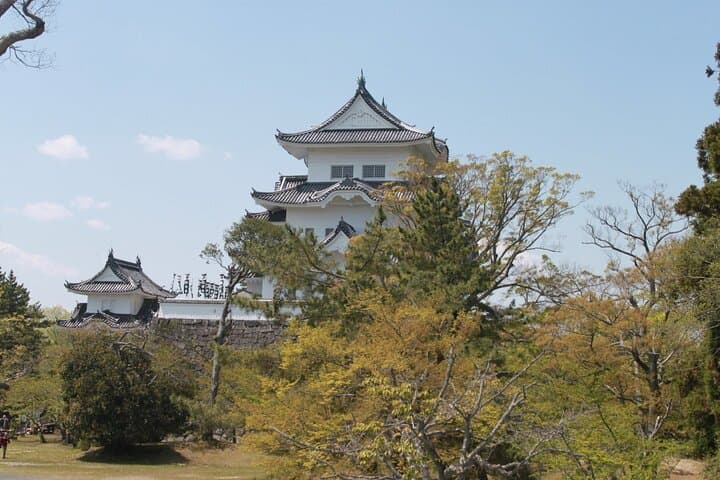
Geology is subtle here — rounded hills and river terraces that shaped travel and settlement — but the built landscape, from the narrow alleys to the raised stone base of Iga Ueno Castle, provides the physical context for the ninja’s skills.
Practically: expect roughly 3–5 km of mostly flat walking with some stairs and tight spaces inside historic homes. The itinerary alternates guided interpretation with hands-on practice (shuriken throws, simple drills) and a possible acrobatic demonstration by local performers. The tour uses public transport between sites and includes guide fees and lunch.
Bring sturdy, grippy shoes, a light rain layer, local currency for small purchases, and a sense of humor about crouching through low doorways. If you have mobility concerns, note the operator lists wheelchair-accessible options, though some historic structures have unavoidable steps.
moderate.
8 hours.
Moderate — able to walk several kilometers, climb stairs and crouch into low spaces intermittently.
Expect roughly 3–5 km of walking spread across the day with short transfers by public transport and several stair sections inside historic sites.
Yes — the experience is family-friendly and includes costume time and interactive demonstrations, though small children should be supervised in tight spaces.
The tour description notes guide fees, lunch and entrance fees are included; confirm specifics at booking if you want to attend every scheduled demonstration.
The operator lists accessibility options; however, some historic structures have steps or low openings — contact the provider in advance to arrange accommodations.
Iga developed a distinct school of ninjutsu during the feudal era; local clans combined surveillance, terrain knowledge and improvised engineering to influence regional politics.
Historic buildings and museum artifacts are sensitive — stick to marked paths, avoid touching displays, and support local preservation by following guide instructions.
Nara Guide operates guided outdoor trips and adventures with an emphasis on safety, stewardship, and memorable experiences.


You step off the train into a compact city ringed by low, green hills and the faint clatter of tramlines — and the tour hands you a dark hakama. For eight hours in Iga, you move between past and present: slipping into a ninja outfit, ducking through the low doorways of a reconstructed ninja house, and tracing the carved wooden traps that once served as camouflage and escape.
You step off the train into a compact city ringed by low, green hills and the faint clatter of tramlines — and the tour hands you a dark hakama. For eight hours in Iga, you move between past and present: slipping into a ninja outfit, ducking through the low doorways of a reconstructed ninja house, and tracing the carved wooden traps that once served as camouflage and escape.
Iga sits at the heart of the Iga-ryu tradition, a feudal-era school of ninjutsu that blended espionage, survival craft and local knowledge of the terrain. The town’s stone-lined streets, castle mound and museum displays make that history tangible: metal tools, throwing implements and illustrated manuals that show a practical, place-based approach to covert movement.
Geology is subtle here — rounded hills and river terraces that shaped travel and settlement — but the built landscape, from the narrow alleys to the raised stone base of Iga Ueno Castle, provides the physical context for the ninja’s skills.
Practically: expect roughly 3–5 km of mostly flat walking with some stairs and tight spaces inside historic homes. The itinerary alternates guided interpretation with hands-on practice (shuriken throws, simple drills) and a possible acrobatic demonstration by local performers. The tour uses public transport between sites and includes guide fees and lunch.
Bring sturdy, grippy shoes, a light rain layer, local currency for small purchases, and a sense of humor about crouching through low doorways. If you have mobility concerns, note the operator lists wheelchair-accessible options, though some historic structures have unavoidable steps.