THE ADVENTURE COLLECTIVE® · Independent discovery and booking for outdoor travel

A private 10‑hour shore excursion that stitches Kyoto’s top cultural stops into one practical loop—from Arashiyama’s bamboo to the torii of Fushimi Inari. Ideal for cruise passengers who want a deep, guided day in Kyoto without navigating public transit.
A private 10‑hour shore excursion that stitches Kyoto’s top cultural stops into one practical loop—from Arashiyama’s bamboo to the torii of Fushimi Inari. Ideal for cruise passengers who want a deep, guided day in Kyoto without navigating public transit.
You step off the gangway with the port behind you and a driver waiting at the passenger exit, name sign in hand. The van rolls through Kansai and, in roughly two hours, the city of Kyoto arrives not as a skyline but as a sequence of places that feel older than the road that brought you.
Verified experiences and guided adventures in the surrounding area.
Operated by Ahmed Abu Tayeh · Kyoto, Kyoto Prefecture
You step off the gangway with the port behind you and a driver waiting at the passenger exit, name sign in hand. The van rolls through Kansai and, in roughly two hours, the city of Kyoto arrives not as a skyline but as a sequence of places that feel older than the road that brought you.
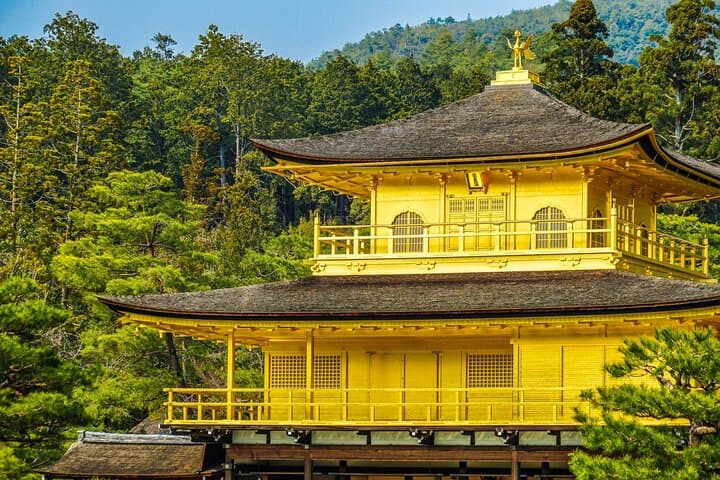
Begin among Arashiyama's bamboo stalks, where columns of green lean like quiet witnesses to centuries of pilgrimage. Within that grove, the Nonomiya Shrine and the gardens of Tenryu-ji—one of Kyoto’s UNESCO sites—show the city's medieval ties to Zen landscape design. Kinkaku-ji, the Golden Pavilion, glints over its mirrored pond, a structure tied to the Ashikaga shoguns and rebuilt after 1955. At Nishiki Market the street-level history is culinary: pickled vegetables, fresh seafood, yuba and vendors whose stalls echo Edo-era market traditions.
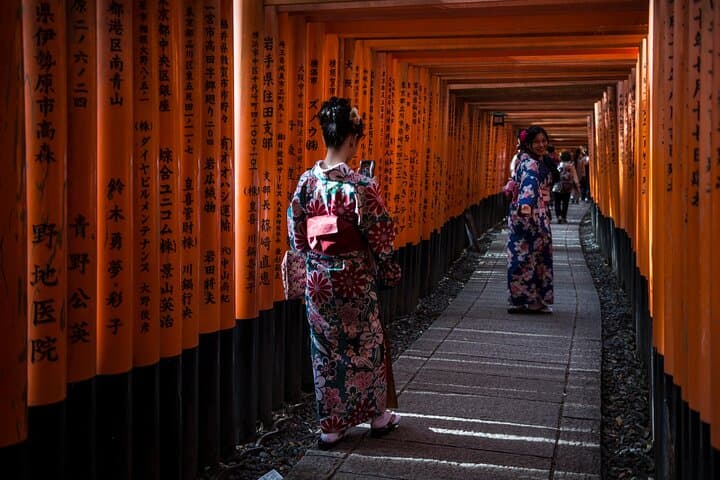
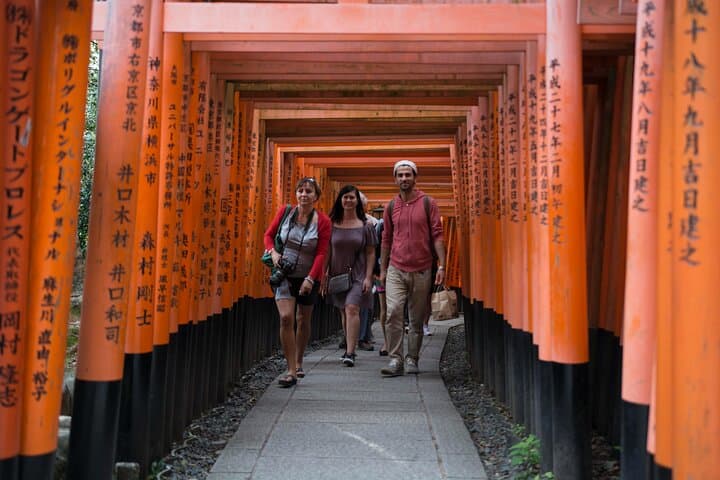
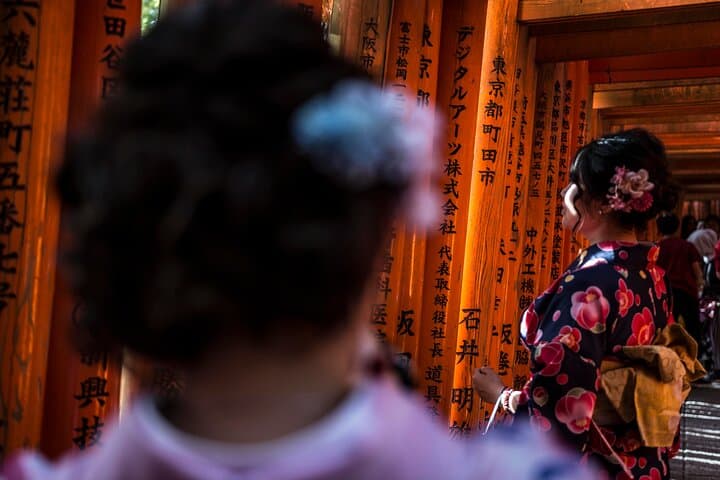
Pontocho and Gion offer narrow streets and wooden machiya where geiko and maiko still walk with practiced composure; be respectful and avoid intrusive photography. Finish at Fushimi Inari’s river of vermilion torii where the trail climbs a wooded ridge charting centuries of devotion to the rice kami, Inari.
Practical edge: the itinerary assumes a private vehicle (approx. JPY 120,000 for up to 5 people; JPY 140,000 for up to 8, cash to driver). Kinkaku-ji admission is extra. Expect 10 hours including port transit; comfortable walking shoes, cash in yen, and a modest pace make this a full but manageable cultural day trip with easy-to-follow logistics.
moderate.
10 hours.
Moderate fitness—able to walk 2–4 miles total with short climbs and stand for long periods.
Plan on about two hours one-way depending on traffic; the tour schedule allocates transit time within a 10-hour private hire.
No—temple admissions such as Kinkaku-ji are paid separately; bring cash for these fees.
Yes—this is a private hire and stops can be adjusted with advance notice, subject to timing and traffic constraints.
Tipping is not customary in Japan; small gestures like offering a thank-you in English or Japanese are appreciated.
Kyoto served as Japan’s imperial capital for over a thousand years; sites like Tenryu-ji and Kinkaku-ji reflect medieval Zen patronage and shogunal culture.
High visitor volume can strain narrow streets and temple gardens—stick to paths, avoid littering, and follow local signage to protect fragile historic sites.
Ahmed Abu Tayeh operates guided outdoor trips and adventures with an emphasis on safety, stewardship, and memorable experiences.
You step off the gangway with the port behind you and a driver waiting at the passenger exit, name sign in hand. The van rolls through Kansai and, in roughly two hours, the city of Kyoto arrives not as a skyline but as a sequence of places that feel older than the road that brought you.
You step off the gangway with the port behind you and a driver waiting at the passenger exit, name sign in hand. The van rolls through Kansai and, in roughly two hours, the city of Kyoto arrives not as a skyline but as a sequence of places that feel older than the road that brought you.
Begin among Arashiyama's bamboo stalks, where columns of green lean like quiet witnesses to centuries of pilgrimage. Within that grove, the Nonomiya Shrine and the gardens of Tenryu-ji—one of Kyoto’s UNESCO sites—show the city's medieval ties to Zen landscape design. Kinkaku-ji, the Golden Pavilion, glints over its mirrored pond, a structure tied to the Ashikaga shoguns and rebuilt after 1955. At Nishiki Market the street-level history is culinary: pickled vegetables, fresh seafood, yuba and vendors whose stalls echo Edo-era market traditions.
Pontocho and Gion offer narrow streets and wooden machiya where geiko and maiko still walk with practiced composure; be respectful and avoid intrusive photography. Finish at Fushimi Inari’s river of vermilion torii where the trail climbs a wooded ridge charting centuries of devotion to the rice kami, Inari.
Practical edge: the itinerary assumes a private vehicle (approx. JPY 120,000 for up to 5 people; JPY 140,000 for up to 8, cash to driver). Kinkaku-ji admission is extra. Expect 10 hours including port transit; comfortable walking shoes, cash in yen, and a modest pace make this a full but manageable cultural day trip with easy-to-follow logistics.