THE ADVENTURE COLLECTIVE® · Independent discovery and booking for outdoor travel

Explore Aswan’s highlights in a private full-day tour: Philae’s island temple, the transformative Aswan High Dam, and the colossal unfinished obelisk. This guided outing blends geology, engineering history and Nile-side culture with practical tips for visiting comfortably.
Explore Aswan’s highlights in a private full-day tour: Philae’s island temple, the transformative Aswan High Dam, and the colossal unfinished obelisk. This guided outing blends geology, engineering history and Nile-side culture with practical tips for visiting comfortably.
Morning sun slides across the Nile as a private boat parts the water toward a ring of ancient stone—this is Aswan, where the river keeps company with granite quarries and temples that still wear the fingerprints of pharaonic labor.
Verified experiences and guided adventures in the surrounding area.
Operated by Far and Beyond Travel · Aswan, Aswan Governorate
Morning sun slides across the Nile as a private boat parts the water toward a ring of ancient stone—this is Aswan, where the river keeps company with granite quarries and temples that still wear the fingerprints of pharaonic labor.
A guided, full-day itinerary moves at a steady pace: Philae (now on Agilkia Island) reveals the last active refuges of Isis worship, its reliefs readable in the hush of colonnades. The story of the Aswan High Dam follows next—an engineering pivot that tamed the Nile’s floods between 1960 and 1970 and reshaped Egypt’s ecology and economy. At the unfinished obelisk in the northern quarries, you can stand beside a mass of stone that split under human ambition and learn how ancient masons measured and abandoned work by the seam.
Geology is visible everywhere: pink Aswan granite underfoot that ancient Egyptians prized for obelisks and statues; the island topography concentrates sun and wind, making shade and water the day’s real luxuries. Culturally, the city blends Nubian rhythms with modern Egyptian life—markets, small cafés and riverside terraces that reveal local flavors.
Practical guidance: this is an easy-paced, private tour of about 7–8 hours with light walking, some steps and uneven temple floors. Entrance fees are commonly not included; bring cash. Expect strong sun and dry heat—hydrate frequently, wear a hat and comfortable shoes, and budget time for photography at golden-hour light by the river.
easy.
7–8 hours.
Suitable for most fitness levels; involves walking on uneven surfaces and short stair sections.
Itinerary notes indicate admissions are typically not included; plan to pay site entrance fees separately in local currency.
The tour includes private transportation—confirm pickup point on booking and allow flexibility for city traffic and ferry times.
The tour is marked physically easy; infants must sit on an adult’s lap. Supervise children around water and steep quarry edges.
Sites are open year-round but extreme heat can make midday touring uncomfortable; operators rarely cancel for weather, so plan accordingly.
Philae’s temples were dismantled and relocated to nearby Agilkia Island during the UNESCO Nubia Campaign in the 1960s to save them from rising waters behind the High Dam.
The High Dam altered the Nile’s natural flood cycle, affecting ecosystems and agriculture; visitors are encouraged to support low-impact guides and respect protected ruins.
Far and Beyond Travel operates guided outdoor trips and adventures with an emphasis on safety, stewardship, and memorable experiences.



Morning sun slides across the Nile as a private boat parts the water toward a ring of ancient stone—this is Aswan, where the river keeps company with granite quarries and temples that still wear the fingerprints of pharaonic labor.
Morning sun slides across the Nile as a private boat parts the water toward a ring of ancient stone—this is Aswan, where the river keeps company with granite quarries and temples that still wear the fingerprints of pharaonic labor.
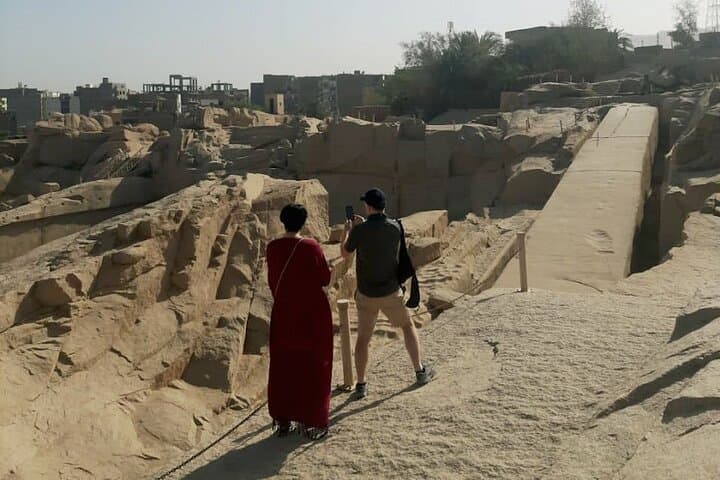
A guided, full-day itinerary moves at a steady pace: Philae (now on Agilkia Island) reveals the last active refuges of Isis worship, its reliefs readable in the hush of colonnades. The story of the Aswan High Dam follows next—an engineering pivot that tamed the Nile’s floods between 1960 and 1970 and reshaped Egypt’s ecology and economy. At the unfinished obelisk in the northern quarries, you can stand beside a mass of stone that split under human ambition and learn how ancient masons measured and abandoned work by the seam.
Geology is visible everywhere: pink Aswan granite underfoot that ancient Egyptians prized for obelisks and statues; the island topography concentrates sun and wind, making shade and water the day’s real luxuries. Culturally, the city blends Nubian rhythms with modern Egyptian life—markets, small cafés and riverside terraces that reveal local flavors.
Practical guidance: this is an easy-paced, private tour of about 7–8 hours with light walking, some steps and uneven temple floors. Entrance fees are commonly not included; bring cash. Expect strong sun and dry heat—hydrate frequently, wear a hat and comfortable shoes, and budget time for photography at golden-hour light by the river.