THE ADVENTURE COLLECTIVE® · Independent discovery and booking for outdoor travel

Spend a day tracing Herzegovina’s layers of history and limestone—visit Blagaj’s tekija, walk the medieval lanes of Počitelj, and cool off beneath Kravica’s 28-meter cascade. This private tour combines cultural context with time to swim and explore at a relaxed pace.
Spend a day tracing Herzegovina’s layers of history and limestone—visit Blagaj’s tekija, walk the medieval lanes of Počitelj, and cool off beneath Kravica’s 28-meter cascade. This private tour combines cultural context with time to swim and explore at a relaxed pace.
You arrive in Mostar and the morning light paints the Neretva a cool green; your guide meets you on Braće Fejića street and the day unfolds like a map of the region’s past. The first stop is Blagaj’s tekija at the Buna spring—water pours from the karst like a quiet force, pushing at the monastery’s stone steps. Guides here will point out Ottoman-era details fused with later Baroque touches as they recount five centuries of local life.
Verified experiences and guided adventures in the surrounding area.
Operated by Bosnia and Herzegovina · Mostar, Federation of Bosnia and Herzegovina
You arrive in Mostar and the morning light paints the Neretva a cool green; your guide meets you on Braće Fejića street and the day unfolds like a map of the region’s past. The first stop is Blagaj’s tekija at the Buna spring—water pours from the karst like a quiet force, pushing at the monastery’s stone steps. Guides here will point out Ottoman-era details fused with later Baroque touches as they recount five centuries of local life.
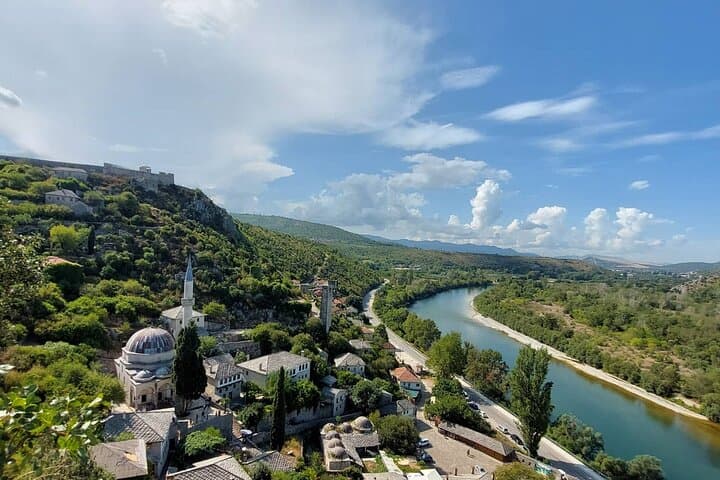
From Blagaj the winding road follows valleys carved in limestone to Počitelj, a medieval hilltown that still houses families within its narrow lanes. Stone houses and defensive towers climb the slope; the town’s layout reflects borderland dynamics between empires. Geologically, this part of Herzegovina is karst country—limestone plateaus, underground rivers, and sudden waterfalls.
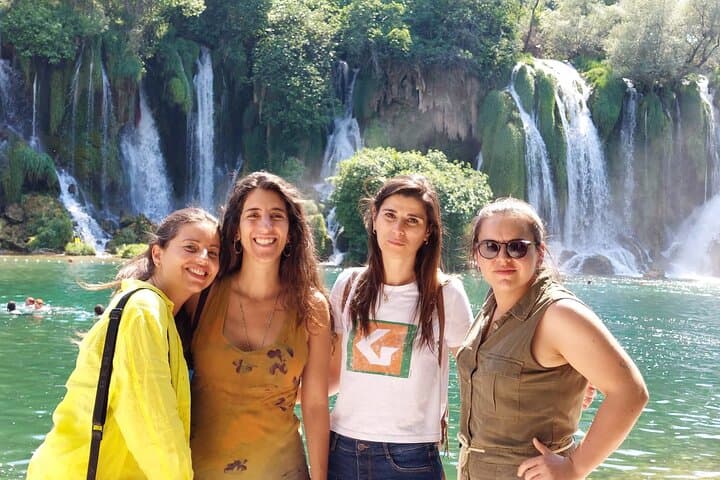
The crescendo is Kravica waterfall: a 28-meter drop that shapes a wide natural amphitheater. In summer the river invites paddles and swims, in cooler months it stands as a sculpted cliff face, the water daring you to cross that line between observer and participant.
Practical guidance: wear sturdy walking shoes for uneven streets and slippery riverbanks, bring swimwear and a quick-dry towel if you plan to enter Kravica, and pack layers—coastal sun can flip to valley chill. Expect a relaxed pace with two hours at each main stop; private transport and bottled water are included. Timing your visit early in the day reduces crowds at Blagaj and Počitelj; afternoons at Kravica are busiest. The tour blends history, geology, and everyday life—accessible, informative, and built for those who want to move beyond postcard views into the region’s living landscape.
easy.
5–7 hours.
Suitable for most fitness levels; involves short walks on uneven surfaces and some steps
The private tour runs approximately 5–7 hours, with about two hours at each main stop (Blagaj, Počitelj, Kravica).
Yes—swimming is permitted in summer months; guides may join but life-saving equipment isn’t provided, so swim at your own risk.
Transport, bottled water, and parking fees are included; specific attraction admissions are typically not included—check with the operator before booking.
The tour is described as suitable for all fitness levels and some locations have limited accessibility; expect uneven terrain and steps at historic sites.
Blagaj tekija dates from the Ottoman period and is a protected national monument; Počitelj’s fortified core dates to the 14th century and reflects borderland strategic planning.
The karst environment is sensitive to pollution and over-visitation—stick to marked paths, avoid single-use plastic, and follow local guidance to protect springs and river habitats.
Bosnia and Herzegovina operates guided outdoor trips and adventures with an emphasis on safety, stewardship, and memorable experiences.
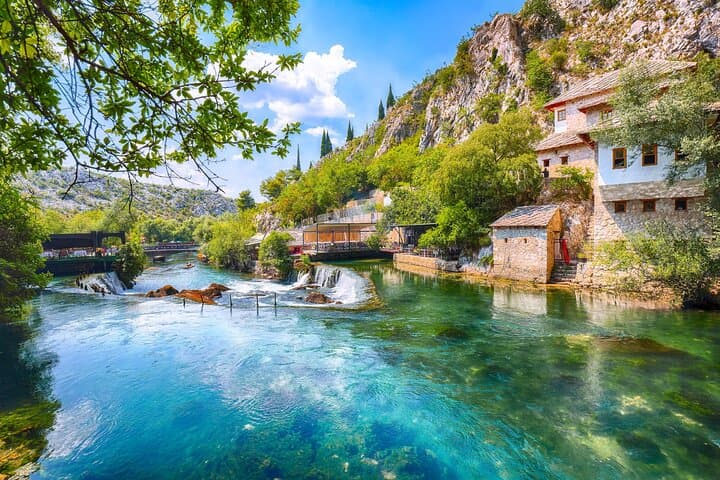
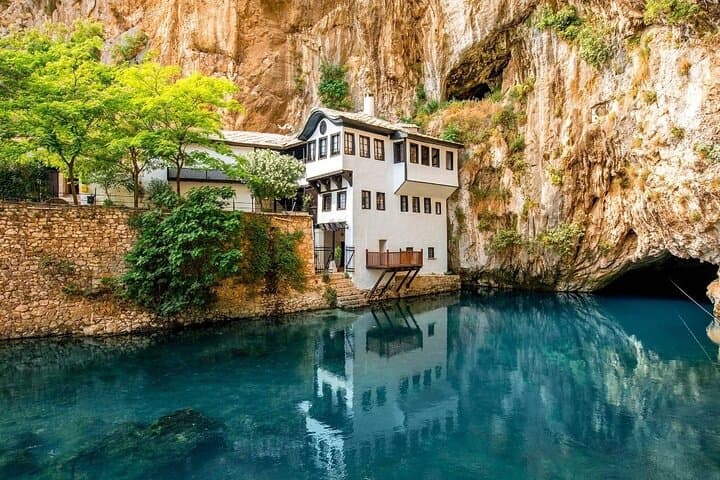
You arrive in Mostar and the morning light paints the Neretva a cool green; your guide meets you on Braće Fejića street and the day unfolds like a map of the region’s past. The first stop is Blagaj’s tekija at the Buna spring—water pours from the karst like a quiet force, pushing at the monastery’s stone steps. Guides here will point out Ottoman-era details fused with later Baroque touches as they recount five centuries of local life.
You arrive in Mostar and the morning light paints the Neretva a cool green; your guide meets you on Braće Fejića street and the day unfolds like a map of the region’s past. The first stop is Blagaj’s tekija at the Buna spring—water pours from the karst like a quiet force, pushing at the monastery’s stone steps. Guides here will point out Ottoman-era details fused with later Baroque touches as they recount five centuries of local life.
From Blagaj the winding road follows valleys carved in limestone to Počitelj, a medieval hilltown that still houses families within its narrow lanes. Stone houses and defensive towers climb the slope; the town’s layout reflects borderland dynamics between empires. Geologically, this part of Herzegovina is karst country—limestone plateaus, underground rivers, and sudden waterfalls.
The crescendo is Kravica waterfall: a 28-meter drop that shapes a wide natural amphitheater. In summer the river invites paddles and swims, in cooler months it stands as a sculpted cliff face, the water daring you to cross that line between observer and participant.
Practical guidance: wear sturdy walking shoes for uneven streets and slippery riverbanks, bring swimwear and a quick-dry towel if you plan to enter Kravica, and pack layers—coastal sun can flip to valley chill. Expect a relaxed pace with two hours at each main stop; private transport and bottled water are included. Timing your visit early in the day reduces crowds at Blagaj and Počitelj; afternoons at Kravica are busiest. The tour blends history, geology, and everyday life—accessible, informative, and built for those who want to move beyond postcard views into the region’s living landscape.