THE ADVENTURE COLLECTIVE® · Independent discovery and booking for outdoor travel

Spend a day tracing Egypt’s early capitals: stand beneath the Giza pyramids, explore Imhotep’s Step Pyramid at Sakkara, and see the colossal remains at Memphis. This private tour pairs archaeology with practical guidance for an accessible, full‑day outing.
Spend a day tracing Egypt’s early capitals: stand beneath the Giza pyramids, explore Imhotep’s Step Pyramid at Sakkara, and see the colossal remains at Memphis. This private tour pairs archaeology with practical guidance for an accessible, full‑day outing.
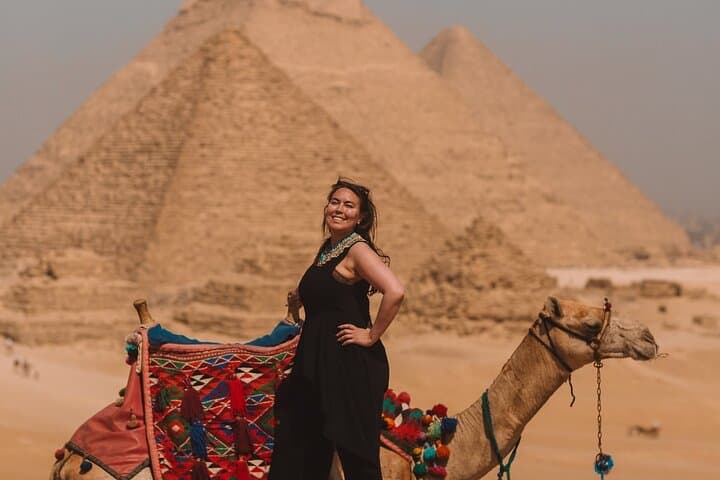
You arrive where stone meets sky: the Great Pyramid rises above the plateau, sun striking its angled faces while a warm wind pushes sand along the causeway.
Verified experiences and guided adventures in the surrounding area.
Operated by Travel Band tours · Giza, Cairo Governorate
You arrive where stone meets sky: the Great Pyramid rises above the plateau, sun striking its angled faces while a warm wind pushes sand along the causeway.
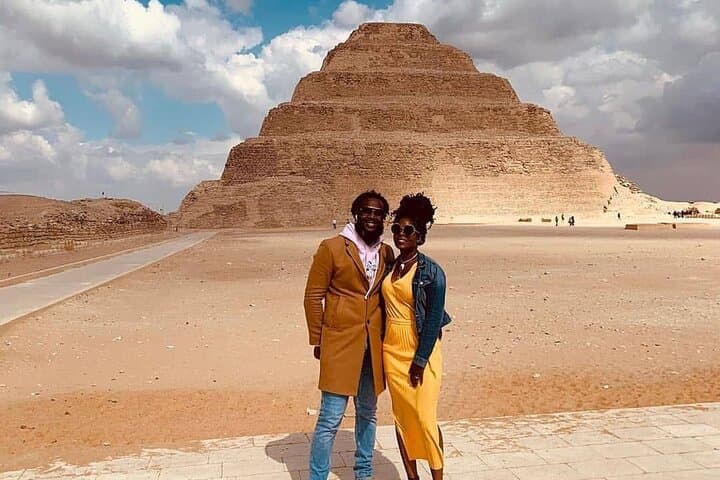
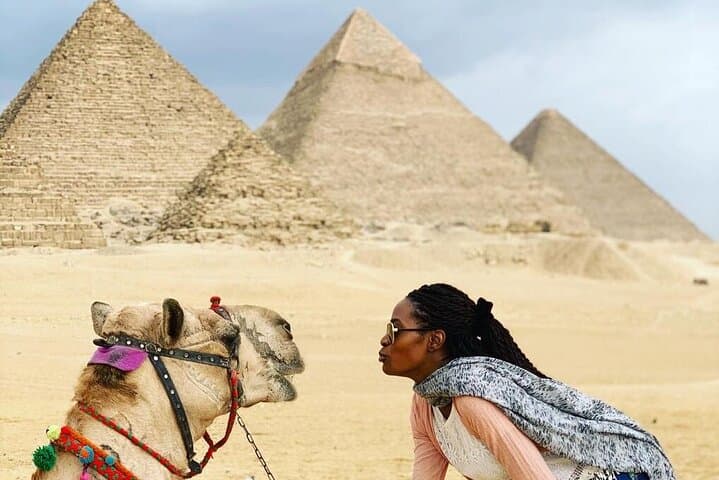
This private full-day tour threads Giza, Sakkara and Memphis—three chapters of ancient Egypt. At Giza you’ll walk the plateau beneath Cheops, Chephren and Mykerinos, inspect the Sphinx and the Valley Temple, and feel the scale of Old Kingdom funerary architecture. Sakkara opens earlier layers of pyramid-building: Imhotep’s Step Pyramid and the longer, lower horizons of mastaba tombs and the Pyramid of Teti with its inscribed texts. Memphis, the open-air museum, places colossal statues—Ramses II’s fallen colossus and an alabaster sphinx—back into the city that once was Egypt’s administrative heart.
Geology here is simple and stark: limestone ledges provide building blocks and panoramic ridgelines; the desert’s color palette shifts through the day and can be unforgiving midday. Culturally, a trained Egyptology guide translates hieroglyphs and burial practices into human stories that anchor the stones.
Practical guidance: expect an 8‑hour day, mostly flat walking with some loose sand and steps in tombs. Wear high-traction shoes, sun protection and carry at least 1–2 liters of water. The included 15‑minute camel ride is brief—treat it as a photo stop rather than transport. Tickets for Giza and Memphis are included; Sakkara’s access depends on which tombs are open. Start early to avoid heat and crowds; keep noise low inside tombs and stay on marked paths to protect fragile surfaces.
easy.
8 hours.
Suitable for all fitness levels; requires sustained walking on flat to uneven surfaces
Entrance for the main attractions at Giza and Memphis is included; Sakkara access covers the main areas and specific tomb openings depend on site permissions.
Yes—the included 15‑minute camel ride is short and supervised, intended as a photo experience rather than long transport.
No—climbing the pyramids is prohibited; visitors may walk around the base and enter some designated tombs when open.
The tour lasts about 8 hours and includes private hotel pickup and drop-off in the Cairo/Giza area.
These sites span millennia: Memphis served as the Old Kingdom capital while Sakkara preserves the earliest large-scale stone pyramid experiments led by Imhotep.
Stick to marked paths, avoid touching carved surfaces and use designated rest areas—visitor behavior directly affects fragile stone and painted reliefs.
Travel Band tours operates guided outdoor trips and adventures with an emphasis on safety, stewardship, and memorable experiences.

You arrive where stone meets sky: the Great Pyramid rises above the plateau, sun striking its angled faces while a warm wind pushes sand along the causeway.
You arrive where stone meets sky: the Great Pyramid rises above the plateau, sun striking its angled faces while a warm wind pushes sand along the causeway.
This private full-day tour threads Giza, Sakkara and Memphis—three chapters of ancient Egypt. At Giza you’ll walk the plateau beneath Cheops, Chephren and Mykerinos, inspect the Sphinx and the Valley Temple, and feel the scale of Old Kingdom funerary architecture. Sakkara opens earlier layers of pyramid-building: Imhotep’s Step Pyramid and the longer, lower horizons of mastaba tombs and the Pyramid of Teti with its inscribed texts. Memphis, the open-air museum, places colossal statues—Ramses II’s fallen colossus and an alabaster sphinx—back into the city that once was Egypt’s administrative heart.
Geology here is simple and stark: limestone ledges provide building blocks and panoramic ridgelines; the desert’s color palette shifts through the day and can be unforgiving midday. Culturally, a trained Egyptology guide translates hieroglyphs and burial practices into human stories that anchor the stones.
Practical guidance: expect an 8‑hour day, mostly flat walking with some loose sand and steps in tombs. Wear high-traction shoes, sun protection and carry at least 1–2 liters of water. The included 15‑minute camel ride is brief—treat it as a photo stop rather than transport. Tickets for Giza and Memphis are included; Sakkara’s access depends on which tombs are open. Start early to avoid heat and crowds; keep noise low inside tombs and stay on marked paths to protect fragile surfaces.