THE ADVENTURE COLLECTIVE® · Independent discovery and booking for outdoor travel

Spend a full day wandering Old Dhaka’s dense lanes, Mughal forts and the busy Buriganga riverfront on a private, guided tour. Learn civic history from Louis Kahn’s Parliament to the Language Movement while enjoying rickshaw and boat rides.
Spend a full day wandering Old Dhaka’s dense lanes, Mughal forts and the busy Buriganga riverfront on a private, guided tour. Learn civic history from Louis Kahn’s Parliament to the Language Movement while enjoying rickshaw and boat rides.
You step from an air-conditioned car into the crush of Old Dhaka: rickshaws thread like bright fish through narrow lanes, a wooden boat horns its way along the Buriganga and the city smells of frying spices and river mud. The day moves at a human pace—short walks between Mughal brickwork, colonial façades and the monumental geometry of Louis Kahn’s Parliament House—each stop a different chapter in the city’s story.
Verified experiences and guided adventures in the surrounding area.
Operated by taxiGo Limo Airport Service · Dhaka, Dhaka
You step from an air-conditioned car into the crush of Old Dhaka: rickshaws thread like bright fish through narrow lanes, a wooden boat horns its way along the Buriganga and the city smells of frying spices and river mud. The day moves at a human pace—short walks between Mughal brickwork, colonial façades and the monumental geometry of Louis Kahn’s Parliament House—each stop a different chapter in the city’s story.
This area was the Mughal capital of Bengal in the 17th century; Lalbagh Fort and nearby mosques reflect that era’s clay-and-brick craftsmanship. Fast-forward to the 20th century and the Shaheed Minar marks the tragic, vital Language Movement of 1952 that helped define Bangladeshi identity. The river Buriganga has shaped commerce and daily life for centuries, hauling goods on overloaded launches at Sadarghat and pulling fishers to its banks despite current pollution challenges.
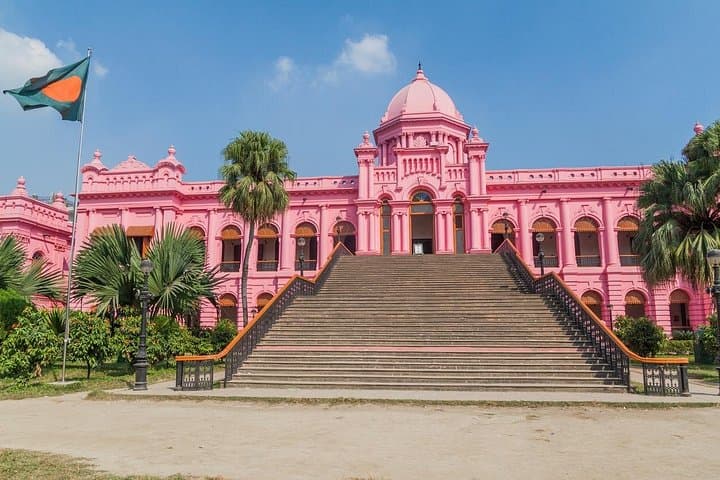
Expect intimate, walkable sections in Old Dhaka—Shakhari Bazaar’s alleys, Ahsan Manzil’s pink façade, and tiled mosque interiors that require modest dress. Local culture is tactile: artisans hammer jewelry, vendors pour sweet tea, and temple bells punctuate the calls to prayer.
Practical guidance: plan for eight hours with multiple short stops; wear breathable, modest clothing and comfortable walking shoes; carry a refillable water bottle and small cash for entry fees and rickshaw fares. Morning or late-afternoon slots avoid mid-day heat and offer better light for photography. The private format lets you set the pace, but expect crowded sites and narrow streets—move deliberately and keep valuables secure.
easy.
8 hours.
Suitable for most fitness levels; requires walking on uneven, crowded streets for several short stretches
Some sites on the itinerary may include admission while others do not; the listing indicates National Museum admission is included in some departures—confirm specific inclusions at booking.
Yes—infant seats are available and the tour is labeled suitable for all fitness levels, but plan for busy, crowded areas that can be overstimulating for very young children.
Visitors should wear modest clothing—covered shoulders and legs; women should carry a headscarf for mosque visits and both genders should avoid shorts and sleeveless tops.
This specific product is listed as all sales final with no refunds available for cancellations; confirm terms before booking.
Old Dhaka was an important Mughal capital in the 17th century; the Shaheed Minar marks the 1952 Language Movement that shaped modern Bangladeshi identity.
The Buriganga faces heavy pollution from urban runoff and industry; visitors can help by avoiding single-use plastics and supporting local initiatives that work on river clean-up.
taxiGo Limo Airport Service operates guided outdoor trips and adventures with an emphasis on safety, stewardship, and memorable experiences.

You step from an air-conditioned car into the crush of Old Dhaka: rickshaws thread like bright fish through narrow lanes, a wooden boat horns its way along the Buriganga and the city smells of frying spices and river mud. The day moves at a human pace—short walks between Mughal brickwork, colonial façades and the monumental geometry of Louis Kahn’s Parliament House—each stop a different chapter in the city’s story.
You step from an air-conditioned car into the crush of Old Dhaka: rickshaws thread like bright fish through narrow lanes, a wooden boat horns its way along the Buriganga and the city smells of frying spices and river mud. The day moves at a human pace—short walks between Mughal brickwork, colonial façades and the monumental geometry of Louis Kahn’s Parliament House—each stop a different chapter in the city’s story.
This area was the Mughal capital of Bengal in the 17th century; Lalbagh Fort and nearby mosques reflect that era’s clay-and-brick craftsmanship. Fast-forward to the 20th century and the Shaheed Minar marks the tragic, vital Language Movement of 1952 that helped define Bangladeshi identity. The river Buriganga has shaped commerce and daily life for centuries, hauling goods on overloaded launches at Sadarghat and pulling fishers to its banks despite current pollution challenges.
Expect intimate, walkable sections in Old Dhaka—Shakhari Bazaar’s alleys, Ahsan Manzil’s pink façade, and tiled mosque interiors that require modest dress. Local culture is tactile: artisans hammer jewelry, vendors pour sweet tea, and temple bells punctuate the calls to prayer.
Practical guidance: plan for eight hours with multiple short stops; wear breathable, modest clothing and comfortable walking shoes; carry a refillable water bottle and small cash for entry fees and rickshaw fares. Morning or late-afternoon slots avoid mid-day heat and offer better light for photography. The private format lets you set the pace, but expect crowded sites and narrow streets—move deliberately and keep valuables secure.