THE ADVENTURE COLLECTIVE® · Independent discovery and booking for outdoor travel

Spend a full day exploring two of Upper Egypt’s best-preserved temples with a private Egyptologist guide. This door-to-door tour from Luxor combines Dendera’s astronomical reliefs and Hathor chambers with Abydos’ Seti I temple and the enigmatic Osireion.
Spend a full day exploring two of Upper Egypt’s best-preserved temples with a private Egyptologist guide. This door-to-door tour from Luxor combines Dendera’s astronomical reliefs and Hathor chambers with Abydos’ Seti I temple and the enigmatic Osireion.
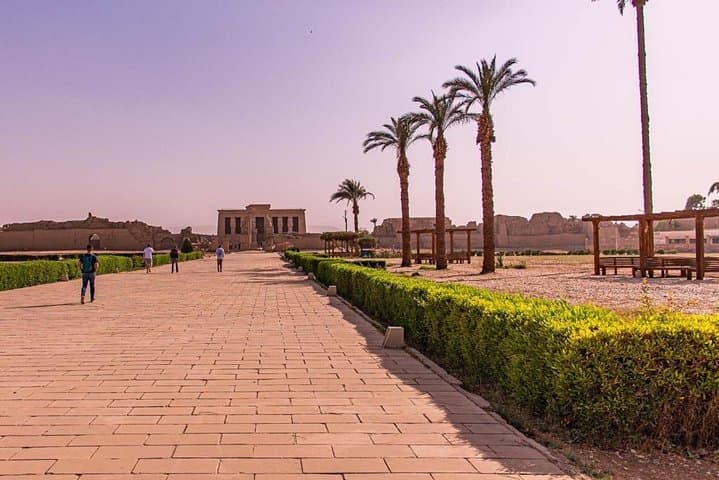
Morning light slices across sugarcane fields as your private A/C vehicle peels away from Luxor and follows the Nile’s patient curve northward. Within two hours the modern bustle thins and stone keeps speaking: the low silhouette of Dendera’s colonnades rises first, then the solemn façade of Abydos later in the day.
Verified experiences and guided adventures in the surrounding area.
Operated by Egypt Lifetime Tours · Dendera, Qena Governorate
Morning light slices across sugarcane fields as your private A/C vehicle peels away from Luxor and follows the Nile’s patient curve northward. Within two hours the modern bustle thins and stone keeps speaking: the low silhouette of Dendera’s colonnades rises first, then the solemn façade of Abydos later in the day.
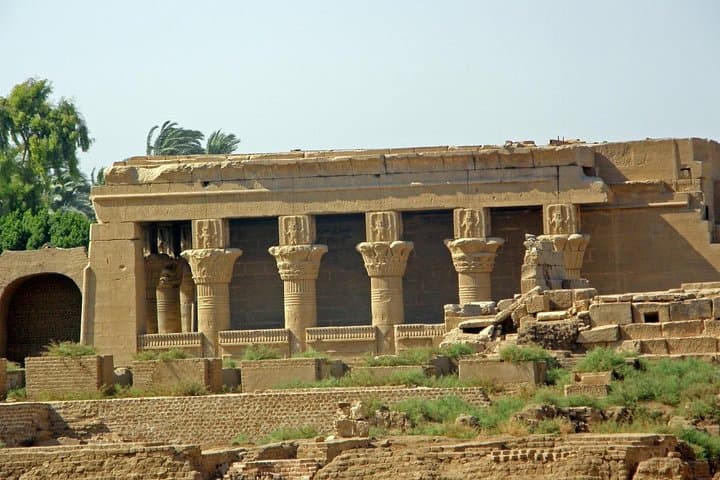
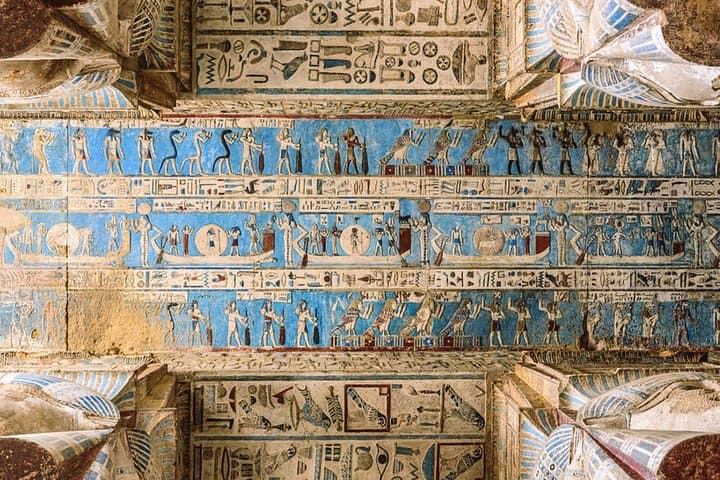
Dendera’s Greco-Roman temple honors Hathor with a massive stone roof, painted reliefs and an astronomical ceiling that once held the famous zodiac now in the Louvre. Abydos, built by Seti I and completed by Ramses II, is where pharaohs declared lineage—its Kings List and the enigmatic Osireion give a tangible sense of ancient statecraft and ritual belief. Geology here is simple: Nile silt on top of older limestone beds, giving sharp relief to stone carvings and preserving color in sheltered chambers.
Culturally, these sites are active places of memory—local guides and Egyptologists read hieroglyphs as narratives of power, death and regeneration. Expect vaulted corridors, uneven ancient stone underfoot and crowds that ebb and flow with cruise schedules.
Practical guidance: the day is long (about 12 hours including drives), bring sun protection, plenty of water, and wear sturdy shoes for temple steps and loose sand. Entrance fees are paid on-site; carry card and some cash. Arrive early to avoid the hottest light and use your Egyptologist guide to decode the reliefs—the difference between seeing stone and understanding story.
easy.
12 hours.
Light fitness required—able to walk and stand for multiple 30–60 minute temple visits and handle short walks on uneven ground.
Entrance fees are not included; you will need to pay on-site—cards are often accepted but carry cash for smaller vendors.
Dendera is about 70 km north of Luxor (roughly 1.5–2 hours by car); Abydos extends the circuit with additional driving, making this a full-day outing.
The tour is suitable for most ages but involves uneven surfaces and steps; wheelchair access is limited—check specific accessibility options with the operator.
Yes, a professional English-speaking Egyptologist guide is included; other languages may be available for an extra charge.
Abydos was a major cult center for Osiris and contains Seti I’s detailed Kings List; Dendera’s temple complex reflects Ptolemaic-era syncretism and preserved astronomical ceilings.
Both complexes are protected archaeological sites with active conservation programs—visitors should avoid touching reliefs and follow established paths to reduce wear.
Egypt Lifetime Tours operates guided outdoor trips and adventures with an emphasis on safety, stewardship, and memorable experiences.
Morning light slices across sugarcane fields as your private A/C vehicle peels away from Luxor and follows the Nile’s patient curve northward. Within two hours the modern bustle thins and stone keeps speaking: the low silhouette of Dendera’s colonnades rises first, then the solemn façade of Abydos later in the day.
Morning light slices across sugarcane fields as your private A/C vehicle peels away from Luxor and follows the Nile’s patient curve northward. Within two hours the modern bustle thins and stone keeps speaking: the low silhouette of Dendera’s colonnades rises first, then the solemn façade of Abydos later in the day.
Dendera’s Greco-Roman temple honors Hathor with a massive stone roof, painted reliefs and an astronomical ceiling that once held the famous zodiac now in the Louvre. Abydos, built by Seti I and completed by Ramses II, is where pharaohs declared lineage—its Kings List and the enigmatic Osireion give a tangible sense of ancient statecraft and ritual belief. Geology here is simple: Nile silt on top of older limestone beds, giving sharp relief to stone carvings and preserving color in sheltered chambers.
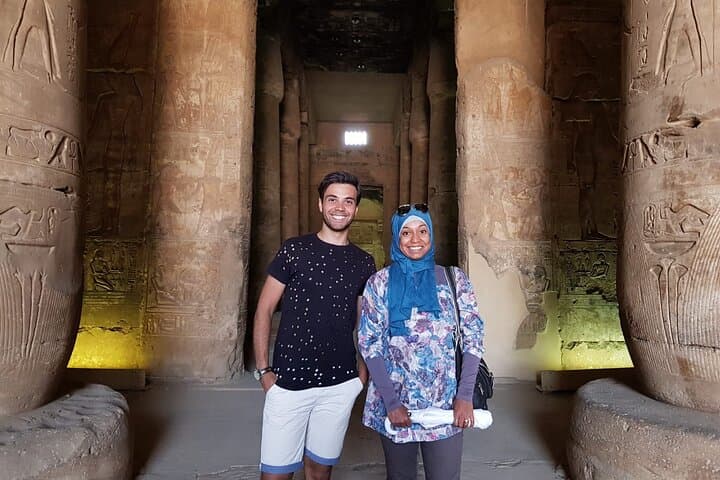
Culturally, these sites are active places of memory—local guides and Egyptologists read hieroglyphs as narratives of power, death and regeneration. Expect vaulted corridors, uneven ancient stone underfoot and crowds that ebb and flow with cruise schedules.
Practical guidance: the day is long (about 12 hours including drives), bring sun protection, plenty of water, and wear sturdy shoes for temple steps and loose sand. Entrance fees are paid on-site; carry card and some cash. Arrive early to avoid the hottest light and use your Egyptologist guide to decode the reliefs—the difference between seeing stone and understanding story.