THE ADVENTURE COLLECTIVE® · Independent discovery and booking for outdoor travel

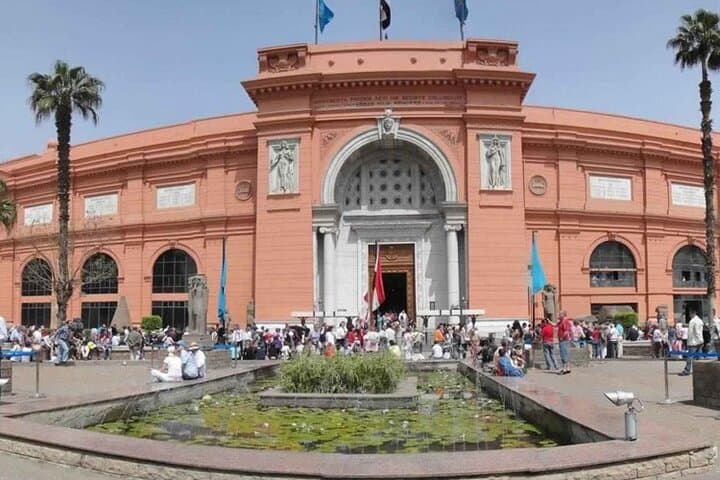
Spend a focused day with a private Egyptologist exploring the Giza Pyramids, the Sphinx, and the Egyptian Museum. This seven-hour tour combines on-site interpretation, hotel transfers, and panoramic photo stops for a smooth, personalized Cairo experience.
Spend a focused day with a private Egyptologist exploring the Giza Pyramids, the Sphinx, and the Egyptian Museum. This seven-hour tour combines on-site interpretation, hotel transfers, and panoramic photo stops for a smooth, personalized Cairo experience.
You step out of an air-conditioned car onto the wind-swept Giza Plateau and the desert sun immediately dares you to look higher — to blocks of limestone stacked with millennia of intent. The Great Pyramid looms with measured geometry, the Sphinx turns a slow, inscrutable face toward the Nile, and the city’s pulse hums faintly beyond the sand.
Verified experiences and guided adventures in the surrounding area.
Operated by Packnfly · Giza, Cairo Governorate
You step out of an air-conditioned car onto the wind-swept Giza Plateau and the desert sun immediately dares you to look higher — to blocks of limestone stacked with millennia of intent. The Great Pyramid looms with measured geometry, the Sphinx turns a slow, inscrutable face toward the Nile, and the city’s pulse hums faintly beyond the sand.
This single-day loop threads three eras: Old Kingdom funerary engineering exposed in the Pyramid fields, New Kingdom splendor reconstructed in the Egyptian Museum’s galleries, and modern Cairo’s bustling streets that ferry you between them. Geologically the plateau is a limestone bench carved from ancient seabed; the stones you walk past are quarried and placed with engineering precision. Culturally, your Egyptologist guide will place monuments within pharaonic ritual, Ottoman-era city growth, and 19th-century archaeology.
Practicalities matter: the tour runs about seven hours with roughly 1–2 km of walking on mixed packed sand and paved paths and minimal elevation change. Expect bright sun and gusty wind; bring sun protection and a refillable bottle (bottled water is provided by the tour). Admission fees to sites typically are not included, and the Egyptian Museum requires ID for certain ticket types. Dress modestly for Cairo and the museum; comfortable, closed shoes handle loose sand. Plan photography at sunrise or late afternoon for softer light and fewer crowds. Your private guide handles logistics, timing, and panoramic photo spots — so you can focus on the scale, the stories, and the uncanny presence of stones that have watched the Nile for four thousand years.
easy.
6–8 hours.
Light to moderate fitness; comfortable with several short walks and standing periods
No, standard entrance fees are typically not included in the basic tour price; bring cash or confirm with your operator whether private entry is arranged.
The tour is advertised as suitable for all fitness levels, but expect uneven ground on the plateau; contact the operator if wheelchair access or special assistance is needed.
Interior access is controlled and requires a separate ticket and sometimes an additional permit; confirm availability in advance and be prepared for confined spaces and stairs.
Tipping is customary; guidelines vary but many visitors tip the guide and driver separately at the end of the day based on service quality.
The Giza pyramids date to the Fourth Dynasty (c. 2600–2500 BCE) as royal tomb complexes; the Egyptian Museum in Tahrir houses artifacts spanning millennia, including Tutankhamun’s treasures.
Erosion, tourism wear, and urban encroachment are ongoing concerns; stay on designated paths, avoid touching ancient stone, and support licensed guides and official museums.
Packnfly operates guided outdoor trips and adventures with an emphasis on safety, stewardship, and memorable experiences.
You step out of an air-conditioned car onto the wind-swept Giza Plateau and the desert sun immediately dares you to look higher — to blocks of limestone stacked with millennia of intent. The Great Pyramid looms with measured geometry, the Sphinx turns a slow, inscrutable face toward the Nile, and the city’s pulse hums faintly beyond the sand.
You step out of an air-conditioned car onto the wind-swept Giza Plateau and the desert sun immediately dares you to look higher — to blocks of limestone stacked with millennia of intent. The Great Pyramid looms with measured geometry, the Sphinx turns a slow, inscrutable face toward the Nile, and the city’s pulse hums faintly beyond the sand.
This single-day loop threads three eras: Old Kingdom funerary engineering exposed in the Pyramid fields, New Kingdom splendor reconstructed in the Egyptian Museum’s galleries, and modern Cairo’s bustling streets that ferry you between them. Geologically the plateau is a limestone bench carved from ancient seabed; the stones you walk past are quarried and placed with engineering precision. Culturally, your Egyptologist guide will place monuments within pharaonic ritual, Ottoman-era city growth, and 19th-century archaeology.
Practicalities matter: the tour runs about seven hours with roughly 1–2 km of walking on mixed packed sand and paved paths and minimal elevation change. Expect bright sun and gusty wind; bring sun protection and a refillable bottle (bottled water is provided by the tour). Admission fees to sites typically are not included, and the Egyptian Museum requires ID for certain ticket types. Dress modestly for Cairo and the museum; comfortable, closed shoes handle loose sand. Plan photography at sunrise or late afternoon for softer light and fewer crowds. Your private guide handles logistics, timing, and panoramic photo spots — so you can focus on the scale, the stories, and the uncanny presence of stones that have watched the Nile for four thousand years.