THE ADVENTURE COLLECTIVE® · Independent discovery and booking for outdoor travel

A private, full-day loop from Baku that pairs UNESCO-listed rock art with bubbling mud volcanoes and the dramatic, never-ending flames of Yanardag. This guided tour blends geology, history, and short walks—perfect for first-time visitors who want a broad, textured overview of Azerbaijan’s wild outskirts.
A private, full-day loop from Baku that pairs UNESCO-listed rock art with bubbling mud volcanoes and the dramatic, never-ending flames of Yanardag. This guided tour blends geology, history, and short walks—perfect for first-time visitors who want a broad, textured overview of Azerbaijan’s wild outskirts.
The morning air off the Caspian stills as your guide slips into the driver’s seat and the city falls away behind you—high-rise glass giving way to scrub and salt-scorched steppe. On this private full-day loop from Baku you move through landscapes that seem to argue with time: prehistoric petroglyphs carved by hands that predate empires, bubbling mud fields that look more like another planet, and hills that refuse to go out.
Verified experiences and guided adventures in the surrounding area.
Operated by Azerbaijan Vacation · Baku, Baku
The morning air off the Caspian stills as your guide slips into the driver’s seat and the city falls away behind you—high-rise glass giving way to scrub and salt-scorched steppe. On this private full-day loop from Baku you move through landscapes that seem to argue with time: prehistoric petroglyphs carved by hands that predate empires, bubbling mud fields that look more like another planet, and hills that refuse to go out.
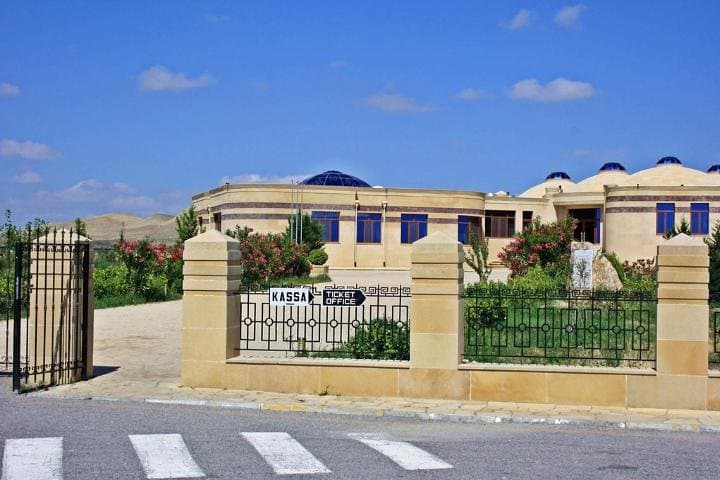
First stop is Gobustan National Park. The wind here seems to rearrange the carvings’ shadows, and the panelled rocks—horses, hunters, boats—hold a blunt, human clarity. Your guide will situate the petroglyphs in the wider sweep of Caucasus prehistory and explain how seasonal migration, hunting, and early maritime trade left marks across this limestone plateau.
Geology takes the spotlight at the Mud Volcanoes, where methane and subterranean pressure force thick grey mud to the surface in slow, theatrical spurts. The moonscape of cracked, cooling mud is brief to walk but long to look at; bring a lens for the steam and vents that the air animates like a breathing thing.
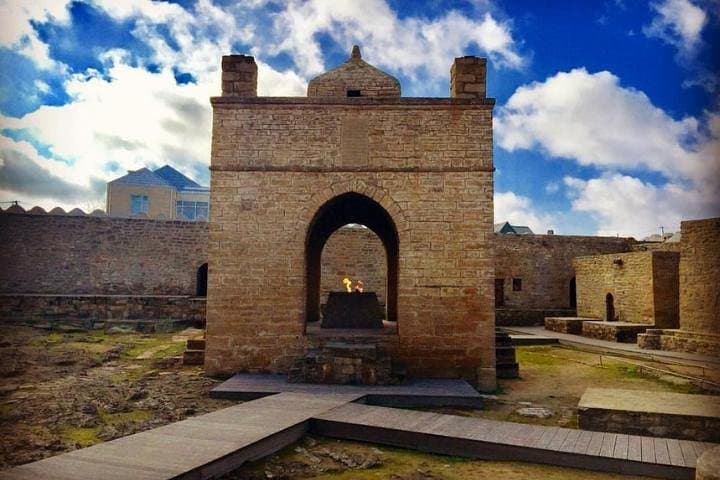
Religious and cultural contrasts shape the afternoon. At Bibi Heybat Mosque the architecture is compact and contemplative—13th-century foundations rebuilt into a 20th-century place of prayer. At Ateshgah (the Fire Temple), flickers of flame and Persian inscriptions point to the region’s multilayered spiritual history: Zoroastrian rites, Hindu pilgrims, and later local veneration. The day closes at Yanardag—Fire Mountain—where natural gas escapes continuously and the slope literally burns. It’s a simple, elemental spectacle and one that fueled folklore and ritual for generations.
Practical notes: the tour runs 7–8 hours with hotel pickup and drop-off in Baku. Expect roughly 1–1.5 hours of driving between major stops depending on traffic; walks at sites are short but on uneven terrain—Gobustan’s trail is about 1–2 km with some stone steps, mud volcanoes often require short off-trail footing. No special technical skills are required; the day suits most fitness levels, but comfortable walking shoes and sun protection are essential.
Timing matters: mornings bring softer light on the petroglyphs; late afternoon highlights the yawning contrast of the fire sites against the sky. Photographers should carry polarizers for glare on rock and neutral-density filters for capturing the flame tongues at Yanardag.
This private format is convenient: a local driver-guide curates pace and context, and the vehicle handles the long stretches. For first-time visitors it’s an efficient, sensory-rich primer on Azerbaijan’s wild edges—where geology, history, and living culture meet on open ground.
easy.
7–8 hours.
Suitable for most travelers who can manage several short walks over uneven surfaces; minimal sustained exertion.
Expect about 1–1.5 hours each way depending on traffic and your hotel location in Baku; the private vehicle makes the route direct and comfortable.
Admission is not included by default for some sites; check your booking details—your guide can advise and arrange tickets if needed.
Yes—infants and small children can use strollers and the tour is family-friendly, though some uneven sections may be better handled by a carrier.
Pickup from hotels in Baku is included; airport pickups are possible if arranged in advance—confirm at booking.
Bring modest clothing: shoulders and knees covered; women may be asked to cover their heads inside certain areas.
The operator may cancel for severe weather with a full refund if you cancel at least 24 hours prior; light rain usually won’t stop the tour.
Gobustan’s petroglyphs record life from the Upper Paleolithic to medieval times, showing hunting scenes and seafaring vessels that hint at ancient trade routes across the Caspian.
Sites are fragile—stay on marked paths at Gobustan and avoid touching rock art; local guides emphasize low-impact visits to limit erosion and litter.
Azerbaijan Vacation operates guided outdoor trips and adventures with an emphasis on safety, stewardship, and memorable experiences.
The morning air off the Caspian stills as your guide slips into the driver’s seat and the city falls away behind you—high-rise glass giving way to scrub and salt-scorched steppe. On this private full-day loop from Baku you move through landscapes that seem to argue with time: prehistoric petroglyphs carved by hands that predate empires, bubbling mud fields that look more like another planet, and hills that refuse to go out.
The morning air off the Caspian stills as your guide slips into the driver’s seat and the city falls away behind you—high-rise glass giving way to scrub and salt-scorched steppe. On this private full-day loop from Baku you move through landscapes that seem to argue with time: prehistoric petroglyphs carved by hands that predate empires, bubbling mud fields that look more like another planet, and hills that refuse to go out.
First stop is Gobustan National Park. The wind here seems to rearrange the carvings’ shadows, and the panelled rocks—horses, hunters, boats—hold a blunt, human clarity. Your guide will situate the petroglyphs in the wider sweep of Caucasus prehistory and explain how seasonal migration, hunting, and early maritime trade left marks across this limestone plateau.
Geology takes the spotlight at the Mud Volcanoes, where methane and subterranean pressure force thick grey mud to the surface in slow, theatrical spurts. The moonscape of cracked, cooling mud is brief to walk but long to look at; bring a lens for the steam and vents that the air animates like a breathing thing.
Religious and cultural contrasts shape the afternoon. At Bibi Heybat Mosque the architecture is compact and contemplative—13th-century foundations rebuilt into a 20th-century place of prayer. At Ateshgah (the Fire Temple), flickers of flame and Persian inscriptions point to the region’s multilayered spiritual history: Zoroastrian rites, Hindu pilgrims, and later local veneration. The day closes at Yanardag—Fire Mountain—where natural gas escapes continuously and the slope literally burns. It’s a simple, elemental spectacle and one that fueled folklore and ritual for generations.
Practical notes: the tour runs 7–8 hours with hotel pickup and drop-off in Baku. Expect roughly 1–1.5 hours of driving between major stops depending on traffic; walks at sites are short but on uneven terrain—Gobustan’s trail is about 1–2 km with some stone steps, mud volcanoes often require short off-trail footing. No special technical skills are required; the day suits most fitness levels, but comfortable walking shoes and sun protection are essential.
Timing matters: mornings bring softer light on the petroglyphs; late afternoon highlights the yawning contrast of the fire sites against the sky. Photographers should carry polarizers for glare on rock and neutral-density filters for capturing the flame tongues at Yanardag.
This private format is convenient: a local driver-guide curates pace and context, and the vehicle handles the long stretches. For first-time visitors it’s an efficient, sensory-rich primer on Azerbaijan’s wild edges—where geology, history, and living culture meet on open ground.