THE ADVENTURE COLLECTIVE® · Independent discovery and booking for outdoor travel

Spend a private day exploring Angkor’s major temples—Bayon, Baphuon, Ta Prohm and Angkor Wat—with a guide and air‑conditioned vehicle. This full‑day tour blends history, carved stone corridors, and practical logistics so you cover the highlights without wasting time.
Spend a private day exploring Angkor’s major temples—Bayon, Baphuon, Ta Prohm and Angkor Wat—with a guide and air‑conditioned vehicle. This full‑day tour blends history, carved stone corridors, and practical logistics so you cover the highlights without wasting time.
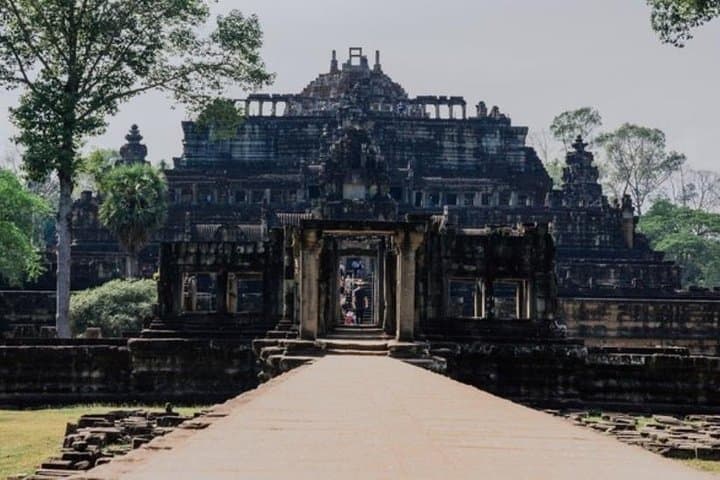
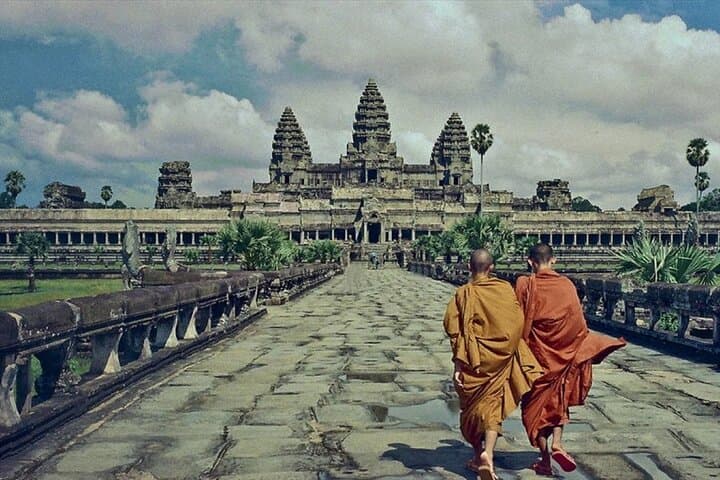
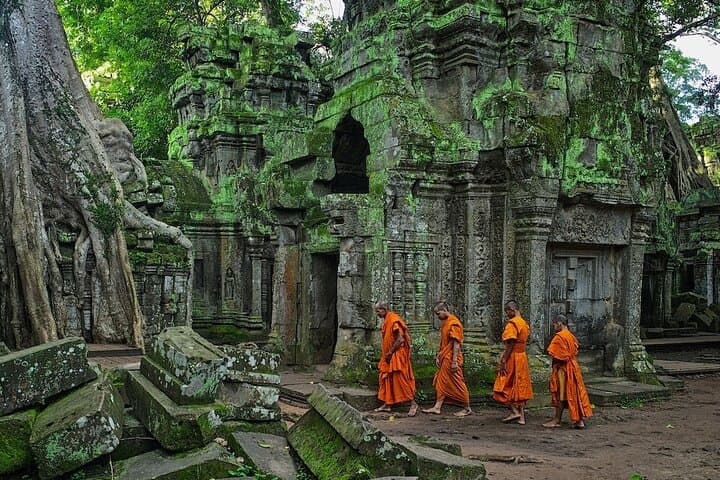
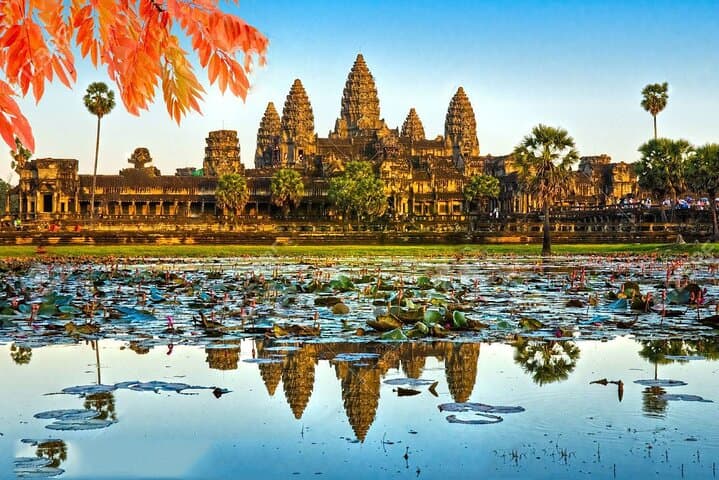
Dawn breaks over a belt of stone towers and jungle roots. A private vehicle threads through Siem Reap’s quiet streets and delivers you to the wide causeways of Angkor: the carved faces of Bayon, the stepped terraces of Baphuon, the tree-engulfed aisles of Ta Prohm, and the lotus-bud towers of Angkor Wat rising like an engineered horizon.
Verified experiences and guided adventures in the surrounding area.
Operated by Bravo Asia Tours · Siem Reap, Siem Reap Province
Dawn breaks over a belt of stone towers and jungle roots. A private vehicle threads through Siem Reap’s quiet streets and delivers you to the wide causeways of Angkor: the carved faces of Bayon, the stepped terraces of Baphuon, the tree-engulfed aisles of Ta Prohm, and the lotus-bud towers of Angkor Wat rising like an engineered horizon.
These monuments sit on the flat alluvial plains of northwest Cambodia, the remains of the Khmer Empire’s hydraulic city. Angkor Wat was raised in the early 12th century under Suryavarman II as a state temple; Angkor Thom and the Bayon reflect later 12th–13th century Buddhist influence under Jayavarman VII. Stones here are laterite and sandstone—soft to carve but weathered by monsoon and sun—so surfaces are uneven and reliefs delicate.
Culture is visible in ritual offerings, carved apsaras, and the careful dress code enforced at temple stairways. Local guides illuminate origin stories, iconography, and the modern conservation work of the APSARA Authority.
Practically: expect a full day (6–8 hours) of walking across the complex—roughly 3–6 km on mixed packed earth and sandstone with stairs and steep temple steps. Bring sun protection, at least 1–2 liters of water, comfortable shoes with good grip, and clothing that covers knees and shoulders for temple access. Timing matters—start early to avoid heat and crowds, and consider Phnom Bakheng only if you’re prepared to climb for sunset. Your private guide and air-conditioned vehicle streamline transfers and allow pace adjustments to match fitness and interest.
moderate.
6–8 hours.
Moderate fitness—able to walk several kilometers, climb uneven, steep temple steps, and handle hot humid conditions.
Angkor Park entry fees are not typically included and must be purchased separately; your guide can advise on ticket types and where to buy them.
Yes—this private tour is flexible; guides will adapt pacing or swap stops if mobility, weather, or interest warrants changes.
Families can join; infant seats and stroller access are available for vehicle transfers, but temple paths may be uneven and require carrying small children in places.
Most temples have uneven terrain and stairs; accessibility is limited—contact the operator ahead to discuss specific mobility needs and possible routes.
Angkor was the center of the Khmer Empire (9th–15th centuries); Angkor Wat dates to the early 12th century under Suryavarman II, while Bayon and Angkor Thom reflect Jayavarman VII’s 12th‑century Buddhist program.
Visitor fees and APSARA Authority supervision fund conservation; minimize impact by not touching carvings, keeping to paths, and avoiding single‑use plastics.
Bravo Asia Tours operates guided outdoor trips and adventures with an emphasis on safety, stewardship, and memorable experiences.
Dawn breaks over a belt of stone towers and jungle roots. A private vehicle threads through Siem Reap’s quiet streets and delivers you to the wide causeways of Angkor: the carved faces of Bayon, the stepped terraces of Baphuon, the tree-engulfed aisles of Ta Prohm, and the lotus-bud towers of Angkor Wat rising like an engineered horizon.
Dawn breaks over a belt of stone towers and jungle roots. A private vehicle threads through Siem Reap’s quiet streets and delivers you to the wide causeways of Angkor: the carved faces of Bayon, the stepped terraces of Baphuon, the tree-engulfed aisles of Ta Prohm, and the lotus-bud towers of Angkor Wat rising like an engineered horizon.
These monuments sit on the flat alluvial plains of northwest Cambodia, the remains of the Khmer Empire’s hydraulic city. Angkor Wat was raised in the early 12th century under Suryavarman II as a state temple; Angkor Thom and the Bayon reflect later 12th–13th century Buddhist influence under Jayavarman VII. Stones here are laterite and sandstone—soft to carve but weathered by monsoon and sun—so surfaces are uneven and reliefs delicate.
Culture is visible in ritual offerings, carved apsaras, and the careful dress code enforced at temple stairways. Local guides illuminate origin stories, iconography, and the modern conservation work of the APSARA Authority.
Practically: expect a full day (6–8 hours) of walking across the complex—roughly 3–6 km on mixed packed earth and sandstone with stairs and steep temple steps. Bring sun protection, at least 1–2 liters of water, comfortable shoes with good grip, and clothing that covers knees and shoulders for temple access. Timing matters—start early to avoid heat and crowds, and consider Phnom Bakheng only if you’re prepared to climb for sunset. Your private guide and air-conditioned vehicle streamline transfers and allow pace adjustments to match fitness and interest.