THE ADVENTURE COLLECTIVE® · Independent discovery and booking for outdoor travel

An early‑morning departure leads to two of Cambodia’s most arresting ancient sites—Preah Vihear’s cliffside panoramas and Koh Ker’s pyramid temples. This full‑day tour pairs dramatic viewpoints with quiet, jungle‑clad ruins.
An early‑morning departure leads to two of Cambodia’s most arresting ancient sites—Preah Vihear’s cliffside panoramas and Koh Ker’s pyramid temples. This full‑day tour pairs dramatic viewpoints with quiet, jungle‑clad ruins.
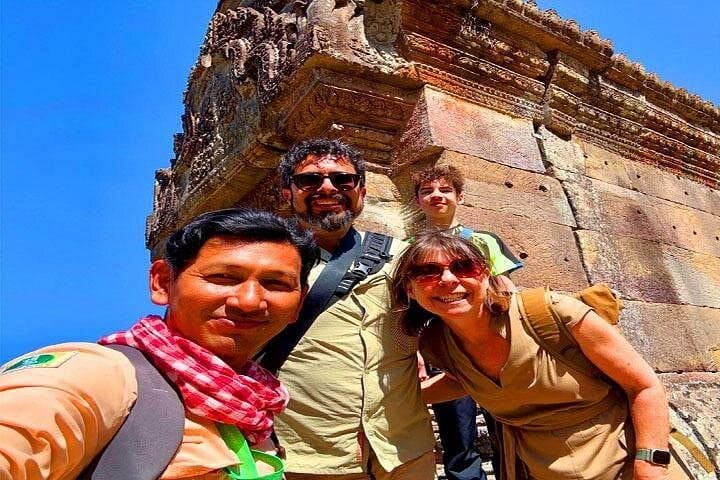
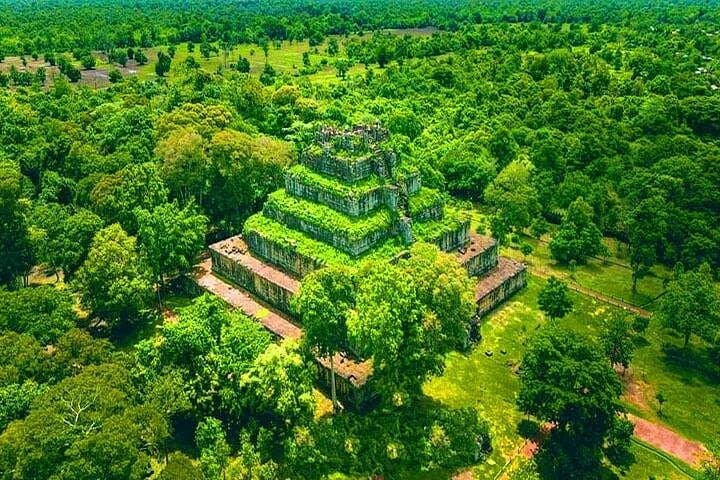
You start before dawn in Siem Reap—the road ahead a black ribbon as the tuk‑tuks sleep and the truck’s air conditioning hums. By first light the cliffs that hold Preah Vihear catch the sun and the temple’s carved gopuras throw long shadows; later, the ruined pyramid at Koh Ker rises from the jungle like an ancient grader of time.
Verified experiences and guided adventures in the surrounding area.
Operated by Buffalo Angkor · Siem Reap, Siem Reap Province
You start before dawn in Siem Reap—the road ahead a black ribbon as the tuk‑tuks sleep and the truck’s air conditioning hums. By first light the cliffs that hold Preah Vihear catch the sun and the temple’s carved gopuras throw long shadows; later, the ruined pyramid at Koh Ker rises from the jungle like an ancient grader of time.
Preah Vihear crowns a 700‑metre limestone cliff on the Dangrek Range; its sandstone halls date to the height of the Khmer Empire and offer panoramas that once defined territorial sightlines. Koh Ker, farther east, was briefly the Khmer capital and is dominated by a stepped pyramid and scattered prasats—its masonry and solitary lingas are reminders of a city left to the forest for centuries. Geologically, the route climbs younger sandstone onto older limestone outcrops, a contrast visible in temple foundations and weathering patterns.
Local villages along the way still practice rice cultivation and animist offerings; guides often point out household shrines and seasonal rice drying that frame daily life. Conservation here is active but fragile: temples sit in protected corridors where visitor behavior directly affects restoration work.
Practical edge: this is a long, full‑day itinerary that begins around 5:00 AM and returns late. Expect uneven stone steps, sun exposure, and brief off‑road 4x4 climbs; carry at least 2 liters of water, sun protection, and modest clothing for temple etiquette. Stagger your camera batteries—the light at Preah Vihear and the solitude at Koh Ker reward the early start.
moderate.
12–13 hours.
Suitable for travelers in average fitness who can walk on uneven stone, climb steps and tolerate long vehicle transfers.
This is a full‑day experience—approximately 12–13 hours—with hotel pickup around 5:00 AM to reach Preah Vihear at first light.
Entrance fees are commonly handled at the site or by your operator—confirm with the tour provider in advance as some tickets for provincial temple sites are separate from Angkor passes.
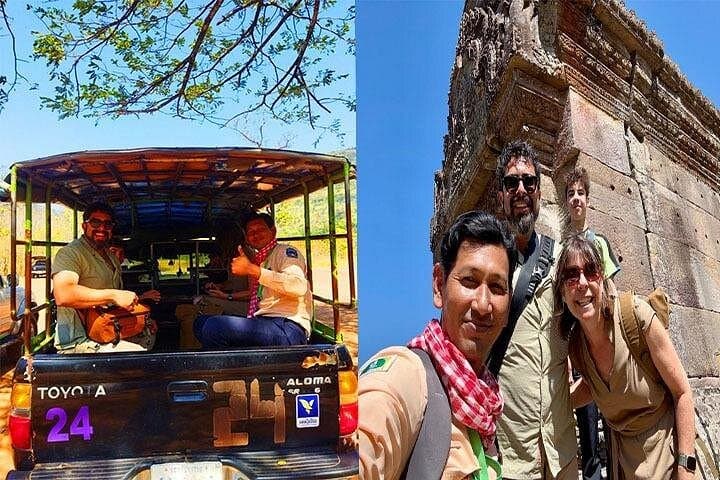
The 4x4 section is relatively short and intended to ease the climb; passengers should be prepared for bumps but no technical off‑road skill is required.
The tour notes accessibility options and infant seating; however, some temple terraces have steps and uneven paths—check with the operator about specific mobility needs before booking.
Both complexes reflect Khmer kingdom shifts—Preah Vihear grew as a ritual site on a strategic ridge while Koh Ker briefly served as capital during the 10th century.
Visitor numbers are managed to protect fragile masonry and nearby habitats; avoid climbing on ruins and follow guide instructions to reduce wear and litter.
Buffalo Angkor operates guided outdoor trips and adventures with an emphasis on safety, stewardship, and memorable experiences.

You start before dawn in Siem Reap—the road ahead a black ribbon as the tuk‑tuks sleep and the truck’s air conditioning hums. By first light the cliffs that hold Preah Vihear catch the sun and the temple’s carved gopuras throw long shadows; later, the ruined pyramid at Koh Ker rises from the jungle like an ancient grader of time.
You start before dawn in Siem Reap—the road ahead a black ribbon as the tuk‑tuks sleep and the truck’s air conditioning hums. By first light the cliffs that hold Preah Vihear catch the sun and the temple’s carved gopuras throw long shadows; later, the ruined pyramid at Koh Ker rises from the jungle like an ancient grader of time.
Preah Vihear crowns a 700‑metre limestone cliff on the Dangrek Range; its sandstone halls date to the height of the Khmer Empire and offer panoramas that once defined territorial sightlines. Koh Ker, farther east, was briefly the Khmer capital and is dominated by a stepped pyramid and scattered prasats—its masonry and solitary lingas are reminders of a city left to the forest for centuries. Geologically, the route climbs younger sandstone onto older limestone outcrops, a contrast visible in temple foundations and weathering patterns.
Local villages along the way still practice rice cultivation and animist offerings; guides often point out household shrines and seasonal rice drying that frame daily life. Conservation here is active but fragile: temples sit in protected corridors where visitor behavior directly affects restoration work.
Practical edge: this is a long, full‑day itinerary that begins around 5:00 AM and returns late. Expect uneven stone steps, sun exposure, and brief off‑road 4x4 climbs; carry at least 2 liters of water, sun protection, and modest clothing for temple etiquette. Stagger your camera batteries—the light at Preah Vihear and the solitude at Koh Ker reward the early start.