THE ADVENTURE COLLECTIVE® · Independent discovery and booking for outdoor travel

Walk through the ash-frozen streets of Pompeii, hike to Vesuvius’ crater, then taste volcanic wines on the slopes—all in one full day from Naples. This practical guide tells you what to expect and how to prepare.
Walk through the ash-frozen streets of Pompeii, hike to Vesuvius’ crater, then taste volcanic wines on the slopes—all in one full day from Naples. This practical guide tells you what to expect and how to prepare.
You step off the van and the air shifts—salty bay wind mixing with a dry, volcanic tang as Vesuvius watches from across the plain. The day unfolds with Roman streets underfoot in Pompeii, then climbs to the crater rim where the earth still holds the memory of 79 AD. Between ruins and vines you move from archaeology to agriculture in a single day.
Verified experiences and guided adventures in the surrounding area.
Operated by Pompeii Transfer Car · Pompeii, Campania
You step off the van and the air shifts—salty bay wind mixing with a dry, volcanic tang as Vesuvius watches from across the plain. The day unfolds with Roman streets underfoot in Pompeii, then climbs to the crater rim where the earth still holds the memory of 79 AD. Between ruins and vines you move from archaeology to agriculture in a single day.
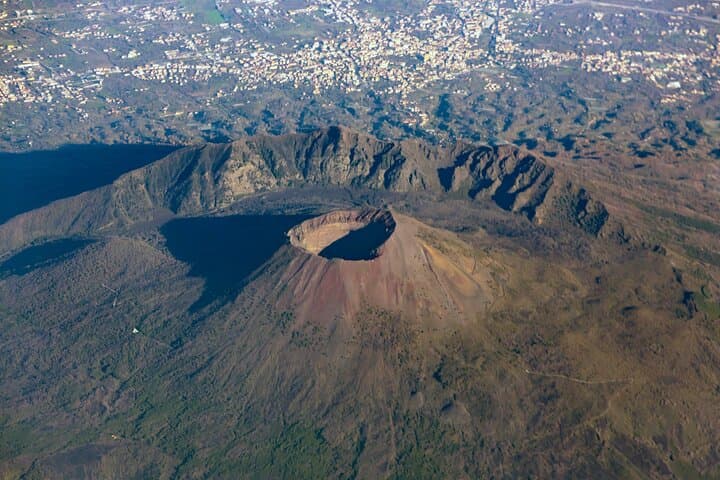
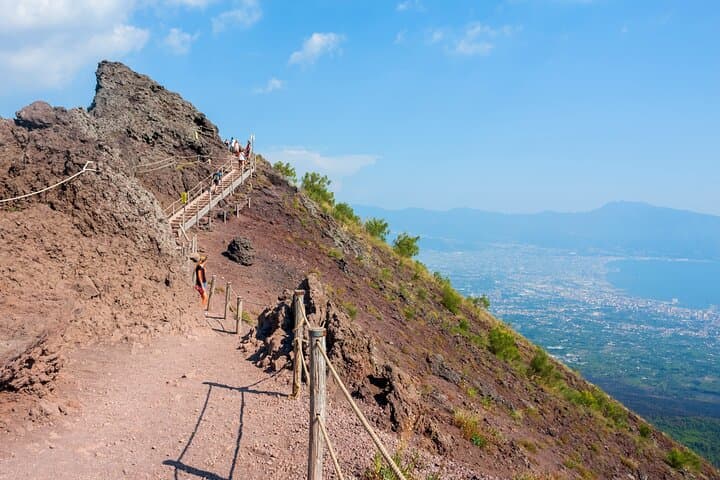
Pompeii is an open-air classroom of Roman life: homes, baths, and frescoed atriums frozen under pumice. Geologically, Vesuvius is a stratovolcano whose last major eruption reshaped the Bay of Naples; the trail to the crater is roughly 4 km round-trip with about 140 m of elevation gain, averaging a 14% gradient to 1,170 m above sea level. The vineyards on its slopes produce wines with volcanic minerality—Aglianico and Falanghina among the varieties—because porous ash retains heat and drains quickly.
Culturally, this area blends Campanian traditions—rustic cuisine, strong coffee, and family-run cantinas—with a history of resilience. Expect packed stone paths in Pompeii, loose volcanic scree on Vesuvius, and sun-exposed terraces at wineries.
Practically: the tour runs 7–8 hours with private, air-conditioned transport, bottled water and Wi‑Fi on board. You’ll have roughly two hours for Pompeii and 1.5 hours for the crater trek; wine tastings and guide admissions are usually extra. Wear sturdy shoes, sun protection and layered clothing; carry cash for small purchases. Start early to avoid midday heat and allow time to savor a cellar visit after the hike.
moderate.
7–8 hours.
Moderate fitness: able to walk 4 km with a 140 m climb on uneven ground and handle several hours on your feet.
The standard trail included in this tour is about 4 km round-trip with approximately 140 m of elevation gain; allow around 1.5 hours to reach and return from the crater rim.
No—admission to Pompeii and any guided services there, plus vineyard tastings, are typically not included and must be paid separately.
The tour provides private transport and accommodates strollers for short distances, but the crater trail involves uneven ground and a steep gradient; those with limited mobility may prefer to remain at the lower viewpoints or skip the hike.
Pickup and drop-off can be arranged from ports, train stations, airports, or hotels in the Naples area—confirm exact pickup point and time with the operator after booking.
Pompeii was buried in ash and pumice in 79 AD after Vesuvius’ explosive eruption; excavations since the 18th century revealed streets, homes and everyday artifacts frozen in time.
Vesuvius National Park and Pompeii are managed to balance tourism with preservation—stay on marked paths, respect fragile ruins, and support local initiatives that fund site conservation.
Pompeii Transfer Car operates guided outdoor trips and adventures with an emphasis on safety, stewardship, and memorable experiences.
You step off the van and the air shifts—salty bay wind mixing with a dry, volcanic tang as Vesuvius watches from across the plain. The day unfolds with Roman streets underfoot in Pompeii, then climbs to the crater rim where the earth still holds the memory of 79 AD. Between ruins and vines you move from archaeology to agriculture in a single day.
You step off the van and the air shifts—salty bay wind mixing with a dry, volcanic tang as Vesuvius watches from across the plain. The day unfolds with Roman streets underfoot in Pompeii, then climbs to the crater rim where the earth still holds the memory of 79 AD. Between ruins and vines you move from archaeology to agriculture in a single day.
Pompeii is an open-air classroom of Roman life: homes, baths, and frescoed atriums frozen under pumice. Geologically, Vesuvius is a stratovolcano whose last major eruption reshaped the Bay of Naples; the trail to the crater is roughly 4 km round-trip with about 140 m of elevation gain, averaging a 14% gradient to 1,170 m above sea level. The vineyards on its slopes produce wines with volcanic minerality—Aglianico and Falanghina among the varieties—because porous ash retains heat and drains quickly.
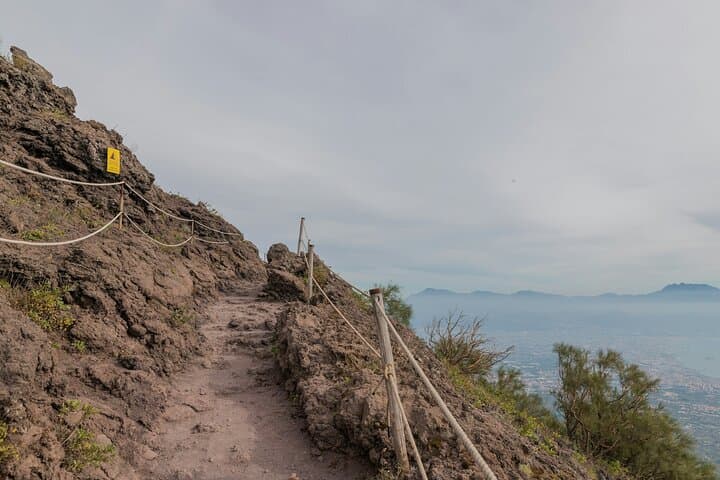
Culturally, this area blends Campanian traditions—rustic cuisine, strong coffee, and family-run cantinas—with a history of resilience. Expect packed stone paths in Pompeii, loose volcanic scree on Vesuvius, and sun-exposed terraces at wineries.
Practically: the tour runs 7–8 hours with private, air-conditioned transport, bottled water and Wi‑Fi on board. You’ll have roughly two hours for Pompeii and 1.5 hours for the crater trek; wine tastings and guide admissions are usually extra. Wear sturdy shoes, sun protection and layered clothing; carry cash for small purchases. Start early to avoid midday heat and allow time to savor a cellar visit after the hike.