THE ADVENTURE COLLECTIVE® · Independent discovery and booking for outdoor travel

A single day that stitches together Petra’s carved canyons, Wadi Rum’s desert immensities and a halt at the Dead Sea. This guide covers what to expect on the long, history-soaked route and how to plan for terrain, timing, and comfort.
A single day that stitches together Petra’s carved canyons, Wadi Rum’s desert immensities and a halt at the Dead Sea. This guide covers what to expect on the long, history-soaked route and how to plan for terrain, timing, and comfort.
You step out of the cooling air‑conditioned van onto packed sandstone and the Siq narrows until the Treasury peels into view — sun striking carved facades like pages turned by history. The day folds across three distinct landscapes: the rose-red city of Petra with its narrow gorges and carved tombs, the lunar quiet of Wadi Rum’s sandstone domes and dunes, and a final, saline mirror at the Dead Sea — the planet’s lowest horizon.
Verified experiences and guided adventures in the surrounding area.
Operated by Retaj Jordan Tours and transportation · Amman, Amman Governorate
You step out of the cooling air‑conditioned van onto packed sandstone and the Siq narrows until the Treasury peels into view — sun striking carved facades like pages turned by history. The day folds across three distinct landscapes: the rose-red city of Petra with its narrow gorges and carved tombs, the lunar quiet of Wadi Rum’s sandstone domes and dunes, and a final, saline mirror at the Dead Sea — the planet’s lowest horizon.
Petra began as a Nabataean caravan hub; its cut rock facades and Roman colonnades trace trade, water engineering and empire. Wadi Rum’s geology is older: towering sandstone and granite shaped by wind and episodic flash floods, with Bedouin camps that preserve oral history and living hospitality. The Dead Sea’s hypersaline basin records the region’s tectonic drop along the Jordan Rift.
Expect lots of walking on uneven stone, steep steps (the Monastery approach involves several hundred carved steps) and desert tracks. Distances are long: the Siq is roughly 1.2 km to the Treasury; exploring Petra’s main circuit and side trails can easily total 6–8 km on foot; Wadi Rum drives traverse dunes and short hikes over rocky outcrops.
Practical edge: start early to avoid midday heat, carry 2–3 liters of water, wear grippy shoes and sun protection, and bring local currency or the Jordan Pass if you’ve pre-purchased entry. Allow time between sites for transit — this is a full 11–13 hour day driven by scenery and history rather than pace. If you plan the Monastery hike, budget extra time and energy; otherwise, camel or donkey transfers can shorten walking segments.
moderate.
11–13 hours.
Moderate fitness — able to walk 6–8 km on uneven stone, climb several hundred steps, and tolerate desert heat for extended periods.
No — the tour notes that admissions are not included; many visitors use the Jordan Pass for Petra which covers entry and visa if purchased in advance.
This itinerary is a full‑day loop (about 11–13 hours) with private transportation from Amman; pickup points and flight/arrival details are requested at booking.
Yes — the Monastery is accessible but involves several hundred steps and extra time; mention your preference so the guide can allocate time accordingly.
Pets and very small children may use strollers for short sections, but many Petra routes and steps are not stroller-friendly; infant seats and some accommodations are available if pre-booked.
Petra was a Nabataean capital (1st century BCE–2nd century CE) that controlled caravan routes and developed intricate water channels and rock-cut architecture.
Visitor pressure affects fragile rock surfaces and desert ecosystems; stick to marked paths, avoid climbing on façades, and follow local guides to minimize impact.
Retaj Jordan Tours and transportation operates guided outdoor trips and adventures with an emphasis on safety, stewardship, and memorable experiences.
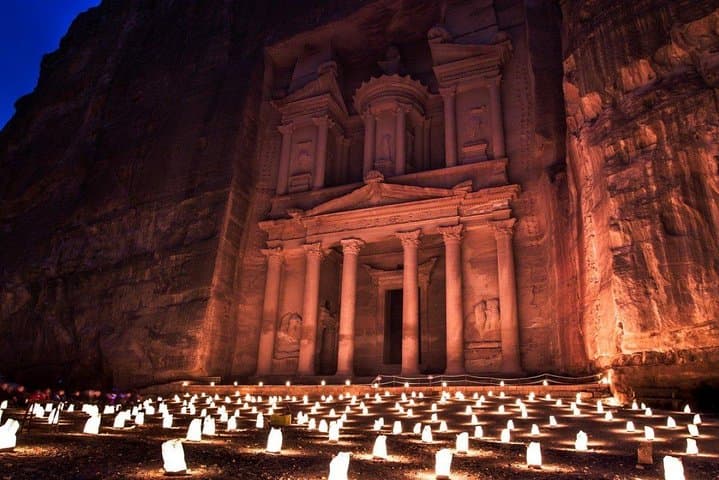
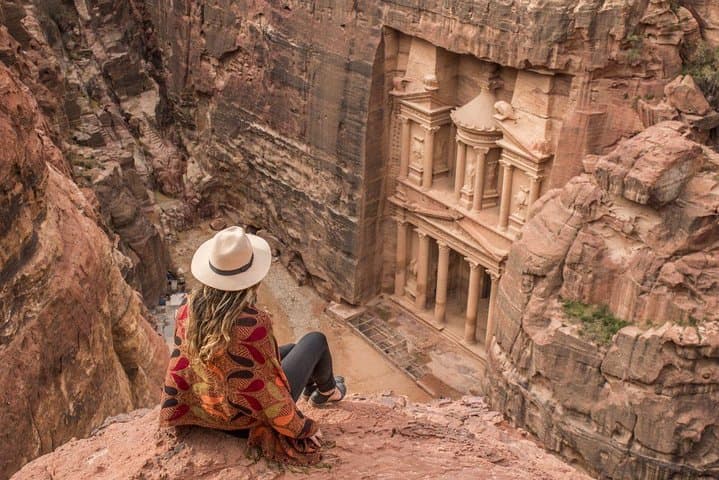
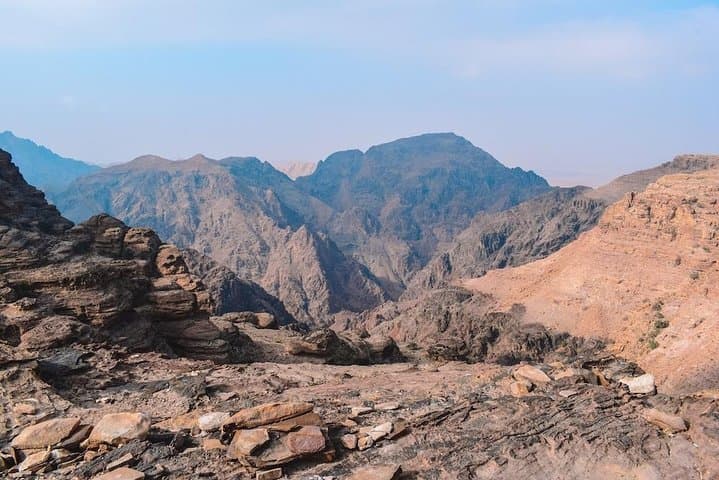
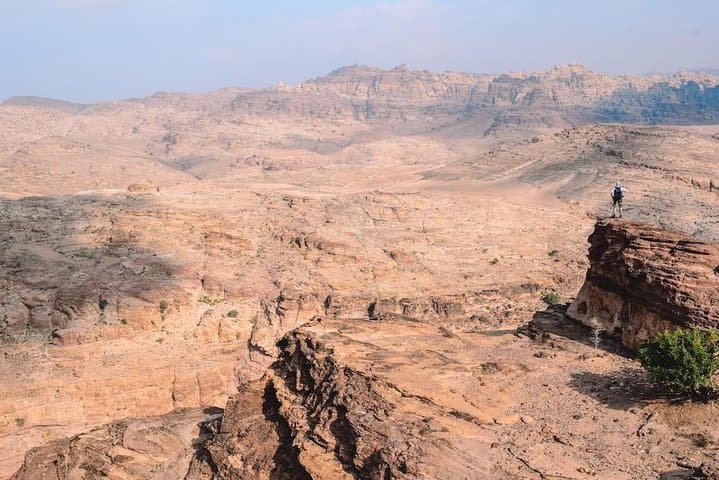
You step out of the cooling air‑conditioned van onto packed sandstone and the Siq narrows until the Treasury peels into view — sun striking carved facades like pages turned by history. The day folds across three distinct landscapes: the rose-red city of Petra with its narrow gorges and carved tombs, the lunar quiet of Wadi Rum’s sandstone domes and dunes, and a final, saline mirror at the Dead Sea — the planet’s lowest horizon.
You step out of the cooling air‑conditioned van onto packed sandstone and the Siq narrows until the Treasury peels into view — sun striking carved facades like pages turned by history. The day folds across three distinct landscapes: the rose-red city of Petra with its narrow gorges and carved tombs, the lunar quiet of Wadi Rum’s sandstone domes and dunes, and a final, saline mirror at the Dead Sea — the planet’s lowest horizon.
Petra began as a Nabataean caravan hub; its cut rock facades and Roman colonnades trace trade, water engineering and empire. Wadi Rum’s geology is older: towering sandstone and granite shaped by wind and episodic flash floods, with Bedouin camps that preserve oral history and living hospitality. The Dead Sea’s hypersaline basin records the region’s tectonic drop along the Jordan Rift.
Expect lots of walking on uneven stone, steep steps (the Monastery approach involves several hundred carved steps) and desert tracks. Distances are long: the Siq is roughly 1.2 km to the Treasury; exploring Petra’s main circuit and side trails can easily total 6–8 km on foot; Wadi Rum drives traverse dunes and short hikes over rocky outcrops.
Practical edge: start early to avoid midday heat, carry 2–3 liters of water, wear grippy shoes and sun protection, and bring local currency or the Jordan Pass if you’ve pre-purchased entry. Allow time between sites for transit — this is a full 11–13 hour day driven by scenery and history rather than pace. If you plan the Monastery hike, budget extra time and energy; otherwise, camel or donkey transfers can shorten walking segments.