THE ADVENTURE COLLECTIVE® · Independent discovery and booking for outdoor travel

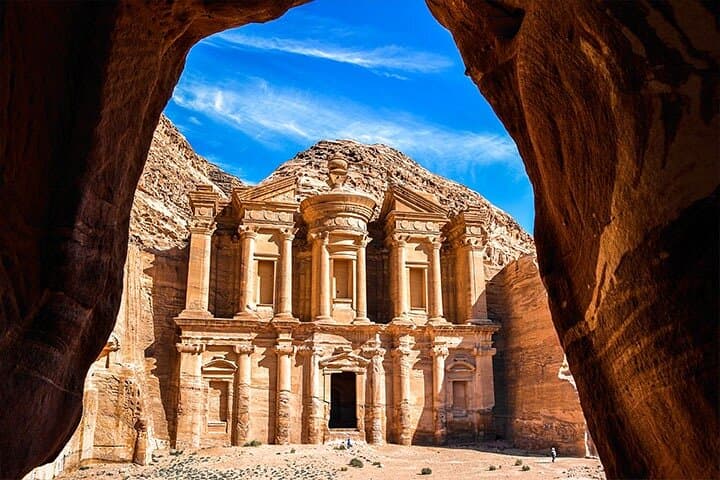
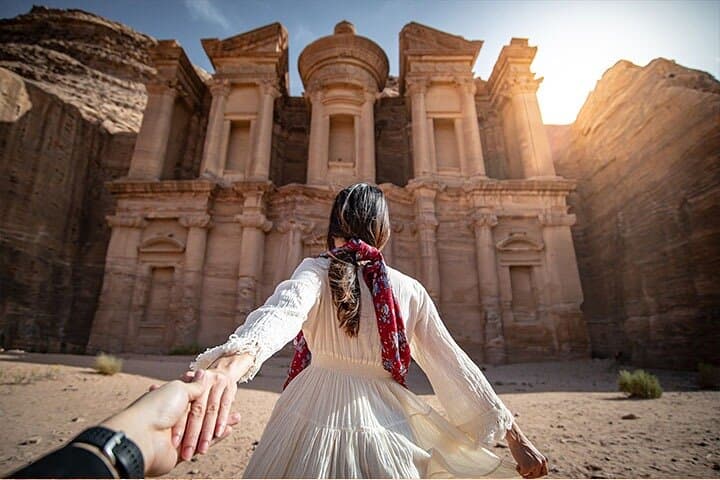
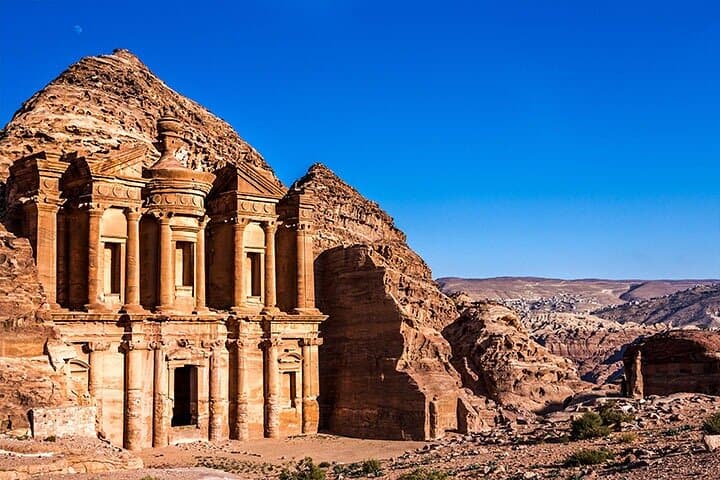
Travel from Aqaba to Petra on a guided full-day coach trip that covers the Siq, the Treasury (Al-Khazneh), major tombs and Little Petra. Expect 2–3 hours guided inside Petra plus free time to explore the Monastery or museum.
Travel from Aqaba to Petra on a guided full-day coach trip that covers the Siq, the Treasury (Al-Khazneh), major tombs and Little Petra. Expect 2–3 hours guided inside Petra plus free time to explore the Monastery or museum.
The morning coach slides out of Aqaba before dawn and the desert opens like a page turned — ochre plains giving way to jagged sandstone folds. By the time you reach the narrow throat of the Siq, sunlight has found the canyon walls and the Treasury’s carved face appears as if it’s stepped out of the rock to meet you.
Verified experiences and guided adventures in the surrounding area.
Operated by Zaid Tours and Travel · Wadi Musa, Ma'an Governorate
The morning coach slides out of Aqaba before dawn and the desert opens like a page turned — ochre plains giving way to jagged sandstone folds. By the time you reach the narrow throat of the Siq, sunlight has found the canyon walls and the Treasury’s carved face appears as if it’s stepped out of the rock to meet you.
Petra sits at a crossroads of history and geology. Carved by the Nabataeans more than 2,000 years ago, the city exploits natural faults and soft sandstone to create façades that catch the light. Walk the 1.2 km Siq and feel the canyon breathe — wind and occasional flash-flood channels shaped the same stone the builders hollowed. Little Petra (Siq al-Barid) offers a quieter introduction: a caravan stop and residential annex that reveals everyday life beyond the monumental tombs.
Culturally, Petra is a story of trade, water engineering and adaptation: Nabataeans managed runoff with cisterns and channels carved into cliffs. Today guides translate inscriptions and point out weathering patterns that tell both human and climatic stories.
Practical guidance: expect 2–3 hours of guided walking inside Petra plus free time for photo stops or a steep 800-step ascent to the Monastery if you choose. Wear sturdy shoes, bring 2–3 liters of water, sun protection and cash for the site museum, donkey or cart services, and souvenirs. If you plan the Monastery, allow an extra hour and steady legs for loose sand and stone steps. Return to Aqaba in the evening; the route is long, but the landscape keeps answering back with new angles of red stone and sky.
moderate.
9 hours (approx.).
Reasonable fitness for 2–5 hours of walking on uneven terrain; climbing to the Monastery requires good knees and stamina.
Entrance is included only if you select the option; the tour notes that Jordan Pass holders should notify the operator to reconcile fees.
The itinerary includes about two hours guided in key areas plus additional free time (total on-site time often 3–4 hours depending on pace).
Yes — if time allows you can climb to the Monastery independently; it’s a steep, loose-stone climb that adds roughly 1 hour each way for fit walkers.
Yes — complimentary hotel pick-up and drop-off in central Aqaba are provided; reconfirm pick-up time 24 hours prior.
Petra was the capital of the Nabataean Kingdom and flourished as a trading hub from the 1st century BCE, notable for its hydraulic engineering and rock-cut architecture.
Preserve fragile sandstone by staying on paths, avoid touching façades, and support local conservation by using official services and following guide instructions.
Zaid Tours and Travel operates guided outdoor trips and adventures with an emphasis on safety, stewardship, and memorable experiences.
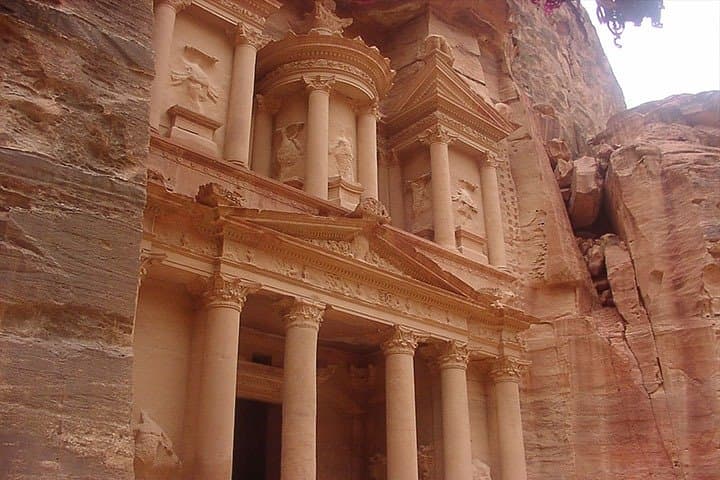
The morning coach slides out of Aqaba before dawn and the desert opens like a page turned — ochre plains giving way to jagged sandstone folds. By the time you reach the narrow throat of the Siq, sunlight has found the canyon walls and the Treasury’s carved face appears as if it’s stepped out of the rock to meet you.
The morning coach slides out of Aqaba before dawn and the desert opens like a page turned — ochre plains giving way to jagged sandstone folds. By the time you reach the narrow throat of the Siq, sunlight has found the canyon walls and the Treasury’s carved face appears as if it’s stepped out of the rock to meet you.
Petra sits at a crossroads of history and geology. Carved by the Nabataeans more than 2,000 years ago, the city exploits natural faults and soft sandstone to create façades that catch the light. Walk the 1.2 km Siq and feel the canyon breathe — wind and occasional flash-flood channels shaped the same stone the builders hollowed. Little Petra (Siq al-Barid) offers a quieter introduction: a caravan stop and residential annex that reveals everyday life beyond the monumental tombs.
Culturally, Petra is a story of trade, water engineering and adaptation: Nabataeans managed runoff with cisterns and channels carved into cliffs. Today guides translate inscriptions and point out weathering patterns that tell both human and climatic stories.
Practical guidance: expect 2–3 hours of guided walking inside Petra plus free time for photo stops or a steep 800-step ascent to the Monastery if you choose. Wear sturdy shoes, bring 2–3 liters of water, sun protection and cash for the site museum, donkey or cart services, and souvenirs. If you plan the Monastery, allow an extra hour and steady legs for loose sand and stone steps. Return to Aqaba in the evening; the route is long, but the landscape keeps answering back with new angles of red stone and sky.