THE ADVENTURE COLLECTIVE® · Independent discovery and booking for outdoor travel

Walk the Siq into Petra’s core, stand before the carved Treasury and climb to the Monastery on a private full-day tour from Amman. This guide explains what to expect — terrain, timing and practical tips to make the most of a long day in Jordan’s Rose City.
Walk the Siq into Petra’s core, stand before the carved Treasury and climb to the Monastery on a private full-day tour from Amman. This guide explains what to expect — terrain, timing and practical tips to make the most of a long day in Jordan’s Rose City.
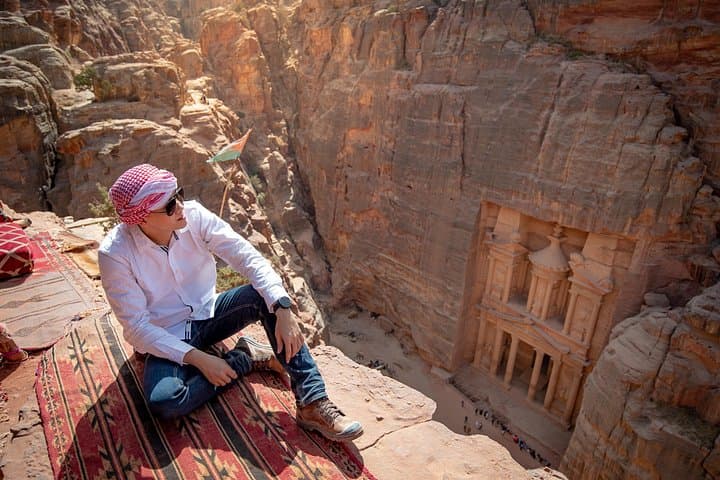
A strip of cool shadow guides you into the Siq — a narrow, twisting cleft of rose-red sandstone where light and carved stone play across your path. By the time the canyon opens and the Treasury appears, you’re standing in a place shaped by water, trade and centuries of footsteps.
Verified experiences and guided adventures in the surrounding area.
Operated by Ready To Take Off Travel And Tourism · Wadi Musa, Ma'an
A strip of cool shadow guides you into the Siq — a narrow, twisting cleft of rose-red sandstone where light and carved stone play across your path. By the time the canyon opens and the Treasury appears, you’re standing in a place shaped by water, trade and centuries of footsteps.
Petra was the capital of the Nabataeans, a trading people who carved homes, tombs and temples directly into sandstone cliffs more than 2,000 years ago. The geological story is immediate: stratified sandstone eroded into smooth walls, natural cisterns and narrow passages that the Nabataeans adapted with dams and channels to capture rare desert rains.
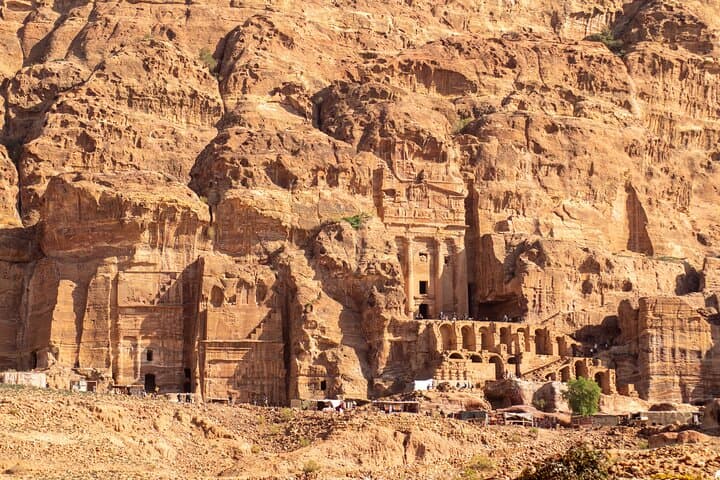
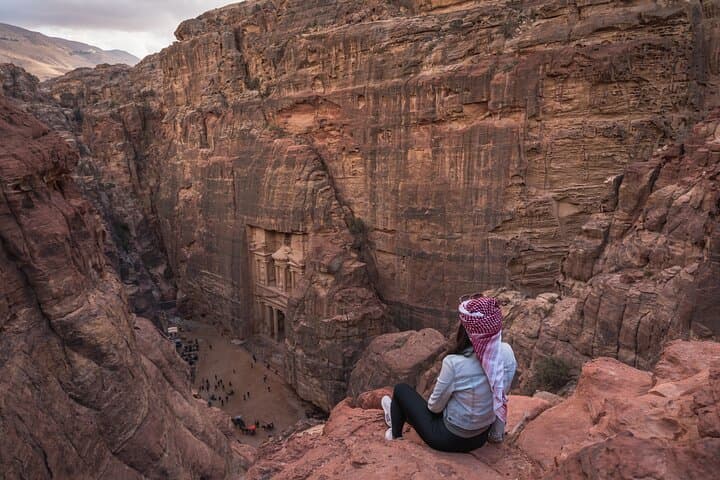
Culturally the site blends Eastern and Hellenistic motifs — façades cut with Corinthian columns one moment and Nabataean kneading of local stone the next. Visitors who press beyond the Treasury find the Royal Tombs, the amphitheater and, after about 800 carved steps, the Monastery (Ad-Deir) framed against wide desert skies.
Practically: expect 8–10 km of walking if you visit the main circuit, uneven footing, lots of stairs to the Monastery and long, exposed sections in sun. A guided full-day trip from Amman returns you in the evening and typically includes private transfer, bottled water and an English-speaking driver; Petra entry must be purchased separately unless included. Go early or late for cooler light and smaller crowds, wear sturdy shoes, carry at least 2 liters of water, and plan for repeated elevation changes — Petra rewards effort with dramatic viewing points and a clear sense of living history.
moderate.
10 hours.
Should be comfortable walking several miles over uneven terrain and climbing sustained stone steps; basic stamina required for a full-day outing.
Not always — check booking details. Many operators offer options with or without the Jordanian Ministry of Tourism entrance fee; tickets can also be purchased on site.
Expect 8–10 km if you visit the primary sites; reaching the Monastery requires roughly 800 carved steps and noticeable elevation gain.
The route is manageable for families but involves long walking and stairs; older travelers or those with mobility limits should consider shorter routes or using local donkey/park services where available.
Spring and fall offer the most comfortable temperatures; early mornings and late afternoons in summer reduce heat exposure.
Petra flourished as a Nabataean trading hub from around the 4th century BCE and is famed for sophisticated water collection and rock-cut urban design.
Petra is a UNESCO World Heritage Site; stick to marked paths, avoid touching delicate façades and respect local guides to reduce erosion and wear.
Ready To Take Off Travel And Tourism operates guided outdoor trips and adventures with an emphasis on safety, stewardship, and memorable experiences.
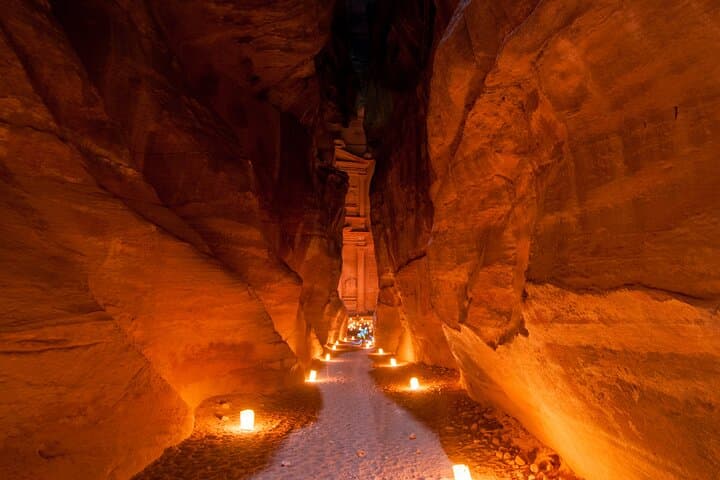
A strip of cool shadow guides you into the Siq — a narrow, twisting cleft of rose-red sandstone where light and carved stone play across your path. By the time the canyon opens and the Treasury appears, you’re standing in a place shaped by water, trade and centuries of footsteps.
A strip of cool shadow guides you into the Siq — a narrow, twisting cleft of rose-red sandstone where light and carved stone play across your path. By the time the canyon opens and the Treasury appears, you’re standing in a place shaped by water, trade and centuries of footsteps.
Petra was the capital of the Nabataeans, a trading people who carved homes, tombs and temples directly into sandstone cliffs more than 2,000 years ago. The geological story is immediate: stratified sandstone eroded into smooth walls, natural cisterns and narrow passages that the Nabataeans adapted with dams and channels to capture rare desert rains.
Culturally the site blends Eastern and Hellenistic motifs — façades cut with Corinthian columns one moment and Nabataean kneading of local stone the next. Visitors who press beyond the Treasury find the Royal Tombs, the amphitheater and, after about 800 carved steps, the Monastery (Ad-Deir) framed against wide desert skies.
Practically: expect 8–10 km of walking if you visit the main circuit, uneven footing, lots of stairs to the Monastery and long, exposed sections in sun. A guided full-day trip from Amman returns you in the evening and typically includes private transfer, bottled water and an English-speaking driver; Petra entry must be purchased separately unless included. Go early or late for cooler light and smaller crowds, wear sturdy shoes, carry at least 2 liters of water, and plan for repeated elevation changes — Petra rewards effort with dramatic viewing points and a clear sense of living history.