THE ADVENTURE COLLECTIVE® · Independent discovery and booking for outdoor travel

Drive from the Dead Sea through desert ridges to Petra’s Siq, step into the Treasury’s pink glow and explore Nabataean tombs on a private full-day tour with lunch. This guide covers what to expect, cultural context and practical tips for a seamless visit.
Drive from the Dead Sea through desert ridges to Petra’s Siq, step into the Treasury’s pink glow and explore Nabataean tombs on a private full-day tour with lunch. This guide covers what to expect, cultural context and practical tips for a seamless visit.
You arrive before dawn, the car moving out of the Dead Sea plain as limestone ridges slide past and desert light sharpens the cliffs. The road climbs; by the time you reach Petra the air smells of dry stone and sun-warmed sandstone. The narrow Siq yawns open and the Treasury appears—pink rock catching light like a slow reveal.
Verified experiences and guided adventures in the surrounding area.
Operated by Red Rock Tours · Wadi Musa, Ma'an Governorate
You arrive before dawn, the car moving out of the Dead Sea plain as limestone ridges slide past and desert light sharpens the cliffs. The road climbs; by the time you reach Petra the air smells of dry stone and sun-warmed sandstone. The narrow Siq yawns open and the Treasury appears—pink rock catching light like a slow reveal.
Petra was the heart of the Nabataean kingdom, a crossroads of incense and spice routes. Its façades are carved from the local sandstone—layers of red, ochre and cream produced by ancient marine deposits and tectonic uplift that folded the region into rugged canyons. Roman columns, Nabataean tombs and Byzantine graffiti overlap here, a cultural palimpsest that reflects centuries of trade and changing empires.
Local life today centers on Wadi Musa village, Bedouin guide traditions and market stalls selling carved souvenirs and herbal teas. Walks from the Siq lead to the Roman theatre, the Street of Facades and higher routes to the Royal Tombs and the Monastery—each viewpoint reframing the city.
Practical guidance: arrive early to avoid heat and crowds, wear sturdy shoes for uneven rock and stairs, carry at least 2 liters of water and a hat. The guided portion is typically about two hours inside Petra; the full day includes transit time from Dead Sea hotels and a buffet lunch at a local restaurant. Expect dusty paths, steep stone steps and short, exposed climbs if you opt for the high viewpoints. Photography is outstanding in morning and late afternoon light. Respect archaeological areas, follow your guide’s route, and budget time if you want to climb to the Monastery or explore Little Petra on the return.
moderate.
8 hours.
Moderate stamina and comfort with uneven terrain and stairs; expect several kilometers of walking.
Expect roughly 2–2.5 hours each way depending on traffic and your Dead Sea pickup location; tours typically start early to maximize time at Petra.
Yes—this private full-day tour includes a buffet lunch and bottled water after the guided portion of the visit.
Children can participate but Petra has many steps and uneven sections; strollers are usable only on paved areas and are not practical past the Siq.
A guide for about two hours is included; the tour operator usually handles entrance logistics, but confirm whether the Petra admission ticket is included or must be purchased separately in advance.
Petra was the Nabataean capital from around the 4th century BC and flourished as a trade hub; its rock-cut architecture reflects both local traditions and Hellenistic-Roman influences.
Petra faces erosion from foot traffic and weathering of soft sandstone; stick to designated paths, avoid touching fragile façades and support local efforts that limit visitor impact.
Red Rock Tours operates guided outdoor trips and adventures with an emphasis on safety, stewardship, and memorable experiences.
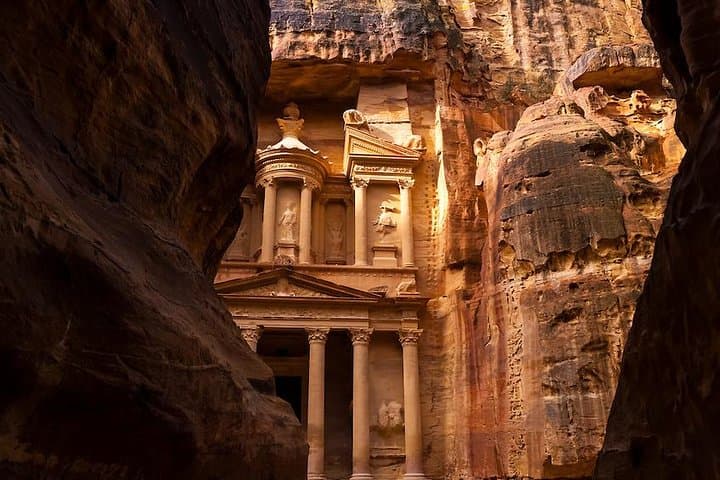

You arrive before dawn, the car moving out of the Dead Sea plain as limestone ridges slide past and desert light sharpens the cliffs. The road climbs; by the time you reach Petra the air smells of dry stone and sun-warmed sandstone. The narrow Siq yawns open and the Treasury appears—pink rock catching light like a slow reveal.
You arrive before dawn, the car moving out of the Dead Sea plain as limestone ridges slide past and desert light sharpens the cliffs. The road climbs; by the time you reach Petra the air smells of dry stone and sun-warmed sandstone. The narrow Siq yawns open and the Treasury appears—pink rock catching light like a slow reveal.
Petra was the heart of the Nabataean kingdom, a crossroads of incense and spice routes. Its façades are carved from the local sandstone—layers of red, ochre and cream produced by ancient marine deposits and tectonic uplift that folded the region into rugged canyons. Roman columns, Nabataean tombs and Byzantine graffiti overlap here, a cultural palimpsest that reflects centuries of trade and changing empires.
Local life today centers on Wadi Musa village, Bedouin guide traditions and market stalls selling carved souvenirs and herbal teas. Walks from the Siq lead to the Roman theatre, the Street of Facades and higher routes to the Royal Tombs and the Monastery—each viewpoint reframing the city.
Practical guidance: arrive early to avoid heat and crowds, wear sturdy shoes for uneven rock and stairs, carry at least 2 liters of water and a hat. The guided portion is typically about two hours inside Petra; the full day includes transit time from Dead Sea hotels and a buffet lunch at a local restaurant. Expect dusty paths, steep stone steps and short, exposed climbs if you opt for the high viewpoints. Photography is outstanding in morning and late afternoon light. Respect archaeological areas, follow your guide’s route, and budget time if you want to climb to the Monastery or explore Little Petra on the return.